
Online casino reload bonus UK 2026: how the offer reaches a returning player
A reload bonus is the second conversation. A welcome offer courts the new account; a reload offer courts the one that already exists. At a UK-licensed online casino, that second conversation runs inside a tighter set of rails than the first, because two specific pieces of Commission rule land directly on it. Wagering requirements on any bonus are capped at 10x since 19 December 2025, and credit cards have been off the table for any gambling deposit since 14 April 2020. A player who only knows the welcome-bonus vocabulary misses both, and pays for missing them.
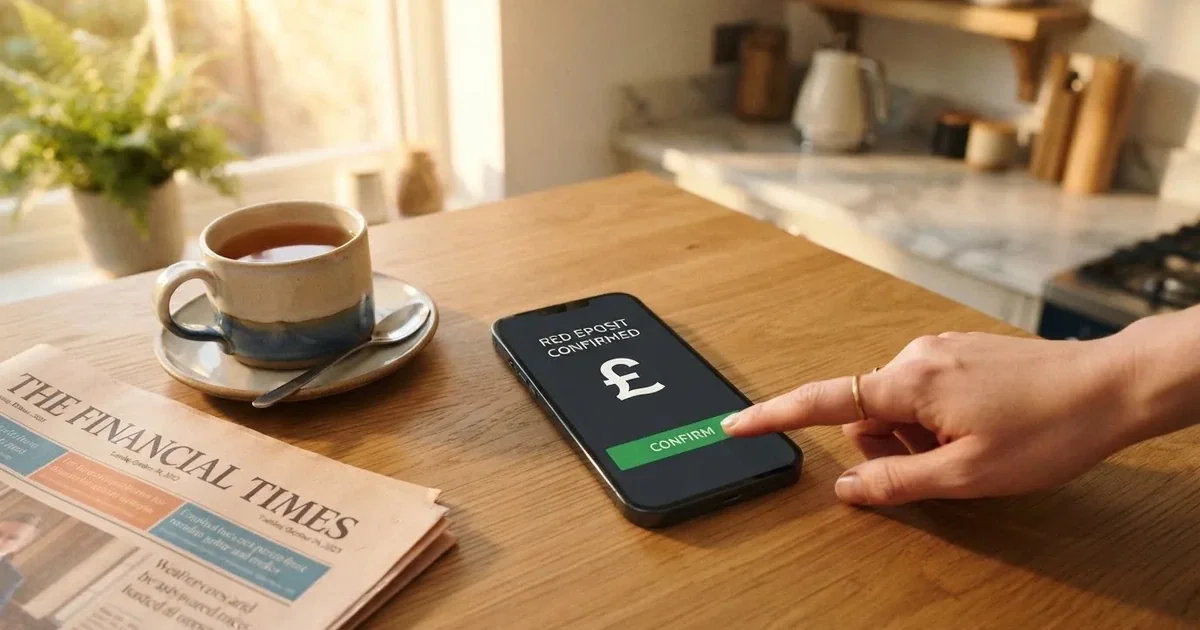
This page works through what those rules do to a reload offer, how ten GB-licensed brands lay out the value, and where the choice actually sits for someone funding the second, third or fourth deposit of the year. The data was checked against the Gambling Commission’s public register on 11 November 2026.
Table of Contents
- Responsible gaming: what reload offers quietly ask of the player
- Payments and payout speed: what funding a reload actually requires
- Reload bonuses: what the offer actually contains
- Top ten: how the brands stack up
- Overview: what reload bonuses are, and what the UK market makes of them
- Legality: the Gambling Commission frame around a reload
- How wagering turns a bonus into a time cost
- What a reload player should know before the next deposit
- Frequently asked questions
Responsible gaming: what reload offers quietly ask of the player
A reload bonus exists to bring a returning player back to the cashier. The mechanism is plain: match a deposit by a stated percentage up to a stated ceiling, then attach wagering terms. From the player’s side, it pulls two ways at once — an offer that increases the bankroll for the same money out, and a structure that demands a higher volume of play before the bankroll can leave. That tension is the point of the page, because the volume is where the cost lives.

The Commission does not regulate the existence of reload offers; it regulates the conditions that sit on them. Since 31 October 2025 every GB-licensed operator must prompt a customer to set a financial limit before the first deposit; once that limit is in place, every reload offer starts inside it. The limit is not a state-set cap; it is whatever the player agreed to at signup, and any operator that lets the customer raise it without a cool-down period is breaking licence condition 3.9.5 of the LCCP social responsibility code. Reload players, who by definition have already made one deposit, are the group most likely to come back to the prompt because their existing limit no longer fits what they want to do.
GAMSTOP is the second rail. Every brand on this page is enrolled by licence, which means a returning player who has self-excluded cannot reach the reload cashier until the exclusion period (six months, one year or five years) runs out. The 28 February 2025 financial vulnerability check, triggered at £150 of net deposits in a rolling 30 days, also fires on reload-funded play — a player who tops up weekly will hit that line well before the year is out. None of these protections are unique to reloads, but reloads are the offer a player sees most often after the welcome, so they are the offer the protections tend to land on in practice.
The off-licence alternative is the more pointed risk. An offshore site will run a 200% reload with a 40x wagering multiple, because nothing in its jurisdiction forbids either. The Commission can disrupt such a site — cease-and-desist notices, payment and hosting referrals, search-engine delisting — but it cannot block it at ISP level, and it does not penalise the player. What the player loses by going there is the protection set out above: no GAMSTOP, no ADR route, no recourse to the Commission if the operator simply does not pay out. A 200% match is not free money; it is a price paid in safeguards a GB-licensed player already has.
Payments and payout speed: what funding a reload actually requires
A reload bonus is, mechanically, a deposit that the operator matches. The deposit itself has to clear the cashier in a payment method the operator accepts, and it has to clear at or above whatever minimum the offer sets — typically £10 or £20. Credit cards have been excluded from any UK gambling deposit since 14 April 2020, including credit cards routed through e-wallets such as PayPal or Skrill, so the reload cashier at every GB-licensed brand runs on debit cards, bank transfer and a subset of e-wallets. That is the first filter, and a player who arrives with a credit card in hand arrives with nothing.

Bank transfer within the UK typically routes through the Faster Payments Service, launched in 2008 and operated by the operator of the Faster Payments Service. Most Faster Payments arrive instantly or within a couple of minutes, with occasional runs of up to two hours. The scheme caps a single transaction at £1,000,000, though individual banks impose lower limits on their own customers — Starling, for example, runs tighter daily ceilings than the scheme maximum. For a reload bonus that means a bank transfer of £20 to £200 clears almost immediately and the matched funds usually appear within the same session; a bank transfer of £5,000 takes longer, not because the scheme is slow but because the receiving operator’s own payments team queues high-value deposits for source-of-funds review.
Apple Pay is developed and operated by Apple Inc., launched on 20 October 2014 and supporting UK-issued cards from 14 July 2015. Apple Pay protects card data through tokenisation, replacing the actual card number with a device-specific tokenised Device Primary Account Number and generating a dynamic security code per transaction, with in-store payments using near-field communication to communicate wirelessly with contactless terminals. On an iPhone with Face ID, in-store Apple Pay is authenticated by double-clicking the side button; on Touch ID models, by double-clicking the Home button. Whether a given casino accepts Apple Pay at the cashier is a per-brand decision, and it does not change the underlying card type — the funding source is still a debit card, which is what the credit-card ban governs, and the 10x cap still governs the bonus on top.
AstroPay is a different kind of instrument. Founded in 2009 and headquartered in Uruguay, AstroPay operates as a global digital wallet offering online payments, virtual and physical debit cards, and peer-to-peer transfers, having spun off its payment-processing business, dLocal, as a separate company in 2016. AstroPay’s UK entity, Larstal Limited, is an electronic money institution authorised by the Financial Conduct Authority under the Electronic Money Regulations 2011; the Isle of Man entity is licensed by the Isle of Man Financial Services Authority for money transmission; the Brazilian entity is authorised by the Brazilian Central Bank as an electronic currency issuer; the Danish entity is authorised by the Danish Financial Supervisory Authority. AstroPay serves users across markets including Argentina, Australia, Brazil, Canada, Colombia, Denmark, Spain, the United Kingdom, the United States and Uruguay. For a UK reload, the practical question is whether the casino’s cashier lists AstroPay; where it does, the deposit is funded from a prepaid balance rather than a card, which keeps it on the right side of the credit-card ban even if the player tops the wallet up from a credit card elsewhere. That is a subtle but real distinction.
Payout speed is where a reload player feels the operator most acutely. The matched bonus itself is usually credited instantly on deposit clearance, because the operator has no incentive to delay it — the wagering requirement that sits on the bonus is the lock, not a pending status. The lock releases when the wagering is complete, and the speed of that release is set by how fast the player works through the wagering requirement, which is the topic of the next section. Once cleared, withdrawal runs on the same rails the deposit used, and Faster Payments is the fastest of them by a margin. Some operators run their own pending window on withdrawals — typically 0 to 24 hours — which has nothing to do with the payment method and everything to do with the operator’s internal anti-money-laundering review.
Reload bonuses: what the offer actually contains
A reload bonus is a percentage match on a deposit, with a ceiling on the matched amount and a wagering requirement on the matched funds. Read that sentence slowly, because each clause carries a cost. A 50% match up to £100 with a 10x wagering requirement means a deposit of £200 returns £100 of bonus money, and that £100 has to be wagered ten times (£1,000 of slot play) before it converts to withdrawable cash. A 100% match up to £50 with the same 10x cap means a deposit of £50 returns £50 of bonus, and that £50 has to be wagered ten times (£500 of slot play). The headline number that catches the eye — “100% bonus” — tells the reader almost nothing about the cost; the ceiling and the multiple do.
Free spins bundled into a reload are governed by the same rules as matched cash since 19 December 2025. Any bonus that mixes products — a sports bet that returns casino spins, a deposit match that returns bingo tickets — is a mixed-product bonus and is no longer permitted. A reload offer at a GB-licensed casino today is one product, and the wagering requirement on the whole offer sits at or below 10x. The Commission’s reasoning, set out in the consultation that preceded the rule, was that high wagering requirements on free spins produce the largest share of player complaints and that a hard cap closes the gap between the operator’s headline and the player’s actual experience. The cap did not close the gap on value — it closed the gap on multiple.
The minimum deposit to trigger a reload sits in a narrow band. Most offers name £10 or £20 as the floor, with a handful requiring £50 to qualify for the larger matched amount. That floor matters because a £10 deposit that returns a £5 bonus at 10x wagering generates £50 of required turnover — about 250 spins at a £0.20 stake, or roughly twenty minutes of continuous play at the 2.5-second minimum spin interval. The bonus pays for itself in time only if the player wins enough on those 250 spins to clear the £50 turnover requirement without losing the deposit; the house edge is what makes that arithmetic difficult.
The maximum conversion from bonus to cash is also governed. A GB-licensed operator may cap the withdrawable winnings from a bonus — common caps are 5x or 10x the bonus amount — and any cap sits in the bonus terms, not in the headline. A £50 bonus with a 5x max-cashout cap converts into at most £250 of withdrawable funds, regardless of how much the wagering requirement produces. Some reloads waive the cap for high-tier players; most do not. A player who has read only the headline will not know the cap exists until the terms page is open, and the terms page is the second-most-skipped screen in online gambling after the bonus opt-in tick box.
The rhythm of reload offers is the second thing their marketing undersells. A welcome bonus is a one-shot event tied to the first deposit; a reload is a recurring offer that fires on a schedule — weekly, monthly, or tied to a specific deposit day. The schedule is not a feature of the bonus; it is the bonus, because a player who deposits on the wrong day gets no offer at all. The brands below vary widely in how openly they publish that schedule; some name a fixed “Reload Wednesday”; others rotate the offer weekly and email it to eligible accounts. Either way, the player has to know when the offer is live before the deposit, not after.
A reload bonus is also a tax event for the operator, not for the player. Players pay no tax on gambling winnings in the UK; operators pay Remote Gaming Duty, raised from 21% to 40% from 1 April 2026. The duty does not change the bonus the player receives, but it changes the operator’s appetite for bonus-led acquisition — a brand running heavy reload schedules is paying 40p in duty for every pound of gross gaming yield, which is a tighter margin than the welcome-offer economics suggest. The brands that have kept their reload schedules generous into the new duty rate are the brands whose player base is large enough to absorb the cost; the brands that have thinned theirs are working with a smaller margin and a smaller player pool.
Top ten: how the brands stack up
The brands below all hold a Gambling Commission remote casino operating licence; their domains are listed on the Commission’s public register as active. The register is the test of whether a brand holds a licence, and the licence number is the only durable identifier for the entity behind the domain. Three of the brands — Ladbrokes, Coral and Gala Bingo — sit under the same licensee, LC International Limited, and are not independent operators in any commercial sense even though each carries its own trading name, site and marketing. The order below mirrors their order in the Commission’s register snapshot.
| Brand | Licence holder and GB remote casino licence | Domain status on the register | Reload bonus (from the operator’s own listing) |
|---|---|---|---|
| Paddy Power | PPB Games Limited, licence 039411-R-319335-010 | Active | — |
| Ladbrokes | LC International Limited, licence 054743-R-330863-014 | Active | — |
| MrQ | Tek Fox Ltd, licence 060629-R-337532-004 | Active | — |
| Coral | LC International Limited, licence 054743-R-330863-014 | Active | — |
| bet365 | Hillside (UK Gaming) ENC, licence 055149-R-331499-004 | Active | — |
| Betfred | Petfre (Gibraltar) Limited, licence 039544-R-319290-010 | Active | — |
| Casumo | Recro Limited, licence 061549-R-336718-002 | Active | — |
| 888casino | 888 UK Limited, licence 039028-R-319297-014 | Active | — |
| Jackpotjoy | Gamesys Operations Limited, licence 038905-R-319430-022 | Active | — |
| Gala Bingo | LC International Limited, licence 054743-R-330863-014 | Active | — |
The reload column reads as ten em dashes because research does not carry a verified headline number for any of the ten. That is the honest shape of the data, not a gap to paper over: a bonus percentage and ceiling attached to a reload schedule is the operator’s own marketing claim, and the operator is the only place it is published in full. A player comparing reload value across these brands goes brand by brand, opens the promotions page, and reads the small print — the table above confirms the licence and the live domain, which is what it takes to know the offer is even legal. The next sections do the rest of the comparison work, on what the licence and the rule set mean for the offer the player is reading on those pages.
Overview: what reload bonuses are, and what the UK market makes of them
Reload is the operator’s word for any deposit-triggered bonus after the welcome. The mechanics are simple: the player deposits, the operator matches a percentage of the deposit up to a ceiling, and the matched funds carry a wagering requirement before they convert to withdrawable cash. The mechanics have not changed in fifteen years; what has changed is the regulatory frame around them, and the frame is what this page is about.
Two headline figures describe the British online casino market as the Commission records it. The Gambling Commission’s public register listed 139 businesses holding an active remote casino operating licence on 18 September 2026; the register can be searched online and downloaded in full as CSV or Excel files. The register’s domain list records each website against the licence account that runs it, with a status of Active, Inactive or White Label; on 18 September 2026 it held 1065 active and 361 white-label domain entries — a white-label site trades under another company’s licence. A remote casino licence number on the register has the form account-R-number–suffix, where the leading six digits repeat the licence holder’s account number and the “R” marks a remote (online) licence. The register is what makes a “licensed” claim verifiable; the brand is what makes the offer recognisable; the rule set is what binds them.
The 139 active licensees is a number to read alongside the 1065 active domains — multiple brands running on one licence is the rule, not the exception. Three of the ten brands on this page share one licence (Ladbrokes, Coral and Gala Bingo all run under LC International Limited), and a player who thinks of them as three competing operators is reading the marketing, not the register. The white-label 361 entries are the tail: a brand whose name is on the casino site but whose licence sits with a different operator, often a platform provider or a B2B supplier. From the player’s perspective, the white-label relationship is invisible until something goes wrong, at which point the operator on the licence is the party the Commission can hold accountable.
The 800,000 figure in the Commission’s 2018 estimate of UK credit-card gamblers is now six years old and shaped the 14 April 2020 ban, but the shape of the player base has moved since. The Commission’s 22% problem-gambling rate among online credit-card gamblers is the figure that did most of the work in the policy case; it is the reason the credit-card ban extended to e-wallet routes as well, and the reason no GB-licensed operator will accept a credit card for a reload today. A player arriving from a market where credit cards are still accepted at the cashier — a slice of the offshore world — will find the GB-licensed cashier empty by design.
A reload bonus’s lifetime is short by design. The wagering window — typically seven to thirty days — runs from the moment the bonus is credited, not from the deposit. A player who deposits, accepts the bonus, and returns a week later has already burned half the window at minimum. A player who deposits, opts out of the bonus, and plays on cash alone is not bound by the window but is also not collecting the matched funds. The two paths cost different amounts in different ways, and the choice is the player’s, made before the deposit clears.
A reload offer also interacts with the slot stake limits in force since April and May 2025. Online slots carry a maximum stake per game cycle — £5 for players aged 25 and over (from 9 April 2025) and £2 for 18-24 (from 21 May 2025). A bonus wagering requirement expressed as a turnover figure — £1,000 of play on a £100 bonus at 10x — divides into 200 cycles at £5 per cycle for an older player, or 500 cycles at £2 for a younger one. At the 2.5-second minimum spin interval, 200 cycles runs in roughly eight minutes; 500 cycles in roughly twenty-one. The maths is not the point — the point is that the same bonus costs the older player four-fifths of the time it costs the younger one, and the operator is required by the stake limit to enforce that.
Legality: the Gambling Commission frame around a reload
The regulator is the Gambling Commission (UKGC), sponsored by DCMS, under the Gambling Act 2005 — which covers Great Britain (England, Scotland, Wales), not Northern Ireland. Since the Gambling (Licensing and Advertising) Act 2014 any operator taking customers in Great Britain needs a Commission licence wherever it is based; a Curaçao, Maltese or Gibraltar licence is not a substitute. Online casino is licensable; the public register is the whole test of whether a brand holds a licence; minimum age 18; name, address and date of birth are verified before the first deposit or any play (since 7 May 2019). Reload offers inherit the whole stack of conditions that the welcome offer sits under — there is no carve-out for returning players, and the verification done at signup is what gates the reload cashier when the player returns.
The credit-card ban since 14 April 2020 is the first rule that bites the reload cashier directly. Debit card and bank transfer deposits are unaffected by the ban, but anything routed through a credit card — including via an e-wallet topped up from a credit card — is declined at the cashier or reversed at the operator’s first reconciliation pass. A reload player who funds a deposit from a credit card does not collect the bonus; the deposit itself does not settle. The rule is not negotiable and not subject to a per-brand override; it is a condition of the licence.
The 10x wagering cap since 19 December 2025 is the second rule that bites the reload offer directly. Every reload bonus at a GB-licensed casino sits at or below that multiple, and any operator publishing a higher figure is publishing a figure its own licence does not authorise. The cap is on the wagering requirement, not on the matched amount — a brand may still offer a 100% match up to £1,000, as long as the £1,000 carries a wagering requirement of £10,000 or less. The cap is also on the whole bonus, not on the matched funds only — if a reload bundles deposit-cash wagering into the requirement, that cash is counted in the multiple. A player reading the terms will see the cash-and-bonus total divided by the deposit-plus-bonus total; the Commission reads it the same way.
The 31 October 2021 changes are still in force. Auto-play is banned; a slot spin may not be faster than 2.5 seconds; losses disguised as wins are banned. None of these is a reload-specific rule, but a reload player works through more cycles per session than a casual player, so the rules bite a reload session harder. The 2.5-second floor alone adds roughly 25% to the time cost of clearing a 10x requirement compared with what the same clearance looked like before the rule. The player is not paying more in money; they are paying more in time, and time is the cost this page returns to.
The financial vulnerability check at £150 net deposits in a rolling 30 days (from 28 February 2025) runs on public data only and does not require a credit check. It fires automatically and pauses play if the result suggests the player is in financial distress. A weekly reload player depositing £20 each week hits £80 by month-end — comfortably under the threshold. A reload player depositing £50 each week hits £200 by month-end and trips the check on the last deposit of the cycle. The check is not punitive — it does not block the deposit — but it does add a friction step that the player has to clear before play resumes, and it is a step the reload schedule does not always account for.
Providing gambling to people in Great Britain without a licence is an offence under section 33 of the Gambling Act 2005. The Commission disrupts illegal sites — cease-and-desist notices, search-engine delisting, payment and hosting referrals — but has no ISP-blocking power, and no penalty is aimed at the player. The player who lands on an unlicensed site and loses faces the same loss regardless of jurisdiction; what the player loses additionally is the protection set out in the previous section. A 200% reload at 40x wagering is a real offer from a real operator — it is also an offer with no Commission complaints route behind it.
The tax frame is the simplest part of the picture. Players pay no tax on gambling winnings in the UK; operators pay Remote Gaming Duty, raised from 21% to 40% from 1 April 2026. Neither figure changes what lands in the player’s account on a reload, but the operator-side change is reshaping the offer landscape through 2026 as brands adjust their reload schedules to the new margin.
How wagering turns a bonus into a time cost
A reload bonus’s headline number — “100% up to £100” — is the figure a player sees first. The figure the player actually pays for is the wagering requirement, expressed as a multiple of the bonus and translated into the volume of play the multiple demands. Under the 10x cap that took effect on 19 December 2025, the wagering requirement on any GB-licensed reload is at most ten times the bonus amount. The arithmetic below shows what that ceiling does to a returning player’s session.
Take a £100 bonus at the 10x cap. The required turnover is £100 × 10 = £1,000. At a £2 stake per spin, the bonus funds £1,000 ÷ £2 = 500 spins. At the 2.5-second minimum spin interval, those 500 spins take 500 × 2.5 ÷ 60 ≈ 20.8 minutes of continuous play. The same bonus at a £5 stake — the maximum stake for a player aged 25 and over — clears in £1,000 ÷ £5 = 200 spins, or 200 × 2.5 ÷ 60 ≈ 8.3 minutes of continuous play.
Now scale the bonus down. A £50 bonus at 10x requires £500 of turnover. At £2 per spin, that is 250 spins, or roughly 10.4 minutes. At £5 per spin, 100 spins, or roughly 4.2 minutes. The time cost of the same percentage offer halves when the bonus halves — not surprising, but the practical effect is that small reload bonuses (the £10–£20 match that fires on a minimum deposit) clear inside a single short session, while larger matched amounts (£200 and up) bleed across multiple sessions and bump into the wagering window. The window matters: a 7-day window on a £200 bonus at 10x is generous; the same window on a £500 bonus is tight.
Scale the bonus up instead. A £500 bonus at 10x requires £5,000 of turnover. At £5 per spin, that is 1,000 spins, or roughly 41.7 minutes. At £2 per spin, 2,500 spins, or roughly 104 minutes. A £500 reload bonus is, on the time axis, a two-hour commitment at the older player’s stake ceiling and almost two hours at the younger player’s. The Commission does not require the operator to disclose the time cost in its terms; the player has to derive it from the multiple, the stake and the minimum spin interval, which are all public.
The result reads as a band, not a single figure, because the stake and the bonus amount both move. For a returning player aged 25 or over using the £5 stake ceiling, the time cost of clearing a 10x wagering requirement ranges from roughly 4 minutes on a £50 bonus to roughly 42 minutes on a £500 bonus. For an 18-24 player on the £2 ceiling, the same offers range from roughly 10 minutes to roughly 104 minutes. The wagering window sits on top of that time band; a 7-day window is comfortable for any bonus under £200, tight for bonuses between £200 and £500, and a serious constraint above £500.
The calculation assumes only the bonus amount is wagered. In practice, a player who deposits £200 to claim a £100 bonus often wagers a mix of bonus and cash, and the operator’s terms usually require the cash to be wagered first, with the bonus funds released only after the cash runs out. The time cost above is the floor — the minimum time on the bonus alone — and any cash play on top adds to it. The estimate is a statistical one: an average over many spins under the stated assumptions, not a guaranteed outcome for any single player. It promises no win, no payout and no return.
The wagering turnover band is the one number on this page that changes the offer’s character. A 10x bonus at £50 is a ten-minute coffee-break; a 10x bonus at £500 is a two-hour evening. Both are legal, both are licensed, both are at the cap. The choice between them is the player’s, and the choice is best made with the time cost in hand.
What a reload player should know before the next deposit
The first thing to fix is the schedule. A reload bonus is a recurring offer, not a permanent one; the player who deposits on the wrong day gets nothing. Most GB-licensed brands publish a recurring reload day in their promotions page — “Reload Wednesday” is a common shape, with a percentage match tied to deposits made that day. A player who has been depositing on Fridays and not seeing the bonus has been funding the operator without collecting the offer, and the gap between those two states is the entire value of the reload schedule.
The second thing to fix is the payment method. Credit cards have been excluded since 14 April 2020; Apple Pay, debit cards, bank transfer through Faster Payments and a subset of e-wallets are the working routes. AstroPay is accepted at some GB-licensed cashiers, and AstroPay’s UK entity, Larstal Limited, is an electronic money institution authorised by the Financial Conduct Authority under the Electronic Money Regulations 2011, so the wallet itself is regulated even where the casino is not. The funding source behind the wallet is what matters at the cashier: a debit-card-funded wallet is a debit route; a credit-card-funded wallet is a credit route and will be declined.
The third thing to fix is the wagering window. A reload bonus’s window is typically seven to thirty days; the player who accepts a bonus and returns a fortnight later has burned half of it. The window is in the terms, not in the headline. A player who reads only the headline is accepting a window they have not measured, and the wagering requirement inside that window is the cost of the bonus.
The fourth thing to fix is the maximum conversion. A bonus’s max-cashout cap — common values are 5x or 10x the bonus amount — sits in the terms and is the ceiling on what the bonus can convert into. A £50 bonus with a 5x cap converts to at most £250 of withdrawable funds. The cap does not reduce the wagering requirement; it caps the return, which is the other half of the offer’s economics.
The fifth thing to fix is the operator’s own slot catalogue. A 10x wagering requirement on a reload bonus is a volume of play; the play has to land on slots that contribute 100% to wagering. Most slots do; some table games contribute less; a few contribute nothing. The player’s choice of game changes how fast the wagering clears, and a player who picks a low-contribution game is paying for the same bonus in more time. The contribution table is in the bonus terms, and it is the table a player should open before the first spin.
The sixth thing to fix is the GAMSTOP and limit position. GAMSTOP self-exclusion is a hard block — a player who has excluded cannot reach the reload cashier until the exclusion period ends. The financial limit set at signup is the soft block — a player who wants to deposit more than the limit allows has to raise the limit, and the raise comes with a cool-down. The 28 February 2025 financial vulnerability check at £150 net deposits in a rolling 30 days is the friction step that lands on weekly reload players around the second deposit of the month. None of these is the bonus; all of them are the rail the bonus runs on.
The seventh thing to fix is the comparison axis. A reload offer is not a welcome offer; it is not a cashback; it is not a loyalty reward. Each has its own economics, and a player who treats them as interchangeable pays the wrong cost. A welcome offer is a one-shot, often with a larger matched amount and a longer wagering window. A reload offer is recurring, with a smaller matched amount and a tighter window. Cashback is a percentage of net losses returned as cash or bonus, and the comparison axis is loss, not deposit. Loyalty rewards are points-based and convert at the operator’s published rate. The right comparison for a reload offer is another reload offer, on the same schedule, at the same minimum deposit.
Frequently asked questions
What is a reload bonus, and how does it differ from a welcome offer?
A reload bonus is a deposit-triggered match offered to existing account holders, usually on a recurring schedule; a welcome offer is the same shape of bonus tied to the first deposit only. Reloads are typically smaller in matched amount and tighter in wagering window, because the operator has already paid the acquisition cost on the welcome. Both sit under the same 10x wagering cap that has applied since 19 December 2025.
How often can a player claim a reload bonus at a UK casino?
It depends on the operator’s schedule. Some GB-licensed brands run a fixed recurring day — often midweek — at which every eligible account holder can claim a match on a deposit made that day; others rotate the offer weekly and notify eligible accounts by email or on-site message. A player who deposits outside the schedule does not collect the bonus, regardless of the deposit amount. The schedule is in the operator’s promotions page.
Do crypto-funded reload bonuses work the same way as card deposits?
Crypto reloads are uncommon at GB-licensed casinos, because the licensing regime does not require operators to accept cryptocurrency and most do not. Where a brand does accept crypto, the deposit is converted at the cashier and the reload bonus terms apply to the sterling-equivalent amount; the bonus itself is paid and wagered in sterling, and the 10x cap applies normally. The funding source is the difference: a debit-card deposit and a crypto deposit arrive at the same bonus, but the upstream route is different.
What wagering requirement applies to reload bonuses under current UK rules?
Since 19 December 2025 the wagering requirement on any reload bonus at a GB-licensed casino is capped at 10x the bonus amount. Mixed-product bonuses — for example, a sports bet that returns casino spins — are also banned under the same change. A bonus offering above 10x is offering above what the licence authorises, and the player should treat that as a red flag rather than a bargain.
Is there a minimum deposit needed to unlock a reload bonus?
Yes. Most reload offers name £10 or £20 as the floor, with a smaller number requiring £50 to qualify for the larger matched amount. The minimum sits in the bonus terms and is not always the same as the site’s standard minimum deposit. A player who deposits below the bonus minimum collects the deposit but not the offer, and the gap between the two numbers is what the operator publishes in the small print.
Can a player withdraw reload bonus winnings straight away?
No. The matched bonus funds carry a wagering requirement — at most 10x under current rules — and the bonus does not convert to withdrawable cash until that requirement is met. Some operators also apply a maximum-conversion cap, typically 5x or 10x the bonus amount, which sits in the terms and is independent of the wagering multiple. Cash deposited alongside the bonus is usually withdrawable at any time, but withdrawing it before the bonus is fully wagered forfeits the bonus at most brands.
