
What a UK player is actually choosing when a casino calls itself foreign
 Available in US
Current as of 23 September 2026 · verified against the Gambling Commission’s public register of gambling businesses
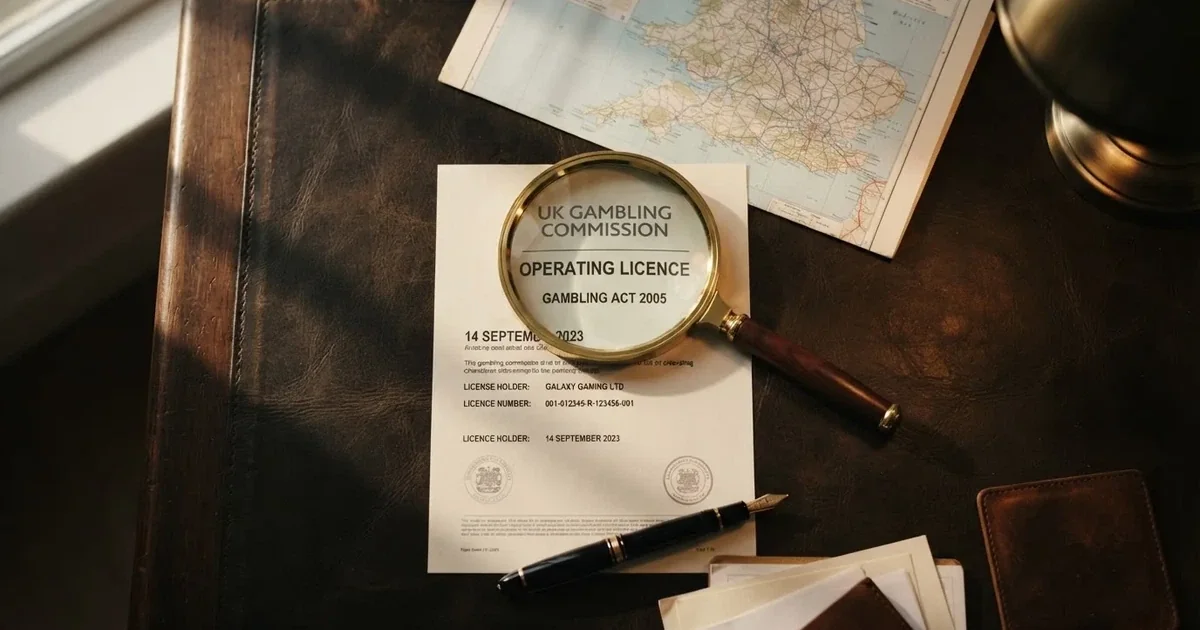
The phrase “foreign casino for UK players” sounds like a category. It isn’t — not on a UK screen. A casino site either holds an active Gambling Commission licence or it does not, and that single line decides what protections follow the player through the door. The word “foreign” is the marketing version of a question the register already answers in one lookup: is this brand licensed to take a deposit from someone in Great Britain? If yes, the rest of the page is a comparison between licensed brands. If no, the rest of the page is a list of what the player has just stepped outside.
That distinction is the spine of what follows. The first section lays out the wider UK online casino landscape — how big the licensed market is, who the regulator is, and why “overseas” is a word that needs careful handling on a UK screen. The next two sections go into the licence question and the protections a UK licence unlocks, because those are the things a player gives up on an unlicensed site. The ranking then compares ten brands that DO hold an active remote casino licence, with the figures taken straight from the register. A short calculation puts a number on what the new bonus rules look like in real play. The FAQ at the end gathers the questions a player tends to ask first.
Table of Contents
- The UK online casino market, in the register’s own numbers
- Licensjurisdiction: the licence is the question
- WellbeWellbeing: what a UK licence unlocks, and what goes with it
- The ten brands on the register, side by side
- What the 10x wagering cap looks like in real play
- The protection gap, restated for the player who is reading this far
- FAQ
The UK online casino market, in the register’s own numbers
The Gambling Commission’s public register is the test. Every business licensed to operate online casino games in Great Britain is on it; the register can be searched online and downloaded as a CSV or Excel file. On 18 September 2026 it listed 139 businesses holding an active remote casino operating licence, and the related domain list held 1,065 active domain entries and 361 white-label entries, where a white-label site trades under another company’s licence rather than holding its own. Those are not small numbers — they describe a market with hundreds of brands and thousands of web addresses, all of which the register treats as one population.

That population is what a UK player is choosing inside. A “foreign casino accepting UK players” is, in plain terms, a site that is marketing itself at a UK screen without sitting in that register. The marketing is global; the deposit button is not. From the player’s chair the question collapses into one: is the brand on the register, and is the specific domain the player typed in an active domain of the licence account that holds it? Both halves matter — a brand can be licensed while a particular web address sits in a different company’s hands.
The register is searchable by domain or by licence holder, and a remote casino licence number has a fixed shape: the leading six digits are the licence holder’s account number, the letter R marks a remote (online) licence, and the suffix distinguishes one licence from the next. A typical licence number from the September 2026 snapshot looks like 045322-R-324275-019, which is the Unibet entry, or 054743-R-330863-014 for Ladbrokes. Recognising that shape is useful when a casino’s footer lists a licence number — it lets a player check the licence against the register rather than trusting the footer’s claim.
Licensjurisdiction: the licence is the question
The honest reading of “foreign casino accepting UK players” is also the simplest. A casino site can hold any licence it likes in any jurisdiction it likes; what matters for a UK player is whether the Gambling Commission has issued an operating licence to the business running the site the player is about to use. Since the Gambling (Licensing and Advertising) Act 2014, any operator taking customers in Great Britain needs a Commission licence wherever it is based. A Curaçao sub-licence, a Malta Gaming Authority licence, an Isle of Man licence — none of these is a substitute for a UK one. They are licences to operate in those jurisdictions, not licences to take a deposit in Great Britain.
The framing is sharper than it looks. A brand that markets to UK players from a Curaçao licence is not licensed to do so; the Commission can, and does, issue cease-and-desist notices, refer payment and hosting providers, and ask search engines to delist sites it considers illegal. The Commission has no power to block sites at the ISP level, so a determined player can usually still find the address — which is exactly why the player-side framing matters. Finding a site is not the same as being protected by it.
Section 33 of the Gambling Act 2005 makes providing gambling to people in Great Britain without a licence an offence. That is aimed at the operator, not the player: no penalty is aimed at the person depositing. What the player loses by playing on an unlicensed site is the set of protections that a UK licence unlocks — the subject of the next section. The offence framing matters for the same reason it always does: a regulator that can act against operators is a regulator that can require operators to act against players who need help.
WellbeWellbeing: what a UK licence unlocks, and what goes with it
Player protections in the UK are not abstract. They are a list of named mechanisms that any online casino licence-holder is required to operate, and that an unlicensed site is under no obligation to provide. A player weighing “foreign” against “UK-licensed” is weighing a specific set of differences:

- GAMSTOP, the national online self-exclusion scheme, is a mandatory condition of every online licence since 31 March 2020. A player who registers with GAMSTOP is excluded from every UK-licensed gambling site for their chosen period (six months, one year or five years; the period cannot be cancelled early). An unlicensed site is not connected to GAMSTOP, so the same self-exclusion does not follow the player there.
- Financial vulnerability checks run at £150 of net deposits in a rolling 30 days (from 28 February 2025) using public data only; wider financial risk assessments have been announced but are not yet in force. A licensed operator has to run that check; an offshore one is not required to do so.
- Before the first deposit or any play, name, address and date of birth are verified, and the minimum age is 18. Since 7 May 2019 the verification rules have required identity to be checked before play, not after a withdrawal request. Anonymous play is not possible at a licensed site; it is, by definition, possible on an unlicensed one — that is the trade.
- Stake limits apply to online slots: a maximum of £5 per game cycle for players aged 25 and over (from 9 April 2025) and £2 for 18–24-year-olds (from 21 May 2025). A licensed operator must enforce those limits. An offshore site runs on its own house rules.
- Auto-play has been banned since 31 October 2021; a slot spin cannot run faster than 2.5 seconds; losses disguised as wins — a spin that returns less than the stake with celebratory graphics — are banned. These rules apply to UK-licensed slots; they do not bind an unlicensed site.
- Wagering requirements on bonuses are capped at 10x since 19 December 2025, and mixed-product bonuses (a sports bet that triggers casino spins, for instance) are banned. Credit cards are banned for gambling since 14 April 2020, including credit cards routed through e-wallets. These are LCCP conditions; they do not travel.
The set is long because the harms they address are specific. A player who has registered with GAMSTOP and finds a site that does not honour it is not in a “different market” — they have walked past the single mechanism that lets them stop. A 19-year-old who can place a £50 spin on an offshore site has stepped outside a rule written for them. The argument for sticking to a UK-licensed site is not that it is safer in some general sense; it is that the specific protections a UK player needs have been written into the licence.
Two practical points finish the picture. First, the National Gambling Helpline (GamCare) and GambleAware are the UK’s named support routes; a licensed operator is required to point players towards them, and ADR (alternative dispute resolution) through an approved provider is part of the licence conditions. An unlicensed site carries no such obligation. Second, players pay no tax on gambling winnings in the UK; operators pay Remote Gaming Duty, which is being raised from 21% to 40% from 1 April 2026 — model only, check with HMRC on the rate in force when this page is read.
The ten brands on the register, side by side
The list below is a register check, not a ranking. Every brand holds an active Gambling Commission remote casino operating licence as of 18 September 2026, and every domain listed is on the public register as an active domain of the licence account named. Several brands share a single licence account: Ladbrokes sits under LC International Limited, Betfair and Paddy Power both sit under PPB Games Limited. The table is a snapshot of who is licensed and how, not a verdict on who is best. Two of the brands in the snapshot — Betfair and Paddy Power — are operated by the same licensee, and the entry below names that.
| Brand | Licence holder | GB remote casino licence | Domain status | Subject support |
|---|---|---|---|---|
| Unibet | Platinum Gaming Limited (account 45322) | 045322-R-324275-019 | Active | — |
| Betfair | PPB Games Limited (account 39411) | 039411-R-319335-010 | Active | — |
| Sky Vegas | Bonne Terre Gaming Limited (account 65519) | 065519-R-339675-002 | Active | — |
| MrQ | Tek Fox Ltd (account 60629) | 060629-R-337532-004 | Active | — |
| Betway | Betway Limited (account 39372) | 039372-R-319367-029 | Active | — |
| PokerStars | Stars Interactive Limited (account 39108) | 039108-R-319334-026 | Active | — |
| Paddy Power | PPB Games Limited (account 39411) | 039411-R-319335-010 | Active | — |
| Ladbrokes | LC International Limited (account 54743) | 054743-R-330863-014 | Active | — |
| BetVictor | BV Gaming Limited (account 39576) | 039576-R-319370-028 | Active | — |
| Betfred | Petfre (Gibraltar) Limited (account 39544) | 039544-R-319290-010 | Active | — |
Three things the table shows at a glance. First, every entry is an active domain on the register; the column would have read differently if any of the ten had been inactive or white-label. Second, the licence numbers are not interchangeable — each licence is tied to the account number that issued it, and a player can check any brand by searching for its domain on the register. Third, the “subject support” column is empty because no bonus or feature data is attached to these licence entries; a column of dashes says the register does not record what a player would otherwise compare on.
Unibet — Platinum Gaming’s flagship, a long-running remote licence
Unibet (unibet.co.uk) sits under Platinum Gaming Limited on account 45322, with remote casino operating licence 045322-R-324275-019. The licence number has been in force continuously since well before the September 2026 snapshot; the brand has the kind of register footprint a player expects from a UK-facing operation. Because the licence holder is the entity the Commission holds accountable, what a player is buying when they click “deposit” at Unibet is a relationship with Platinum Gaming, not with a parent company in another jurisdiction — and that relationship is what the LCCP conditions attach to. For a player who reads licence numbers before they read welcome packages, Unibet’s entry on the register is one of the cleaner checks in the table.
Betfair — PPB Games’ exchange-plus-casino stack
Betfair is one of two brands operated by PPB Games Limited on account 39411, holding remote casino operating licence 039411-R-319335-010. The same licence covers Paddy Power (the next entry down), so the two brands share an accountable operator and a single LCCP compliance footprint. The relevant comparison for a player is not “which brand” but “which product” — Betfair is the exchange-and-casino combination, Paddy Power the bookmaker-and-casino combination — and the licence frame is identical for both. The fact that the licence covers two well-known brands also explains why the Commission’s single-account view of PPB Games is the right unit of comparison.
Sky Vegas — Bonne Terre’s broadcast-tied casino
Sky Vegas sits under Bonne Terre Gaming Limited on account 65519, holding remote casino operating licence 065519-R-339675-002. Bonne Terre is the gambling arm of the Sky group; the licence predates the broader consolidation that has happened across UK-licensed brands, and the account number is meaningfully higher than the long-standing operators in the table. For a player used to thinking of Sky as a broadcaster first, the licence entry is a reminder that the gambling side is a separate legal entity, separately licensed, and separately accountable to the Commission.
MrQ — Tek Fox’s no-wagering, smaller-floor brand
MrQ is the only brand in the table operated by Tek Fox Ltd, on account 60629, holding remote casino operating licence 060629-R-337532-004. MrQ has built its reputation on a no-wagering bonus model — which, under the new 10x cap that came in on 19 December 2025, is well inside the UK limit rather than at the edge of it. The licence frame is otherwise standard, and the brand’s smaller-floor positioning is a marketing choice rather than a regulatory one.
Betway — Betway Limited’s own-account licence
Betway is held by Betway Limited on account 39372, with remote casino operating licence 039372-R-319367-029. The brand has been on the register with its own account — rather than via a parent or a white-label — for the full life of the remote regime, and the licence number is one of the longer-established in the September 2026 snapshot. A player who has used Betway for sports betting and casino on the same account is dealing with one licence holder throughout.
PokerStars — Stars Interactive’s poker-and-casino stack
PokerStars is held by Stars Interactive Limited on account 39108, with remote casino operating licence 039108-R-319334-026. The poker side is the brand’s history, but the licence is a remote casino operating licence — meaning the same licence covers the casino games that sit alongside the poker client. The .uk domain is the active entry on the register; players who reach the brand through an alternate country-code domain should check it lands on the same licence account before depositing.
Paddy Power — PPB Games’ bookmaker-plus-casino twin
Paddy Power is the second brand operated by PPB Games Limited on account 39411, sharing the same remote casino operating licence 039411-R-319335-010 as Betfair. The two brands being on one licence is the practical reason an LCCP condition or a Commission action against one applies to both. From a player’s perspective, the choice between the two is product-led rather than licence-led.
Ladbrokes — LC International’s high-street-rooted casino
Ladbrokes sits under LC International Limited on account 54743, holding remote casino operating licence 054743-R-330863-014. LC International is the entity that holds Ladbrokes, Coral and Gala Bingo under one umbrella — a single licence holder running several well-known brands. The same caveat applies as for PPB Games: what the Commission acts on is the licence holder, not the brand.
BetVictor — BV Gaming’s independent-account licence
BetVictor is held by BV Gaming Limited on account 39576, with remote casino operating licence 039576-R-319370-028. The brand has held its own licence account for the full life of the remote regime; the BV Gaming entity is the only one in the table with a name that does not match a brand-name parent. For a player reading licence entries, that is the cleanest signal that the licence is held directly by the operator.
Betfred — Petfre (Gibraltar) Limited’s bookmaker-plus-casino stack
Betfred is held by Petfre (Gibraltar) Limited on account 39544, with remote casino operating licence 039544-R-319290-010. The Gibraltar incorporation is the kind of detail a register check makes obvious: Betfred’s UK-licensed casino is run by a Gibraltar company, which is exactly the situation the Gambling (Licensing and Advertising) Act 2014 was written for — a non-GB operator that nonetheless needs a UK licence to take GB customers. The licence number is what makes the arrangement legal; the corporate structure is incidental to the player’s protection.
What the 10x wagering cap looks like in real play
The bonus rules changed on 19 December 2025. Wagering requirements on bonuses are now capped at 10x the bonus amount, and mixed-product bonuses are banned. A player looking at a £100 bonus now sees a £1,000 required turnover at most, rather than the 30x or 40x figures that were common before. The cap is on the wagering multiple, not on the bonus itself — operators can still set bonus amounts and game-weightings, and the cap sits on the multiplier applied to them.
To turn the cap into a play-time estimate: a £100 bonus at 10x wagering is £1,000 of qualifying turnover. On a £0.10 slot spin (a common minimum stake on UK-licensed slots), that is 10,000 qualifying spins. At a 2.5-second minimum spin interval — the floor the LCCP sets for slot play — 10,000 spins takes 25,000 seconds of game time, which works out to about 6.9 hours of continuous play. The figure is a band, not a point: it stretches if the player uses higher stakes, and shortens if the bonus is smaller or the wagering multiple is lower than the cap.
The result is a band, and the band is a meaningful improvement on the pre-cap market. A £100 bonus at the old 30x standard required £3,000 of qualifying turnover and roughly 20.8 hours of play on the same stake; a £100 bonus at 10x takes a third of that time. The cap does not change the house edge on the games — that is set by the slot’s RTP and is independent of the bonus — but it does change the volume of play the bonus requires before it converts. For a player comparing two offers, the relevant figure is no longer “how generous is the bonus” but “how short is the wagering” — and the cap puts a ceiling on that comparison.
The cost of clearing is not the same as the cost of playing. The required turnover is the volume of bets the bonus requires; the expected loss is a function of the slot’s RTP and the volume of qualifying play. For a slot at 96% RTP, the expected loss on £1,000 of qualifying turnover is £40, and the expected loss on £3,000 (the old 30x figure) is £120. The cap reduces both the time commitment and the expected loss of the bonus in roughly the same proportion. It does not change the house edge; it changes how much of it a player has to ride through to convert the bonus.
The protection gap, restated for the player who is reading this far
A player who reads the licence table and the licence-test framing will already have noticed the conclusion. The brands in the table are UK-licensed; the protections described earlier apply to them. A brand that does not appear in the table — or that appears in the register under a different domain, or under an inactive status — is the case where the framing matters. A UK player who chooses an unlicensed site is choosing, deliberately or otherwise, to step outside GAMSTOP, outside the stake and bonus limits, outside the financial vulnerability checks, and outside the ADR route. The list is specific because the protections are specific; the choice is specific in the same way.
Three things to keep in mind while weighing that choice. First, the Commission’s enforcement tools include cease-and-desist notices, search-engine delisting referrals, and payment and hosting referrals — but not ISP-level blocking, so a determined player can still find the address. The site being reachable is not the same as the site being licensed. Second, the player’s deposit is not protected by the same mechanisms on an unlicensed site: there is no ADR route, no approved dispute resolution, and no Commission complaints procedure. A player with a withdrawal problem on an unlicensed site has, in practice, the operator’s own customer service. Third, GAMSTOP’s exclusion period cannot be cancelled early, so the protection a player has set up does not end because they found an offshore site. It simply does not apply there.
FAQ
What does it mean for a casino site to be based outside the UK?
A site based outside the UK is one whose operating company is incorporated in another jurisdiction — Gibraltar, Malta, Curaçao, the Isle of Man, and so on. For a UK player, what matters is not where the company sits but whether the Gambling Commission has issued an operating licence to that company for the specific domain the player is using. The Commission’s public register is the test, and it can be searched by domain or by licence holder. A non-GB operator can be licensed in Great Britain — Betfred’s licence is held by a Gibraltar company — or it can be unlicensed in Great Britain; the register is what tells a player which.
Do foreign casino sites accepting UK players hold a Gambling Commission licence?
Some do and some do not. The brands in the licence table above all hold an active remote casino operating licence as of 18 September 2026, which is what allows them to take deposits from UK players regardless of where the operating company is incorporated. A site that markets itself as foreign and accepts UK players without a Commission licence is operating outside the UK regime; that is the case the section on licensjurisdiction describes. A UK player who wants the protections of a UK licence should treat the register check as a precondition, not a final step.
What protections does a UK player lose by using a foreign casino site?
The specific protections described in the wellbeing section: GAMSTOP self-exclusion, the £2 / £5 slot stake limits, the 10x wagering cap on bonuses, the credit-card ban, the financial vulnerability check at £150 of net deposits, the auto-play ban, the 2.5-second minimum spin interval, and the ban on losses disguised as wins. None of these apply on an unlicensed site because none of them are written into a non-UK licence. A player who needs any of them has stepped outside them by leaving the UK regime.
Is a Malta or Curaçao licence the same as a UK Gambling Commission licence?
No. A Malta Gaming Authority licence authorises a company to operate under Maltese law, and a Curaçao sub-licence authorises operation under Curaçao law; neither is a licence to take deposits from people in Great Britain. Since the Gambling (Licensing and Advertising) Act 2014, a UK licence has been a separate requirement from any other jurisdiction’s licence, and the two are not interchangeable. The UK licence is what unlocks the UK-specific protections; the foreign licence unlocks the protections written into that foreign regime.
Can a UK player self-exclude through GAMSTOP on a foreign casino site?
No. GAMSTOP is a mandatory condition of every UK online licence, so it covers every UK-licensed casino site. An unlicensed offshore site is not connected to GAMSTOP and is not required to honour a GAMSTOP registration. A player who has registered with GAMSTOP and is considering an unlicensed site has stepped outside the mechanism they set up. The exclusion period — six months, one year, or five years — does not cancel because the player found an alternative site; it simply does not extend to that site.
Created by the ”jackpotslotsuk” editorial team.