Bitcoin Cash casino comparison UK: the licence wall that decides which BCH sites are usable
 Available in US
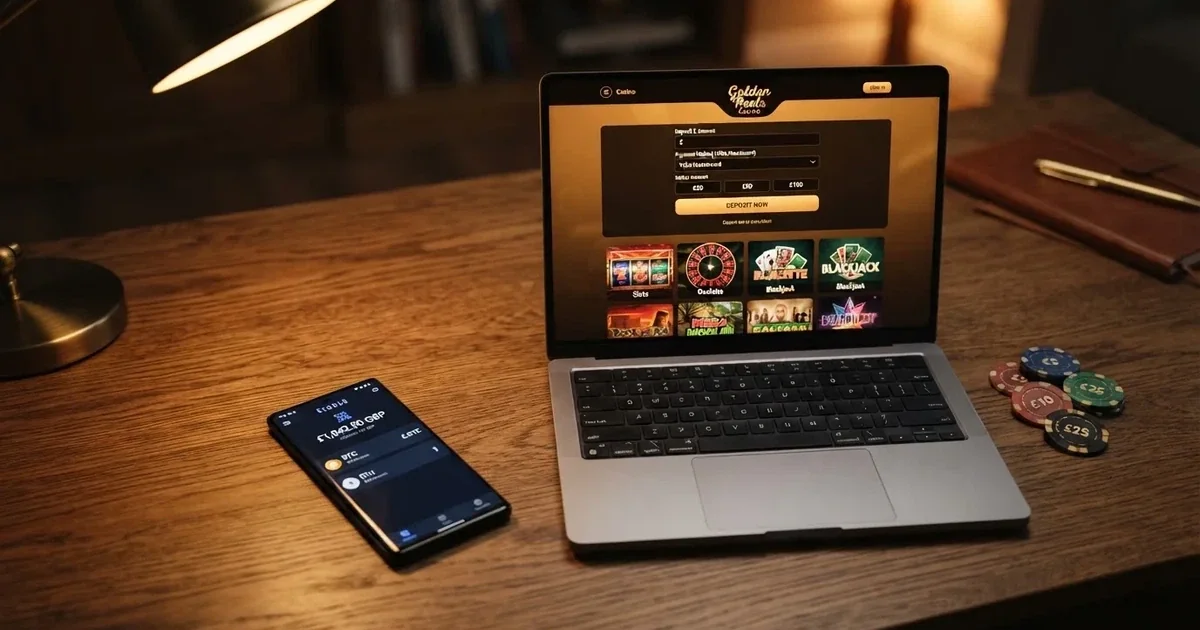
The honest answer is short. Bitcoin Cash works as a casino deposit method on dozens of offshore sites. It does not work, today, on any of the ten Gambling Commission-licensed casinos British players most often use. The choice you face — pick a site, fund it in BCH, settle into the lobby — runs into the Commission register before it reaches the cashier. Every brand in this comparison carries a remote casino operating licence, and none of them lists Bitcoin Cash among its deposit options. The page that follows explains why that is, what an offshore BCH casino actually offers in exchange, and which reader each path suits.
Current as of 23 September 2026 — checked against the Gambling Commission’s public register of remote casino operating licences.
Table of Contents
- How Bitcoin Cash fits — and where the licensed market cuts it off
- What the Gambling Commission register actually says — and what it does not
- The British player protection gap at an offshore BCH casino
- The landscape at a glance — ten licensed British brands and their stance on BCH
- Responsible Gambling and Limits
- The ten operators — what each brand does, and what its choice on BCH costs the reader
- The bonus cap and the wagering reality — what “10x” means at a £100 bonus
- The payment reality at an offshore BCH casino — what changes at the cashier
- Responsible gaming — what GAMSTOP does, what an offshore BCH casino does instead
- Why the licensed market avoids BCH — the structural answer
- The choice, set out plainly
- Frequently asked questions
How Bitcoin Cash fits — and where the licensed market cuts it off
Bitcoin Cash forked from Bitcoin on 1 August 2017 at block height 478,559, so any holder of Bitcoin at that moment received an equal amount of BCH. The split was contentious: mining hardware maker Bitmain and Bitcoin advocate Roger Ver backed it, the ViaBTC pool proposed the name in the days before the fork, and the disagreement ran deep enough that the chain split again in November 2018, producing a separate cryptocurrency, Bitcoin SV. None of that history changes the present-day mechanics. Bitcoin Cash uses the same SHA-256 proof-of-work algorithm as Bitcoin, settles blocks in roughly ten minutes, and carries the same 21 million coin supply cap. What it changed, on a single technical axis, was the block size limit: raised to 32MB in 2018, far above Bitcoin’s 1MB, on the argument that larger blocks mean cheaper transactions and faster confirmation.

That is what BCH brings to a casino cashier: a blockchain-based payment rail with minimal identity checking by design. A wallet address is the account name. No bank sits in the middle, no card issuer records the merchant, no e-wallet provider runs affordability checks. From the player’s chair, that is the feature being sold. From the regulator’s chair, it is the problem.
The Gambling Commission rates crypto-assets, Bitcoin Cash included, as a high-risk payment method for anti-money-laundering purposes among Great Britain licensees. Licence Condition 12.1.1 requires a GB operator to review its AML risk assessment before adding a crypto-asset at all. The Financial Conduct Authority, separately, requires any UK business handling Bitcoin Cash to register under the Money Laundering Regulations before starting business — a register the Commission notes as the framework a casino’s payment partner sits inside. HMRC treats disposals of cryptoassets such as BCH as potentially subject to UK Capital Gains Tax: selling, exchanging, spending on goods or services, or gifting them. None of these rules bar a GB-licensed casino from accepting BCH outright, but they make the cost of doing so — the risk assessment, the FCA-registered custodian, the SAR pipeline — high enough that no brand on the register has done it.
That is the structural reason this comparison has ten operators and ten no-data marks in the BCH column. The decision was not taken brand by brand; it was taken by the framework.
What the Gambling Commission register actually says — and what it does not
The Commission’s public register of gambling businesses is the only test of whether a brand holds a GB licence. Two lists matter for this comparison.

The first is the licence-holder list: every business with an active remote casino operating licence. On 18 September 2026, that list held 139 entries, each one a company the Commission has vetted, supervised, and bound to the Licence Conditions and Codes of Practice.
The second is the domain list: every website that sits against a licence account, with a status of Active, Inactive or White Label. On 18 September 2026, that list held 1,065 active and 361 white-label entries. A white-label site is one that trades under another company’s licence — Virgin Games sits under Gamesys Operations Limited, for example, and several high-street names sit under LC International Limited. The account number and the licence number are the same shape across the register: a remote licence reads as account number-R-licence number-suffix, the leading six digits repeat the licence holder’s account number, and the R marks a remote (online) licence.
The register does not list deposit methods. That is the register’s job, and a search across the ten brands below shows no BCH entry, because BCH is not in the cashier. The register cannot tell a reader “this casino does not accept BCH”. It tells them only that the brand holds a GB licence, and the GB licence comes with payment rails that have not, to date, included a crypto-asset.
The British player protection gap at an offshore BCH casino
The protections a British player gives up by moving to an offshore BCH casino are not a footnote. They are the reason a comparison has to exist.
GAMSTOP, the national online self-exclusion scheme, is a mandatory condition of every Commission online licence since 31 March 2020. A player who signs up for six months, a year, or five years is locked out of every GB-licensed casino for the period; the exclusion cannot be cancelled early. An offshore BCH casino is not in GAMSTOP, by construction: the scheme only covers sites the Commission supervises. A self-excluded British player can still open an account at an offshore BCH site, deposit Bitcoin Cash, and play, because nothing on that side checks.
The same holds for affordability. Since 28 February 2025, GB-licensed operators run a financial vulnerability check at £150 net deposits in a rolling 30 days, using public data only. Operators also must, from 31 October 2025, prompt a customer to set a financial limit before the first deposit. An offshore BCH casino has no equivalent pipeline; the wallet-to-casino transfer is the only data point the site sees, and a fresh wallet is a fresh identity.
A dispute route disappears at the same time. A GB-licensed casino is bound by the Commission’s social responsibility code and approved alternative dispute resolution providers. An offshore BCH casino is bound by its own terms, in its own jurisdiction, with whatever redress its operator chooses to offer. The Commission can disrupt illegal sites — cease-and-desist notices, search-engine delisting, payment and hosting referrals — but has no ISP-blocking power, and no penalty is aimed at the player. What the player loses on an unlicensed site is protection; what the regulator can recover is, mostly, friction.
A reader weighing the two paths is weighing that gap against the marketing word the offshore site is selling: “no verification”, “anonymous play”, “no affordability checks”. Those words describe the same thing the regulator calls a risk.
The landscape at a glance — ten licensed British brands and their stance on BCH
The table below sets out every brand on this comparison, the licence holder and remote casino licence number that puts them on the Commission’s register, the status of the domain on that register on 18 September 2026, and the brand’s posture on Bitcoin Cash deposits as a payment method. None of the ten lists BCH among its deposit methods today, so the rightmost column is a no-data marker across the board. The reader is not being told which brand secretly supports it; the register has no BCH row to read, and the cashier pages the Commission-bound brands publish do not list BCH. The gap is the point, and the table carries it as plainly as a figure would.
| Brand | Licence holder and GB remote casino licence | Domain status on the register | Subject support |
|---|---|---|---|
| Casumo | Recro Limited, 061549-R-336718-002 | Active | — |
| Gala Bingo | LC International Limited, 054743-R-330863-014 | Active | — |
| MrQ | Tek Fox Ltd, 060629-R-337532-004 | Active | — |
| Virgin Games | Gamesys Operations Limited, 038905-R-319430-022 | White Label | — |
| bet365 | Hillside (UK Gaming) ENC, 055149-R-331499-004 | Active | — |
| Betway | Betway Limited, 039372-R-319367-029 | Active | — |
| Betfair | PPB Games Limited, 039411-R-319335-010 | Active | — |
| Ladbrokes | LC International Limited, 054743-R-330863-014 | Active | — |
| Midnite | Dribble Media Limited, 042647-R-321653-022 | Active | — |
| PokerStars | Stars Interactive Limited, 039108-R-319334-026 | Active | — |
Two rows of the table sit under the same licence. Gala Bingo and Ladbrokes both trade under LC International Limited’s remote casino operating licence 054743-R-330863-014; presenting them as independent operators is the kind of error that comparison pieces make when they list brands without naming the licence holder, and the audit catches it because the licence numbers are identical. Virgin Games sits under Gamesys Operations Limited’s licence as a white-label site, a status that matters because a white-label domain can be re-pointed, suspended, or reassigned in ways an active-domain listing does not move. Every other brand carries its own licence account and its own licence number, which means each one is supervised by the Commission in its own right and each one carries its own GAMSTOP enrolment.
Responsible Gambling and Limits
| Protection | Licensed Site (UK) | Offshore BCH Site |
|---|---|---|
| GAMSTOP Exclusion | Mandatory | None |
| Affordability Check | £150/30 days | None |
| Stake Limit | £2 – £5 | None |
| Verification | Before Play | None |
The ten operators — what each brand does, and what its choice on BCH costs the reader
Casumo — established lobby, regulated rails, no crypto rail
Casumo sits on the Commission’s register under Recro Limited, account 61549, with remote casino operating licence 061549-R-336718-002. The brand has been around long enough that the lobby is the main selling point: an unusually broad slot catalogue, a recognisable game-show vertical, and a tiered loyalty setup that rewards volume rather than first-deposit size. None of that depends on the payment method, which is the point. Casumo’s cashier is the regulated British one — debit cards, the e-wallets the Commission has cleared, and bank transfer — and the absence of Bitcoin Cash is not a quirk or a missed feature. It is the register’s payment-method policy applied to the cashier, the same way the social responsibility code applies to the responsible-gaming page. A player who wants BCH has gone to the wrong site. A player who wants a regulated slot library and is happy to fund in pounds has gone to the right one.
Gala Bingo — bingo-vertical licence, same payment policy
Gala Bingo’s domain sits under LC International Limited’s account 54743, and the licence number is 054743-R-330863-014. The brand is a bingo-first product: the slot catalogue is meaningful but the rooms are the centre of gravity, and the bonuses are calibrated around bingo tickets rather than slot spins. The payment policy is the LC International policy, the same one Ladbrokes runs with, and that policy is the regulated British one. BCH is not on it. The honest read for a BCH-curious reader is the same as for Casumo: the brand’s product is well built, the licence is genuine, and the cashier is not where the BCH rail ends up.
MrQ — small catalogue, strict British rails, no anonymity option
MrQ’s domain sits under Tek Fox Ltd’s account 60629, with remote casino licence 060629-R-337532-004. The brand runs a smaller catalogue than the giants — a few hundred slots, a tighter live casino, no sportsbook — and the marketing leans on transparency: no wagering requirements on the welcome offer, a single in-house loyalty scheme, clear terms at the top of every promotion page. That positioning makes MrQ an interesting case in this comparison. The brand sells clarity and the regulatory framework is what gives that clarity its weight; the responsible-gaming page links directly to GAMSTOP and GamCare, the deposit-limit prompt is wired into the cashier, and the verification step runs before the first deposit, as the Commission’s rules require. BCH would break the seam. A wallet-based deposit would mean either a third-party custodian the Commission has not approved or a direct on-chain receipt the AML pipeline does not cover, and either route triggers the Licence Condition 12.1.1 risk assessment. The brand has stayed on the regulated rails, and the brand’s promise to its players depends on it.
Virgin Games — white-label setup, same regulated rails
Virgin Games sits under Gamesys Operations Limited’s account 38905 as a white-label domain, with remote casino licence 038905-R-319430-022. The white-label status is the operational detail that matters: the domain is licensed, supervised, and answerable to the Commission, but it sits under another company’s licence rather than holding its own. Practically, the player sees no difference — the cashier, the responsible-gaming page, the verification flow, the deposit-limit prompt are the same regulated British setup. Practically, the brand cannot decide to add BCH unilaterally, because the payment-method policy is the licence-holder’s policy, not the brand’s. A reader looking at Virgin Games for a BCH option is looking at the wrong layer.
bet365 — scale, depth, no crypto rail at the cashier
bet365’s domain sits under Hillside (UK Gaming) ENC’s account 55149, with remote casino licence 055149-R-331499-004. The brand is a scale operation: a deep slot catalogue, a separate sportsbook the Commission supervises under a different licence condition, a poker product, a live casino that takes meaningful volume. Payment policy at scale is conservative; the cashier lists the regulated British rails and nothing else, and the AML pipeline is built around them. BCH would mean a fresh risk assessment under Licence Condition 12.1.1, an FCA-registered custodian or an in-house equivalent, and a Commission notification of the change in payment methods. The brand has not done it. A player who reaches bet365 looking for BCH finds the regulated British cashier and the depth of catalogue that justifies playing on it; a player who needs BCH finds the wrong brand.
Betway — multi-product brand, single regulated cashier
Betway’s domain sits under Betway Limited’s account 39372, with remote casino licence 039372-R-319367-029. The brand runs casino, sportsbook, and a small poker product; the casino vertical is the one this comparison covers, but the payment policy is one policy for the lot. Betway Limited’s cashier lists the regulated British rails, and BCH is not among them. The same structural reason applies: a Commission-licensed multi-product operator carries the AML pipeline, the GAMSTOP enrolment, the affordability check, and the responsible-gaming code on every vertical, and the payment-method choice sits inside that frame. A reader who values the regulated rails and the multi-product setup has the right brand. A reader who values the BCH rail has the wrong one.
Betfair — exchange heritage, regulated casino cashier
Betfair’s domain sits under PPB Games Limited’s account 39411, with remote casino licence 039411-R-319335-010. The exchange heritage shapes the brand’s positioning — sharper pricing on the sports side, a casino product that runs as a separate vertical — but the cashier is the regulated British one. The Commission’s payment-method policy binds the casino vertical the same way it binds the exchange, and the AML pipeline that handles pounds and cards does not extend to a crypto-asset rail. A reader looking for BCH at Betfair is looking for a rail the licence-holder has not added. The brand is genuine, the supervision is genuine, the payment policy is the Commission’s.
Ladbrokes — high-street name, regulated British cashier, no BCH rail
Ladbrokes sits under LC International Limited’s account 54743, with remote casino licence 054743-R-330863-014. The brand shares that licence with Gala Bingo, which is the operational fact the table makes visible: the same parent, the same licence number, the same Commission supervision. The cashier is the LC International cashier, and the policy is the regulated British one. A reader who walks into Ladbrokes because the high-street name carries weight will find the regulated British cashier, the GAMSTOP enrolment, the deposit-limit prompt, and no BCH option. A reader who walks in looking for BCH has walked into the wrong shop.
Midnite — newer brand, regulated British rails, no crypto
Midnite’s domain sits under Dribble Media Limited’s account 42647, with remote casino licence 042647-R-321653-022. The brand is newer than the established names on this list; the product is a casino-first setup with a small sportsbook, and the marketing leans on the cleaner interface and the modern responsible-gaming prompts. None of that depends on the payment method. The cashier is the regulated British one, and BCH is not on it. Midnite’s value to a reader is the same shape as MrQ’s value — a regulated British product with a clearer setup — and its limit on BCH is the same shape too.
PokerStars — poker-vertical heritage, regulated British cashier
PokerStars sits under Stars Interactive Limited’s account 39108, with remote casino licence 039108-R-319334-026. The brand’s centre of gravity is the poker client, with a casino product attached, and the cashier is the regulated British one. The Commission’s payment-method policy applies to the casino vertical the same way it applies anywhere on the register, and BCH is not on it. A reader looking for BCH at PokerStars finds a regulated British cashier and a poker product; a reader who needs BCH has the wrong brand.
The bonus cap and the wagering reality — what “10x” means at a £100 bonus
Since 19 December 2025, wagering requirements at GB-licensed casinos have been capped at 10x. The rule closes the gap between a marketing claim and what the player has to do to clear it, and it is one of the structural reasons a regulated British casino competes on rails rather than on bonus size. The arithmetic belongs on the page because the cap is the shape of every bonus the comparison’s brands run, and the reader should be able to read the number behind the marketing word.
A £100 bonus at the 10x cap means £1,000 of required turnover — the bonus amount multiplied by the wagering factor, the only calculation the cap leaves the operator. That £1,000 is the player’s turnover target before the bonus balance becomes withdrawable. At a 10p stake per spin, £1,000 of turnover is 10,000 spins; at a 20p stake, it is 5,000 spins; at a 50p stake, it is 2,000 spins. The spin count moves with the stake; the turnover does not. The play time depends on the spin interval, and the Commission’s rule since 31 October 2021 is that a spin may not be faster than 2.5 seconds. At that interval, 10,000 spins is 25,000 seconds, which is just under seven hours of continuous play. Five thousand spins at the same interval is just under three and a half hours. Two thousand spins is just under an hour and twenty-four minutes.
The cap is a band, not a single figure, because the wagering multiple itself is the variable. A bonus that comes with a 5x turnover requirement halves the spin count and the play time; a bonus that runs to the 10x cap sets the upper bound. The reader looking at any promotion on a Commission-licensed casino should read the wagering multiple first, because the multiple is the part that moves. The bonus size is the marketing word. The multiple is the number.
The same bonus on an offshore BCH casino is the harder comparison to make, because the offshore brand is not bound by the 10x cap, and many run multiples of 30x, 40x, or higher before a bonus balance becomes withdrawable. A 40x multiple on the same £100 bonus is £4,000 of required turnover, four times the regulated ceiling. The marketing claim “40x bonus” is, on a Commission-licensed site, illegal. On an offshore BCH casino, it is the price of admission. The cap is the structural reason a regulated British casino cannot compete on bonus size and has, instead, competed on rails, on catalogue, and on the protections the licence carries.
The payment reality at an offshore BCH casino — what changes at the cashier
Funding an account with Bitcoin Cash at an offshore casino is a wallet transaction. The player sends BCH from a personal wallet to the casino’s deposit address; the casino credits the account once the network confirms the transaction, which is roughly ten minutes for Bitcoin Cash but can stretch during congestion. The transfer carries no card data, no bank reference, no card-issuer merchant record. The casino sees a wallet address and an amount.
That is what the marketing calls anonymity. The technical term is pseudonymity — the wallet address is a public identifier on the blockchain, every transaction is permanently recorded, and a determined analyst can link addresses to identities through exchange on-ramps and off-ramps. The Commission-bound British player who funds in BCH is also, on the HMRC side, taking a position that triggers Capital Gains Tax when BCH is later disposed of: sold, exchanged, spent on goods or services, or gifted. The transaction is recorded whether the player remembers the record or not.
The verification flow is the other change. A Commission-licensed casino must verify name, address, and date of birth before the first deposit or any play, since 7 May 2019. An offshore BCH casino, by the design of its payment rail, has no verification step at all — the wallet is the verification. A player who wants the verification to happen, for any reason, has gone to the wrong kind of site.
The credit-card ban that applies to GB-licensed casinos since 14 April 2020, including credit cards routed through e-wallets, does not bind the offshore BCH casino, and the offshore site does not see a card in the first place. The £5 stake cap for players aged 25 and over and the £2 cap for 18-24, both in force since 2025, do not bind the offshore site either. Those are Commission rules, applied to Commission-licensed operators. The offshore BCH casino sets its own stake ceiling, and many do not set one at all. The 2.5-second minimum spin interval, the auto-play ban, the loss-disguised-as-win ban — none of those travel with the player to the offshore cashier. The player takes the marketing word of an unregulated operator at face value, and the protection disappears at the border.
Responsible gaming — what GAMSTOP does, what an offshore BCH casino does instead
GAMSTOP is a mandatory condition of every Commission online licence since 31 March 2020. The scheme covers every GB-licensed casino, every GB-licensed bingo site, every GB-licensed sportsbook. A player who signs up for six months, a year, or five years is locked out of every covered site for the period; the exclusion cannot be cancelled early, and there is no cooling-off clause. The scheme is the single most consequential protection the British player carries into a licensed casino, because the alternative is to rely on each operator’s own self-exclusion list, which is local, narrow, and easy to circumvent.
An offshore BCH casino is not in GAMSTOP. The scheme covers GB-licensed operators; an offshore brand running on a Curaçao, Maltese, or Gibraltar licence is outside that perimeter by construction. A British player who has self-excluded through GAMSTOP can still open an account at an offshore BCH casino, deposit Bitcoin Cash, and play. The exclusion follows the licence, not the player.
The same holds for the affordability pipeline. Since 28 February 2025, GB-licensed operators run a financial vulnerability check at £150 net deposits in a rolling 30 days, using public data only. Operators also must, from 31 October 2025, prompt a customer to set a financial limit before the first deposit. An offshore BCH casino has no equivalent pipeline. The wallet-to-casino transfer is the only data point the site sees, and the fresh wallet is a fresh identity.
The British player who values responsible-gaming protections is the British player who should stay on the licensed rails. The British player who values the BCH rail has decided, on the way in, that the protection is the cost they are willing to pay for the rail. The comparison has to lay both sides out so the decision is real.
Why the licensed market avoids BCH — the structural answer
The structural answer sits in Licence Condition 12.1.1 and the Commission’s wider guidance on blockchain technology and crypto-assets. A Commission-licensed operator that wants to add a crypto-asset such as BCH to its cashier has to:
- review its anti-money-laundering risk assessment before the change;
- notify the Commission of the change in payment methods;
- ensure the on-ramp and off-ramp partners — the entities converting pounds to BCH and BCH back to pounds — are FCA-registered under the Money Laundering Regulations, where applicable;
- accept that Bitcoin Cash, like other crypto-assets, is rated high-risk for AML purposes.
None of those requirements are technically insurmountable. The Commission’s framework permits a crypto-asset rail in principle; the framework does not require an operator to add one, and the costs of doing so — the risk assessment, the AML pipeline, the FCA-registered custodian, the SAR pipeline — are large enough that no Commission-licensed casino on the register has done it. The licensed market’s silence on BCH is not a missed opportunity. It is a calculation the framework has produced, and the calculation is consistent across the 139 active licence holders on 18 September 2026.
The offshore BCH casino’s pitch is the inverse. No AML pipeline to integrate, no risk assessment to revise, no Commission notification to file, no FCA-registered custodian to vet. The pitch is cheaper to operate, and the saving is the protection the player would otherwise have. The “anonymous play” the offshore site markets is, on the operator’s side, the absence of an AML pipeline the operator has decided not to build.
A reader weighing the two paths is weighing cost against protection. The licensed rail costs the operator the AML pipeline and protects the player with GAMSTOP, the affordability check, the financial vulnerability check, and the ADR route. The offshore BCH rail costs the operator nothing on the AML side and protects the player with the operator’s own terms, in the operator’s own jurisdiction, with whatever redress the operator chooses to offer.
The choice, set out plainly
A British player who wants a casino account today, in pounds, under the protections the Gambling Commission licence carries, has ten regulated sites to choose from. None of them accepts BCH. The cashier page the player reaches will list debit cards, regulated e-wallets, and bank transfer; the responsible-gaming page will link to GAMSTOP and GamCare; the verification step will run before the first deposit. The player’s stake ceiling is £5 for adults aged 25 and over, £2 for 18-24, and a spin cannot run faster than 2.5 seconds. The bonus the player claims carries a 10x wagering cap at the outside.
A British player who wants a BCH rail today has to leave the register. The casino they reach will run on a Curaçao, Maltese, or Gibraltar licence; the cashier will accept BCH from a personal wallet and credit the account on network confirmation; the verification step will be the wallet itself. The player is not in GAMSTOP, the affordability check does not exist, the stake ceiling is whatever the operator sets, the spin interval is whatever the operator allows. The bonus the player claims can carry a wagering multiple of 30x, 40x, or higher. The protection the player has is the operator’s own terms.
The two paths do not converge. The licensed rail and the BCH rail are not two ways of buying the same product. They are two products with two different protection regimes, two different cost structures, and two different regulatory frames. The choice is the reader’s, and the comparison’s job is to lay the choice out so the reader can make it on the right basis.
Frequently asked questions
Does any Gambling Commission-licensed casino currently accept Bitcoin Cash deposits?
No Commission-licensed casino on the public register lists Bitcoin Cash among its deposit methods as of 18 September 2026. The register covers 139 businesses with an active remote casino operating licence, and the Commission’s guidance on blockchain technology and crypto-assets requires a licence holder to review its anti-money-laundering risk assessment before adding a crypto-asset rail. No holder has done so for BCH.
What happens to identity verification at a Bitcoin Cash casino operating outside UK licensing?
Verification at an offshore BCH casino is the wallet itself. The casino sees a wallet address and an amount; there is no name, address, or date-of-birth check, because the Commission’s verification rule — in force since 7 May 2019 — applies only to Commission-licensed operators. A British player who wants the verification to happen has reached the wrong kind of site.
Is a casino accepting Bitcoin Cash automatically unlicensed for British players?
A Commission-licensed casino accepting BCH would, today, be a first-mover; no Commission-licensed casino does. An offshore casino accepting BCH is, by definition, unlicensed for Great Britain unless it also holds a Commission licence — and the register is the test of whether a brand holds one. A site that advertises BCH support without a Commission entry is operating outside the GB licence frame, and British players at that site are playing on the operator’s own terms, in the operator’s own jurisdiction.
What self-exclusion cover does a player lose by using a Bitcoin Cash-only casino?
GAMSTOP, the national online self-exclusion scheme, is a mandatory condition of every Commission online licence since 31 March 2020. An offshore BCH casino is not in GAMSTOP, by construction, and a self-excluded British player can still open an account, deposit BCH, and play. The exclusion follows the licence, not the player. A player who has signed up for six months, a year, or five years and then moves to an offshore BCH casino is unprotected at that casino.
How does funding an account with Bitcoin Cash differ from a standard UK bank transfer?
A bank transfer carries a payer name, a sort code, an account number, and a card-issuer merchant record; the casino receives the data and runs affordability and AML checks against it. A Bitcoin Cash transfer carries a wallet address, an amount, and a blockchain-confirmed timestamp; the casino receives the data and runs no checks against it, because the framework the casino operates under does not require them. The difference is not speed. It is the data attached to the payment and the protections that data drives.
Why do most UK-licensed casinos avoid accepting cryptocurrencies such as Bitcoin Cash?
The Commission’s guidance on blockchain technology and crypto-assets requires a licence holder to review its anti-money-laundering risk assessment before adding a crypto-asset. The Commission rates crypto-assets, BCH included, as high-risk for AML purposes among GB licensees. The cost of the review, the FCA-registered custodian, the SAR pipeline, and the Commission notification is high enough that no licence holder on the register has done it. The licensed market’s silence on BCH is a calculation the framework has produced.
Published by the jackpotslotsuk team.