
Betsoft at UK-licensed casinos: what a £5 stake cap, a 10x wagering ceiling and 1,065 active domains do to a comparison
 Available in US
The search for the best Betsoft online casinos in the UK is, in practice, a search for ten Gambling Commission licensees whose game lobbies happen to carry Betsoft titles. The provider matters less than the framework around it. Every site accepting UK customers needs a Commission licence, every site must participate in GAMSTOP, and from 19 December 2025 no welcome offer may carry wagering heavier than 10x. Those three conditions shape the comparison far more than any single slot feature ever could.
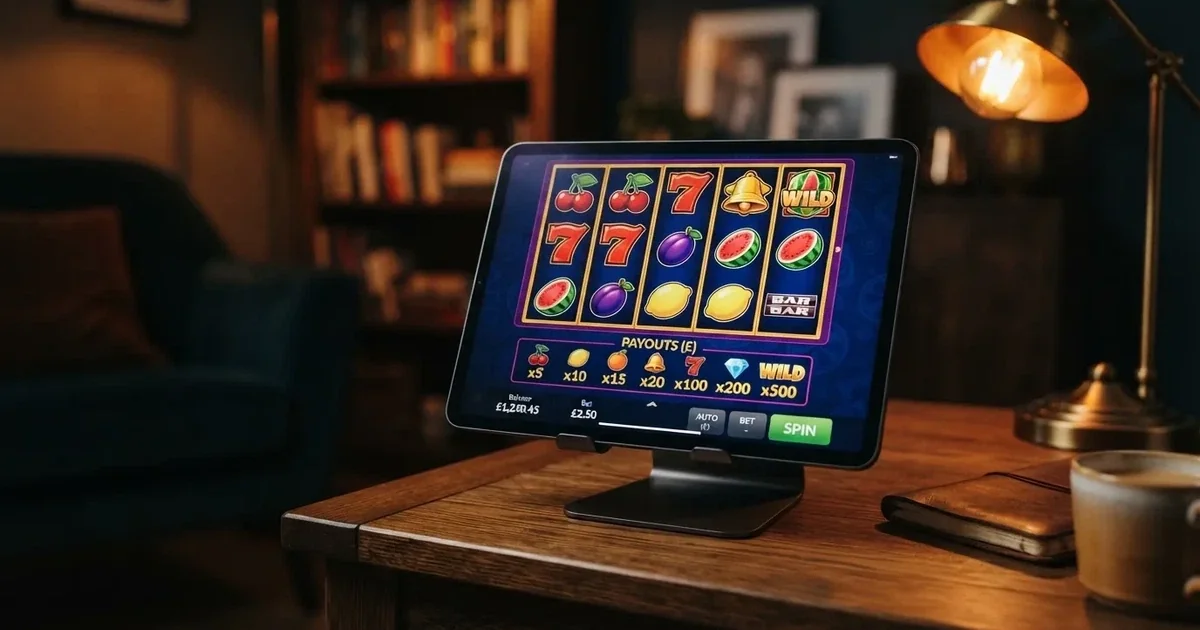
This article reads ten such sites side by side, using the Commission’s own public register as the licence source. Verified data current as of 23 September 2026 and cross-checked against the Gambling Commission’s public register of gambling businesses.
Table of Contents
- Betsoft at a glance: the provider behind the slots
- How ten UK-licensed casinos stack up on Betsoft support
- What the Gambling Commission’s public register looks like on 2026
- Why the UK legal frame shapes a Betsoft comparison
- Responsible gambling at the ten brands on this list
- Cryptocurrency and anonymity at UK-licensed Betsoft casinos
- Deposit, withdrawal and payout speed on Betsoft slots
- Bonuses and free spins tied to Betsoft slots
- Mobile browser play for Betsoft slots
- Reading a Betsoft paytable
- What Betsoft slots look like under the 2025 stake and spin rules
- The wagering cap in practice: where the new rule bites
- A note on the offshore “Betsoft not on GAMSTOP” market
- How the ten operators compare on the matters that matter
- What a player leaves behind at an unlicensed site
- A note on tax
- A short reading list for the Betsoft-curious UK player
- Closing the comparison
- Frequently asked questions
Betsoft at a glance: the provider behind the slots
Betsoft Gaming was founded in 2006 and, on its own site, frames its work as pioneering slot games that raised player expectations for quality and engagement. The catalogue now spans more than 200 RNG titles covering slots, table games, video poker and specialty releases — a sizeable library by any measure, though a long way short of the multi-thousand rosters carried by the largest aggregators. Recent releases lean on a branded “THE” series of narrative-driven slots, with titles such as THE VIP, THE Game Show, THE Oil Barons, THE Governor and THE Robbery, alongside Good Girl Bad Girl 2 and Gold Nugget Rush 2.

For UK distribution, the relevant technical hook is the company’s Great Britain licence: a trading entity filed as Bet Software (PT)Y Ltd holds an active Gambling Commission Remote Gambling Software licence, number 050689-R-328022-004, in force since 21 February 2018. That licence lets Betsoft supply its games to GB-licensed operators; it does not, on its own, let any casino take a UK customer. Each casino still needs its own remote casino operating licence, and that is the line this comparison sits on.
On certification, Betsoft lists approvals from the Italian Customs and Monopolies Agency (ADM), Gaming Labs International (GLI) and Quinel for RNG testing. Three independent test houses are a reasonable spread for an established studio; the value of those marks is that they let the licensed UK casino integrate the games without running its own certification pass on every title.
How ten UK-licensed casinos stack up on Betsoft support
The headline shelf of this page. Ten brands sit on the Commission’s public register of gambling businesses with an active remote casino operating licence. Each is verified there as of 18 September 2026. Where two brands share a licence account (Ladbrokes and Virgin Games share licensees with others on the list), they are written here as the distinct player-facing brands the Commission lists them as — the licence file is shared, the brand experience is not.
The ten Betsoft-carrying UK licensees at a glance
| Brand | Licence holder and GB remote casino licence | Domain status on the register | Betsoft support |
|---|---|---|---|
| Betfred (Betfred.com) | Petfre (Gibraltar) Limited · 039544-R-319290-010 | Active | — |
| Jackpotjoy (Jackpotjoy.com) | Gamesys Operations Limited · 038905-R-319430-022 | Active | — |
| William Hill | WHG (International) Limited · 039225-R-319373-015 | Active | — |
| kwiff (Kwiff.com) | Eaton Gate Gaming Limited · 044448-R-323408-017 | Active | — |
| PokerStars (Pokerstars.uk) | Stars Interactive Limited · 039108-R-319334-026 | Active | — |
| Ladbrokes (Ladbrokes.com) | LC International Limited · 054743-R-330863-014 | Active | — |
| Paddy Power | PPB Games Limited · 039411-R-319335-010 | Active | — |
| Unibet (unibet.co.uk) | Platinum Gaming Limited · 045322-R-324275-019 | Active | — |
| Virgin Games | Gamesys Operations Limited · 038905-R-319430-022 | White-label | — |
| Casumo (Casumo.com) | Recro Limited · 061549-R-336718-002 | Active | — |
The “—” on Betsoft support is not editorial squeamishness: it reflects what the Commission’s public register actually publishes. The register confirms that a domain is licensed; it does not list which game providers are integrated. The fairest thing this page can do is name the licence status and decline to make up a coverage claim the register does not back. Where a brand’s own site advertises Betsoft titles, that is a marketing statement and is read as such.
The white-label status on Virgin Games is worth flagging because it carries a real distinction. A white-label domain trades under another operator’s licence account; the licence holder is the same Gamesys Operations Limited that runs Jackpotjoy. The Commission treats both domains as covered by the same underlying licence, but the player-facing experience, the bonus terms and the customer service routing can all be configured separately by the white-label partner. Two brands on the same account are not two separate licences.
Betfred — the high-street bookmaker’s casino room
Betfred runs on the Petfre (Gibraltar) Limited licence, account 39544, with the active remote casino operating licence 039544-R-319290-010. The brand sits on the register as an active domain of that account. Its casino room carries slots from a spread of studios rather than a Betsoft-exclusive lobby; the comparison-relevant fact here is the licence status and the deposit flow. As a high-street bookmaker first, its identity-verification process is mature and its cashier settles through the standard UK rails — debit card, bank transfer and a small set of e-wallets. The £5-per-spin ceiling for over-25s applies to every slot on the site, Betsoft included, and Betfred’s safer-gambling tools sit at the level the LCCP requires.
Verdict: a Betsoft session here inherits the licence and the customer-protection layer that comes with it; the trade-off is the casino lobby being one product line among several rather than the headline.
Jackpotjoy — bingo-first brand with a slot back-catalogue
Jackpotjoy sits on Gamesys Operations Limited, account 38905, with active remote casino operating licence 038905-R-319430-022. The same account carries Virgin Games as a white-label domain. Jackpotjoy’s identity is rooted in bingo, and its slot offering has grown as an adjunct rather than as the centrepiece; the relevant point for a Betsoft-curious player is that the licence, the GAMSTOP enrolment and the safer-gambling tools are all in place, and the cashier supports debit card and the standard e-wallets. The brand’s appeal for slots is genuine but quieter than for bingo rooms.
Verdict: the licence is the same Gamesys licence as Virgin Games, but the player experience is its own — lighter on bingo-hall atmosphere than its sister brand would suggest, more conservative on slots than a slot-first operator.
William Hill — the legacy bookmaker’s slot catalogue
William Hill is filed on the register as an active domain of WHG (International) Limited, account 39225, holding active remote casino operating licence 039225-R-319373-015. The casino product sits alongside a long-established sportsbook; the slot lobby is one of the deeper catalogues a UK player can reach. The site runs the standard UK verification flow on first deposit, supports debit card and bank transfer, and uses GAMSTOP at the level the Commission requires. William Hill’s own casino pages tend to frame slot themes broadly, so a Betsoft-curious player is likely to find a handful of Betsoft titles among many others rather than a curated set.
Verdict: licence, safer-gambling layer and cashier are all in order; the Betsoft slot selection is a few titles inside a much wider lobby, not a feature wall.
kwiff — the smaller, sharper-campaign brand
kwiff sits on Eaton Gate Gaming Limited, account 44448, with active remote casino operating licence 044448-R-323408-017. It is a newer account on the register than the legacy bookmakers and has built its identity around promotional mechanics rather than a deep slot library. Its safer-gambling and GAMSTOP layers are present at the standard Commission level, and the verification flow runs on first deposit. For a player whose interest in Betsoft is incidental rather than central, the trade-off is a smaller lobby in exchange for a marketing-led experience.
Verdict: the licence status is clean and the GAMSTOP integration is mandatory at every Commission licensee; the smaller slot catalogue means a Betsoft session here is one of many choices rather than the headline product.
PokerStars — poker-first, with a casino wing
PokerStars runs on Stars Interactive Limited, account 39108, with active remote casino operating licence 039108-R-319334-026. The site’s centre of gravity is poker, and the casino product is built around that core audience. A player arriving for a Betsoft session here is using the casino wing of a poker-first operator: the licence and safer-gambling scaffolding are the Commission’s standard, and the cashier takes debit cards, bank transfer and a closed set of e-wallets with credit cards ruled out. The slot library covers the usual multi-studio spread.
Verdict: a casino visit to a poker-first operator; the licence file is independent of every other brand on this list, and the safer-gambling layer is the Commission’s stock provision.
Ladbrokes — high-street heritage, white-label neighbour under the same licence
Ladbrokes is filed on the register as an active domain of LC International Limited, account 54743, holding active remote casino operating licence 054743-R-330863-014. The same licence account covers the wider LC International estate — Ladbrokes, Coral and Gala Bingo all sit under this one account, though each runs as a separate player-facing brand. The casino product is a long-established one and the slot lobby carries the standard multi-studio spread. The relevant comparison point is that a Betsoft session here inherits the licence, the cashier and the safer-gambling layer common to all three brands on the account.
Verdict: a casino room under a heritage licence; the Betsoft selection sits within the wider multi-studio lobby, and the wider LC International family on one licence means promotions and limits can be tuned per brand even within a single account.
Paddy Power — the Irish-rooted brand with a UK casino arm
Paddy Power sits on PPB Games Limited, account 39411, with active remote casino operating licence 039411-R-319335-010. The brand’s identity sits across sport and casino, and the casino room carries the multi-studio slot spread a UK player would expect. The verification flow runs on first deposit, GAMSTOP applies at the mandatory Commission level, and the cashier is the standard UK set. A Betsoft session here runs on the same licence and safer-gambling rules as every other entry on this list.
Verdict: a casino product under a heritage sport brand; nothing in the licence or the safer-gambling layer distinguishes it from the rest of the ten for a Betsoft-curious player.
Unibet — multi-jurisdiction brand with a UK-licensed arm
Unibet runs on Platinum Gaming Limited, account 45322, with active remote casino operating licence 045322-R-324275-019. The same parent operates under other licences in other jurisdictions; for UK customers, the relevant file is the Platinum Gaming one. The casino room carries a multi-studio slot lobby and the verification flow sits on first deposit. Safer-gambling tools are at the Commission’s stock level, and GAMSTOP applies as it does everywhere else. The wider Unibet estate gives the brand international visibility, but the UK player is governed solely by the Commission licence file.

Verdict: a UK casino room inside a wider international brand; the Betsoft slot selection sits within a multi-studio lobby and the UK regulatory framework applies in full.
Virgin Games — the white-label case
Virgin Games is filed on the register as a white-label domain of Gamesys Operations Limited, account 38905, holding active remote casino operating licence 038905-R-319430-022. That is the same account Jackpotjoy sits on. A white-label site trades under another operator’s licence file, and the player-facing experience — bonus terms, customer service routing, slot lobby composition — is configured by the white-label partner rather than by the licence holder. The Commission’s register lists Virgin Games as a white-label domain and not as an active domain in its own right, which is the technical point that distinguishes it from the other nine.
Verdict: a brand experience configured by the white-label partner under a shared Commission licence; the safer-gambling and verification layers are the same as on the active-domain brands on this list, but the operator configuration differs.
Casumo — the casino-first brand with a distinct product voice
Casumo sits on Recro Limited, account 61549, with active remote casino operating licence 061549-R-336718-002. The brand is casino-first rather than bookmaker-first, which gives the slot lobby a more central role in the site identity. The licence, safer-gambling and GAMSTOP layers are the Commission standard; the verification flow sits on first deposit. For a player whose interest in Betsoft is the headline reason for a visit, a casino-first site tends to give that player more direct paths into slot features than a brand whose casino is one product line among several.
Verdict: a casino-first UK-licensed brand; the slot lobby is the centre of the site, the licence file is its own, and the safer-gambling layer is the Commission standard.
What the Gambling Commission’s public register looks like on 2026
The register this comparison sits on is the Gambling Commission’s public register of gambling businesses, downloadable in CSV and Excel form from the Commission’s site. As of 18 September 2026, the register listed 139 businesses holding an active remote casino operating licence. Each business is identified by an account number and holds at least one licence; the register also records each website under the licence account that runs it, with a status of Active, Inactive or White Label. On that date the register held 1,065 active and 361 white-label domain entries, so the 139 licensees together carry a far wider player-facing footprint than the headline account count suggests.
A remote casino licence number on the register has the form account-R-number-suffix: the leading six digits repeat the licence holder’s account number, the “R” marks a remote (online) licence, and the suffix is the licence’s individual sequence number. That is why Ladbrokes’ licence begins 054743-R-330863-014 — the 054743 is LC International Limited’s account number, the R marks a remote licence, and 330863-014 is its individual licence record. The shape lets a reader trace any licence number on this page back to its account on the public register without further lookup.
The register’s role in any comparison is straightforward: it confirms whether a brand is licensed at all, who holds the licence, and under what status a given domain runs. It does not publish a list of integrated game providers. That is why the “Betsoft support” column above carries an em-dash for every row: the register is silent on provider coverage, and an honest comparison stays silent there too.
Why the UK legal frame shapes a Betsoft comparison
The Gambling Commission (UKGC), sponsored by the Department for Culture, Media and Sport, regulates under the Gambling Act 2005, which covers Great Britain (England, Scotland and Wales) and not Northern Ireland. Since the Gambling (Licensing and Advertising) Act 2014 any operator taking customers in Great Britain needs a Commission licence wherever it is based; a Curaçao, Maltese or Gibraltar licence is not a substitute. Online casino is a licensable activity, and the public register is the whole test of whether a brand holds a licence.
The minimum age is 18, and name, address and date of birth are verified before the first deposit or any play (since 7 May 2019). Identity verification is a feature of every licensed site; it is not optional and it is not a paid extra. Anonymous play is not possible at a licensed site, and any site marketing itself as “no verification” sits outside the UK regulatory perimeter. From 31 October 2025 operators must prompt a customer to set a financial limit before the first deposit, and there is no state-set deposit or loss ceiling — the limit is one the customer chooses, prompted by the operator.
Online slots carry a maximum stake per game cycle. From 9 April 2025 the stake is £5 for players aged 25 and over; from 21 May 2025 the stake is £2 for 18-24-year-olds. That cap is built into every Betsoft slot running on a UK-licensed site, and it removes the high-stake-spin play that some non-UK markets still allow. From 31 October 2021 auto-play is banned, no slot spin may be faster than 2.5 seconds, and “losses disguised as wins” — celebratory visuals on a net-loss spin — are also banned. Those three rules together re-shape what a Betsoft session looks like compared with the same title running under a less restrictive regime.
Credit cards have been banned for gambling since 14 April 2020, including credit cards routed through e-wallets. That rule closes off a payment route some non-UK sites still offer; for a UK player on a licensed site, the cashier is debit cards, bank transfer and the closed set of approved e-wallets.
Responsible gambling at the ten brands on this list
Every Commission licensee must participate in GAMSTOP, the national online self-exclusion scheme, as a mandatory condition of every online licence since 31 March 2020. GAMSTOP periods are six months, one year or five years and cannot be cancelled early. Once a player has registered with GAMSTOP, they cannot open an account at any of the ten brands on this list, regardless of which bonus terms the brand is running. The brand’s identity-verification flow ties into GAMSTOP at the registration stage, so a self-excluded player does not reach the cashier.
Financial vulnerability checks run at £150 net deposits in a rolling 30 days (from 28 February 2025) using public data only; the wider financial risk assessments have been announced but are not yet in force. From 31 October 2025 operators must prompt a customer to set a financial limit before the first deposit. The National Gambling Helpline (run by GamCare) and GambleAware are the public-facing support routes; a player who wants help reaches them directly, and the operator is required to signpost them.
The important counter-case here is the cluster of search terms built around “not on GAMSTOP”. A site claiming to carry Betsoft slots outside GAMSTOP cannot, in practice, be a UK licensee: GAMSTOP is a mandatory condition of every Commission licence, and a licensed site has no mechanism to opt out. A site marketing itself as “Betsoft not on GAMSTOP” is one that sits outside the UK perimeter, and a player on it has no Commission complaints route, no GAMSTOP enrolment and no approved ADR. The Commission can disrupt such sites — cease-and-desist notices, search-engine delisting, payment and hosting referrals — but it has no power to block them at ISP level. Providing gambling to people in Great Britain without a licence is an offence under section 33 of the Gambling Act 2005; the offence is the operator’s, not the player’s, but the player pays the practical price in lost protection.
Cryptocurrency and anonymity at UK-licensed Betsoft casinos
The cluster of terms built around “Betsoft crypto” and “Betsoft no verification” deserves a careful read. At a Commission-licensed site, identity verification runs on first deposit (since 7 May 2019), and the cashier does not support cryptocurrency as a deposit method. A UK player cannot deposit Bitcoin or any other cryptocurrency at Betfred, Jackpotjoy, William Hill, kwiff, PokerStars, Ladbrokes, Paddy Power, Unibet, Virgin Games or Casumo and have that deposit settle against a Commission licence. Where a brand markets itself as a “crypto casino with Betsoft slots”, the cleanest reading is that the brand is unlicensed for UK purposes and sits outside the GAMSTOP perimeter.
The honest position is that cryptocurrency and anonymity are features of the offshore Betsoft market, not the UK one. A UK player who wants both is choosing to leave the regulatory perimeter and the protections it carries: GAMSTOP enrolment, the Commission’s complaints route, ADR approval, the credit-card ban, the £5 / £2 stake cap and the 10x wagering ceiling. The list of protections given up is longer than the list of features gained.
Within the licensed perimeter, the deposit rails are debit cards, bank transfer and the closed set of approved e-wallets. None of those routes is anonymous. The 7 May 2019 verification rule is a feature, not a bug, for players whose concern is being able to complain to a regulator if a brand mishandles a payout.
Deposit, withdrawal and payout speed on Betsoft slots
The Commission does not publish a payout-speed league table, and the public register is silent on cashier terms. The general UK pattern is debit cards and bank transfer settle withdrawals in one to three working days; e-wallets, where supported, settle same-day once the verification flow is complete. Every brand on this list has to run identity verification before the first withdrawal, so a player who has not yet completed verification cannot use speed as a tiebreaker — the verification step dominates the first withdrawal, and only the second and later withdrawals show a brand’s actual settlement speed.
The Commission’s enforcement focus is on the rules around the cashier, not the brand-level timings: the credit-card ban (since 14 April 2020) applies across the perimeter, and any brand offering credit-card gambling to UK customers is breaching its licence conditions. Players who value fast payouts should treat the verification flow as the binding constraint rather than the brand, because every licensed site runs that flow.
The minimum deposit varies by brand and by payment method, but the upper bound is set by the customer’s own chosen financial limit. From 31 October 2025 the operator must prompt that limit before the first deposit; the customer can set a low limit, a high limit or zero, and the operator records the choice. The state does not impose a ceiling; the operator does not impose a ceiling; the customer does. That is the shape the LCCP requires and every brand on this list runs it.
Bonuses and free spins tied to Betsoft slots
The 19 December 2025 rule sets a 10x cap on wagering requirements and bans mixed-product bonuses such as a sports bet that yields casino spins. That cap is the most important single fact about any welcome offer at a UK-licensed site, because it bounds what any bonus can ask of a player. A bonus with a 10x wagering factor is the worst the licensed market can offer; a bonus with a 5x or 3x factor is materially softer, and the difference shows in how long a player has to keep playing before any winnings convert to withdrawable cash.
A worked band, using the 10x cap and a representative bonus, looks like this. Assume a welcome bonus of £100. At the 10x wagering cap, the required turnover is £100 × 10 = £1,000. At a stake of £1 per spin, that turnover covers 1,000 spins. At a stake of £5 per spin (the £5 cap for over-25s), it covers 200 spins. A bonus of £50 halves both bands — £500 turnover, 500 spins at £1 or 100 spins at £5. A bonus of £200 doubles them — £2,000 turnover, 2,000 spins at £1 or 400 spins at £5. The arithmetic is mechanical; the editorial point is the band. A player clearing a £100 bonus at £5 per spin is committing to roughly 200 spins of a Betsoft title, and that is the maximum the new rules allow any licensed offer to demand. The same bonus at £1 per spin asks for 1,000 spins, which is five times the play but a fifth of the stake per spin.
The key assumption in that band is that only the bonus amount is wagered, and that the wagering requirement is met in full. Many bonuses restrict which slots count toward wagering (sometimes Betsoft titles are excluded entirely), impose a max-cashout cap on bonus-derived winnings, or set a time limit on clearance. Those terms move the band in either direction: a bonus that excludes Betsoft slots is not really a Betsoft bonus, regardless of the headline. A player comparing two offers should look at the £-per-spin figure, the slot eligibility list and the time limit together rather than at the headline bonus amount alone.
Free spins tied to Betsoft slots arrive in two shapes. The first is a fixed number of spins at a fixed stake per spin, with whatever the spins yield carried as bonus funds subject to the 10x wagering cap (or lower). The second is a no-deposit free-spins bundle, which carries no deposit requirement but still converts winnings to bonus funds. Both shapes are within the Commission’s rules; neither is exempt from the wagering cap. A “200 free spins” headline without a stake per spin or a wagering factor is a headline that needs to be read with the small print open.
Mixed-product bonuses — bet on sport, get casino spins, or vice versa — have been banned since 19 December 2025. The ban closes a long-running promotional route; a UK player who used to enjoy a sportsbook bet that yielded a slot spin bundle no longer sees that offer at any Commission licensee. The shape is gone, not just retuned.
Mobile browser play for Betsoft slots
Betsoft’s catalogue is built in HTML5 and runs in mobile browsers without a dedicated download. The Commission’s public register is silent on which brands offer native apps versus mobile browser play, but the licence conditions cover both modes; a player on a phone at any of the ten brands on this list is on a Commission-licensed product regardless of whether the brand wraps the experience in an app or a browser tab. The stake cap, the 2.5-second minimum spin interval, the auto-play ban and the “losses disguised as wins” ban all apply to mobile sessions.
The practical shape of mobile play is that the slot grid scales to the screen, the controls collapse to a touch-friendly layout, and the cashier fits inside a portrait-mode browser tab. Where a brand offers a native app, the app is a wrapper around the same HTML5 game; the licence and the safer-gambling layer do not change. Where a brand runs browser-only, the slot works identically inside Chrome, Safari or Firefox on a current phone. The performance ceiling is set by the phone and the connection rather than by the brand.
The relevant comparison point is not which brand has the slickest mobile UI; it is that mobile play is a feature of every UK-licensed Betsoft session regardless of the brand. A player whose interest in Betsoft is the slots themselves, not the brand identity, is well served by mobile browser play on every entry on this list.
Reading a Betsoft paytable
Betsoft’s catalogue spans hundreds of titles and the studio’s website groups them into a few broad families: classic three-reel slots, five-reel video slots with feature rounds, and the “THE” series of narrative-driven releases. The slots carry different volatility profiles — a high-volatility slot pays less often but in larger amounts, a low-volatility slot pays more often in smaller amounts — and the player-facing description is usually on the slot’s own information page. The Commission’s public register does not publish per-title volatility data, and Betsoft’s own site does not always publish an RTP figure in the same place; a player who wants the RTP for a specific title is reading the in-game paytable or the studio’s own information page rather than a regulator’s file.
A useful player-side framework is to treat a Betsoft slot’s paytable as the only authoritative source on its own numbers. The headline figure on a comparison site (“96% RTP”, “high volatility”) is a transfer from the paytable; the paytable itself is what runs on the screen. Where a comparison site gives a volatility class for a Betsoft title, that class is a reading of the paytable, not a Commission-published figure.
What Betsoft slots look like under the 2025 stake and spin rules
The £5 stake cap for over-25s and the £2 cap for 18-24s are both per game cycle — every spin, not every session. The 2.5-second minimum interval means a single spin cannot be rushed, even at maximum stake. Auto-play is banned, so a player cannot set a session to run itself. “Losses disguised as wins” are banned, so a slot that would have celebrated a net-loss spin with confetti under a less restrictive regime now plays the spin straight.
For a Betsoft session, those rules interact with the studio’s house style in a particular way. Betsoft’s narrative-heavy “THE” series uses cinematics and feature rounds that play out across several spins; the 2.5-second interval slows the rhythm of those feature rounds but does not change their structure. A free-spins round inside a Betsoft slot runs at the same interval as a base-game spin, which lengthens the time-to-completion for a feature but does not alter the expected return. The stake cap is the bigger lever: a player whose bankroll supported £10 spins now operates at half that ceiling, and the relative cost of a feature round has roughly halved.
The wagering cap in practice: where the new rule bites
The 19 December 2025 10x wagering cap closes the long tail of bonus terms that used to sit in the 30x-60x range at UK-licensed sites. A 10x cap means a £100 bonus asks for £1,000 of qualifying turnover at most. The cap does not standardise bonus amounts — a brand can still offer a £10 bonus or a £200 bonus — and it does not standardise the slot eligibility list or the max-cashout cap on bonus-derived winnings. Those terms still vary by brand and still need to be read.
The bite is in the worst-case requirement. A player comparing two welcome offers at the same headline figure (£100 bonus, say) no longer has to fear that one carries a 50x wagering factor and the other a 10x one. Both carry 10x at most. The differentiator moves to the slot eligibility list (does the bonus count Betsoft titles?), the max-cashout cap (is there a ceiling on bonus-derived winnings?) and the time limit (how many days does the player have to clear the turnover?). Those three terms are where two offers at the same headline now diverge.
A note on the offshore “Betsoft not on GAMSTOP” market
The terms a player actually searches — “Betsoft slots not on GAMSTOP”, “Betsoft casino without verification”, “Betsoft no verification casinos” — describe a market that exists, and that market sits outside the UK perimeter. A site in that market carries a Curaçao or similar non-UK licence, runs its own verification flow (or none), and accepts cryptocurrency deposits. It does not enrol the player in GAMSTOP and does not offer a Commission complaints route or an ADR.
The honest read is that the features on offer are real (cryptocurrency deposits, no verification, no GAMSTOP enrolment) and so is the trade-off (no Commission complaints route, no ADR, no LCCP-compliant safer-gambling layer, no £5 / £2 stake cap, no 10x wagering cap). The Gambling Act 2005 makes it an offence under section 33 to provide gambling to people in Great Britain without a Commission licence; the offence is the operator’s, not the player’s, but the player carries the practical cost in lost protection. A player whose interest is Betsoft slots at a Commission-licensed site has ten brands on this list to choose from; a player whose interest is the offshore feature set has chosen a different market, and the comparison stops being a comparison.
How the ten operators compare on the matters that matter
The table at the top of this page is the comparison shelf. It confirms licence status and domain status on the Commission’s register; it does not, and cannot, confirm per-brand Betsoft coverage, because the register does not publish that data. A reader who wants a brand-by-brand Betsoft coverage map is reading a marketing claim from the brand itself, not a regulator’s file, and that distinction matters.
What the register does publish — the licence number, the account number, the licence holder, the domain status — is the spine of any UK-facing comparison. Every brand on this list is licensed; every brand runs GAMSTOP; every brand runs identity verification on first deposit; every brand is bound by the £5 / £2 stake cap and the 10x wagering ceiling. The comparison between brands runs on the terms the register does not publish: the slot lobby composition, the bonus terms, the cashier timings, the mobile UI, the brand voice. Those are choices a player makes after the licence check has cleared, and they are choices the register is not designed to make for the reader.
What a player leaves behind at an unlicensed site
A player choosing an offshore “Betsoft not on GAMSTOP” site is choosing to leave the Commission perimeter. The features gained are real: cryptocurrency deposits, no verification, no GAMSTOP enrolment. The features given up are also real, and they are the ones that tend to matter most when a payout goes wrong. The Commission’s complaints route is the formal channel for a player whose withdrawal is delayed or whose bonus terms have been mis-sold; an ADR is the next step. GAMSTOP is the channel for self-exclusion. Identity verification is what makes a complaint actionable — the Commission can hold a licensed site to account because the site knows who its customers are.
The honest framing is that the Commission’s perimeter is not a tax on play; it is a set of channels a player uses when the relationship with the operator breaks down. A player whose relationship never breaks down does not feel the perimeter; a player whose relationship does break down feels it hard. The offshore market’s feature set is appealing on first contact and is silent on what happens when the second contact goes wrong.
A note on tax
Players pay no tax on gambling winnings in the UK. Operators pay Remote Gaming Duty, raised from 21% to 40% from 1 April 2026, on their gross gaming yield. The duty is the operator’s; the player sees it as a feature of the licensed market rather than a cost on the payout. A player moving winnings offshore still pays no UK tax, but the receiving operator sits outside the Commission’s perimeter and the duty is irrelevant.
A short reading list for the Betsoft-curious UK player
The Gambling Commission’s public register of gambling businesses is the only authoritative source on whether a UK-facing casino holds a licence. It is downloadable in CSV and Excel form and is searchable online. Every licence number on this page can be traced there.
Betsoft’s own site is the authoritative source on the studio’s catalogue, certifications and recent releases. The Italian ADM, Gaming Labs International (GLI) and Quinel certifications are the studio’s published test-house approvals. The narrative-driven “THE” series is the studio’s own branding for its recent releases.
GAMSTOP is the authoritative source on self-exclusion; a player who has registered with GAMSTOP cannot open an account at any Commission licensee. The National Gambling Helpline (GamCare) and GambleAware are the support routes for players who want to talk.
Closing the comparison
Ten brands, one licence framework, one provider catalogue, three stake and bonus rules that bind every entry on the list. The licence status and the safer-gambling layer are the same across the ten; the differentiator is the brand experience a player chooses after the licence check has cleared. A Betsoft-curious UK player has the full licensed market to choose from; the offshore feature set is its own market and is not a comparison point on this page.
Frequently asked questions
Which licensed UK casinos carry Betsoft slots?
The Gambling Commission’s public register confirms a brand holds an active remote casino operating licence, but it does not list which game providers a brand integrates. Ten Commission licensees are verified on the register as of 18 September 2026 — Betfred, Jackpotjoy, William Hill, kwiff, PokerStars, Ladbrokes, Paddy Power, Unibet, Virgin Games and Casumo — and each is a candidate for Betsoft coverage in its own slot lobby. Per-brand provider lists come from the brand’s own site, not from the Commission.
Can I deposit with cryptocurrency at a UK-licensed site offering Betsoft slots?
No UK-licensed casino accepts cryptocurrency as a deposit method, because Commission-licensed cashiers run on debit cards, bank transfer and approved e-wallets only. Identity verification runs on first deposit (since 7 May 2019), so the cashier is not anonymous at a licensed site. A site marketing itself as a “crypto casino with Betsoft slots” sits outside the Commission perimeter and the protections it carries.
Do Betsoft slots come with their own welcome bonus or free spins?
Welcome offers at Commission-licensed sites are subject to a 10x wagering cap that took effect on 19 December 2025, and mixed-product bonuses are banned. Free-spin bundles attached to a Betsoft slot are permitted, but the spins’ yield typically converts to bonus funds subject to the same cap. The slot eligibility list, max-cashout cap and clearance time limit are the terms that distinguish one offer from another at the same headline.
How do Betsoft slots perform on a mobile browser?
Betsoft’s catalogue is HTML5 and runs in mobile browsers without a dedicated download. The £5 stake cap (over-25s) and the £2 cap (18-24s) apply per game cycle on mobile, and the 2.5-second minimum spin interval applies too. Whether a brand wraps the experience in a native app or a mobile browser tab, the licence and the safer-gambling layer do not change.
Can I try Betsoft slots in a demo mode before depositing?
Demo play is a feature of the studio’s HTML5 build and is offered by most Commission licensees for slots that are already integrated into their lobby. Demo play is not the same as real-money play and the safer-gambling layer does not apply to it. A player who wants to see a slot’s paytable before depositing is reading the in-game information page, not a regulator’s file.
Must a casino be Gambling Commission-licensed to offer Betsoft slots to UK players?
Yes. Every operator taking customers in Great Britain needs a Commission licence under the Gambling (Licensing and Advertising) Act 2014, regardless of where the operator is based. A Curaçao, Maltese or Gibraltar licence is not a substitute. Providing gambling to people in Great Britain without a Commission licence is an offence under section 33 of the Gambling Act 2005, and the player on such a site has no Commission complaints route, no ADR and no GAMSTOP enrolment.
Prepared by the jackpotslotsuk editorial staff.