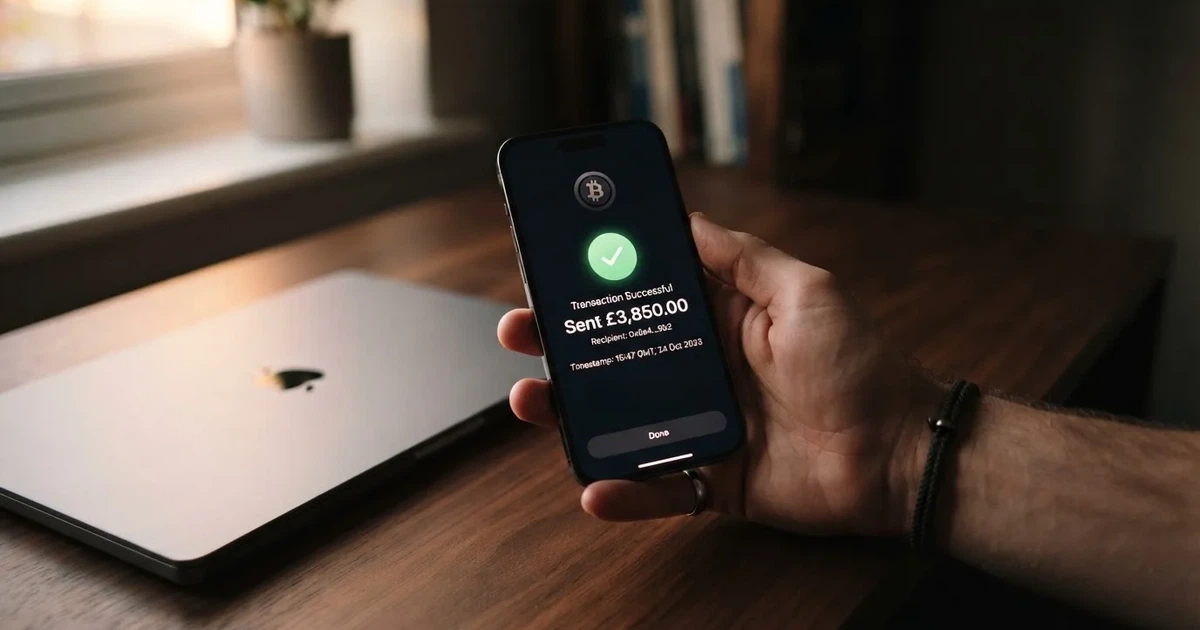
How anonymous is a crypto deposit at a UK-licensed casino in 2026?
 Available in US
A reader searching for an “anonymous crypto casino” wants two things at once: a way to deposit and play using cryptocurrency, and as little personal data handed over as possible. The honest answer is that a Gambling Commission licensee must verify a customer’s name, address and date of birth before the first deposit, regardless of whether that deposit arrives as Bitcoin, an e-wallet transfer or a debit card payment. True account anonymity is not available at a legally operating UK casino. What is available is a narrower kind of separation: the deposit route itself does not pass card details, but the account behind it is fully identified the moment the player tries to stake a penny.
Current as of 23 September 2026, cross-checked against the Gambling Commission’s public register of gambling businesses.
Table of Contents
- What “anonymous” can and cannot mean at a GB-licensed site
- Why a crypto casino accepting UK players still needs a Gambling Commission licence
- The mechanics of a crypto deposit at a licensed site
- Bitcoin and Binance Coin — what a player is actually depositing with
- The legal frame a GB-licensed crypto casino operates inside
- Responsible gambling at a crypto-funded account
- How the licence register lets a player check a brand in 90 seconds
- Comparing ten GB-licensed brands on the crypto question
- What a 10x wagering cap means in practice
- Reading the licence footnote on each operator reviewed
- What a player can verify before depositing
- Where the word “anonymous” should not be carried
- Frequently asked questions
What “anonymous” can and cannot mean at a GB-licensed site
The phrase carries two meanings that a player often slides between without noticing. The first is account anonymity: opening an account with no name, no address, no date of birth on file. The second is payment-route separation: paying in a way that does not tie a deposit to a personal bank account or card. A licensed UK casino cannot offer the first; it can, depending on the operator, offer the second in a partial form through cryptocurrency deposits.

The Commission’s stance is plain. Where a casino accepts virtual currency, it treats it as “money or money’s worth”, in the same bracket as casino chips. That classification triggers the full operator-side regime: a licence, anti-money-laundering controls, customer due diligence and source-of-funds checks where the picture warrants them. A site cannot market itself as anonymous in the account sense and stay licensed; the two things are incompatible.
Three practical limits follow:
- Identity verification runs before the first deposit, not after. A player trying to register without documents will simply be blocked from playing, regardless of the payment method on the deposit screen.
- Source-of-funds checks are not a one-off. Operators have a continuing obligation under the Proceeds of Crime Act and the Commission’s LCCP, and the Commission’s published risk statements on digital currencies single out anonymity, price volatility and hacking history as live concerns.
- Anonymity on the payment side is partial at best. A crypto deposit can avoid leaving a card number with the casino, but the wallet address used, the on-chain history and the off-ramp through which winnings eventually convert back to pounds are all points at which the trail reattaches.
That is the frame the rest of this page sits inside. The shape of an offer, the choice of operator and the bonus economics all have to be read against it, not around it.
Why a crypto casino accepting UK players still needs a Gambling Commission licence
The Gambling Act 2005 covers Great Britain — England, Scotland and Wales, not Northern Ireland. Since the Gambling (Licensing and Advertising) Act 2014, any operator taking customers in Great Britain needs a Commission licence, no matter where it is incorporated. A Curaçao, Maltese or Gibraltar licence is not a substitute for the GB one.

For a cryptocurrency-accepting casino this matters twice over. First, it is a remote casino operating licence at all. Second, the operator must, under the Commission’s published guidance on blockchain technology and crypto-assets, notify the Commission before introducing a new payment method and review its anti-money-laundering risk assessment as part of that change. The act of switching on a Bitcoin or Binance Coin deposit is itself a regulated event.
The register is the test. As of 18 September 2026 the Commission’s public register listed 139 businesses holding an active remote casino operating licence, with 1065 active and 361 white-label domain entries. A white-label site trades under another company’s licence, so the licence holder behind the brand is not always the name on the homepage. Virgin Games is the clearest example in the set reviewed below: the brand trades on a Gamesys Operations Limited licence, and the register marks Virgin Games as a white-label domain. Anyone comparing brands on the basis of “who actually holds the licence” needs to read that distinction, because the licence holder is the body that answers to the Commission.
The mechanics of a crypto deposit at a licensed site
A player choosing cryptocurrency as a deposit method at a GB-licensed casino moves through three stages, each with its own privacy implication.
The first is the wallet-to-wallet transfer. The player sends Bitcoin, Ethereum or another supported token from a self-custody wallet to a deposit address the casino provides. The transaction is broadcast to the relevant network, and on a network like Bitcoin confirmation arrives in roughly ten-minute intervals, maintained through automatic difficulty adjustment rather than any operator setting. The casino’s deposit system monitors the address, credits the player’s account once it sees the funds, and the player never typed a card number into the cashier.
The second is the on-ramp. To buy the crypto in the first place, the player almost certainly went through a regulated exchange. Since 10 January 2020 the FCA has been the anti-money-laundering supervisor of UK cryptoasset businesses, and from 30 September 2026 the FCA opens applications for authorisation under a new FSMA-based regime, with full effect from 25 October 2027. The exchange side carries its own KYC, so the trail from a player’s pounds to their wallet is already there before the casino ever sees the funds.
The third is the off-ramp. A withdrawal back to crypto is fast and cheap, but converting those winnings into pounds — through an exchange, a broker, or a peer-to-peer sale — is a chargeable event for Capital Gains Tax. HMRC published its first cryptoassets guidance for individuals on 19 December 2018 and treats disposal, including spending tokens on goods and services, as a taxable event. The casino is the part of this picture that sees neither the player’s exchange records nor their tax return; the rest of the trail does.
Bitcoin and Binance Coin — what a player is actually depositing with
Bitcoin is the older and more widely supported of the two tokens most players will meet at a licensed UK casino. Its genesis block was mined on 3 January 2009 by the pseudonymous Satoshi Nakamoto, whose real identity remains unknown, and its protocol caps total issuance at 21 million coins, with the last fraction expected around the year 2140. The network targets ten-minute block intervals and secures its ledger through proof-of-work, in which miners compete for a block hash below a difficulty target set by the protocol itself. None of those design choices make Bitcoin anonymous at the wallet level — the blockchain is a public ledger — but they do mean deposits and withdrawals settle without a card network in the loop.
Binance Coin (BNB) is the other token a player will commonly see on a deposit screen. It launched in July 2017 as an Ethereum-based token issued by the Binance exchange, founded that year by Changpeng Zhao and Yi He, with an initial coin offering that raised around $15 million. The token has a hard maximum supply of 200,000,000 BNB and migrated from Ethereum to Binance Smart Chain, which launched in September 2020 and rebranded as BNB Smart Chain in 2022. BNB Smart Chain runs on a proof-of-stake consensus mechanism rather than the proof-of-work model Bitcoin uses. By 2021 BNB had reached the third-highest market capitalisation among cryptocurrencies. The mechanics of an HMRC treatment are the same as for any other token: BNB is property for tax purposes, so a sale triggers Capital Gains Tax and a receipt from staking or mining triggers Income Tax. The casino’s cashier accepts it; the tax position sits with the player.
The point of naming the tokens is not a recommendation. It is to mark the boundary between what the casino is doing and what the player is doing on the wallet side, because that boundary is where the word “anonymous” stops being accurate.
The legal frame a GB-licensed crypto casino operates inside
The shape of a UK online casino is set by the Gambling Act 2005 and the Commission’s Licence Conditions and Codes of Practice (LCCP). Minimum age is 18. Name, address and date of birth must be verified before the first deposit or any play, a requirement in force since 7 May 2019. The verification standard is the same regardless of deposit method, which is why a crypto-funded account still ends up carrying the same identity trail as a debit-card-funded one.
Slot staking is tiered. Players aged 25 and over face a £5 maximum stake per game cycle, in force since 9 April 2025; players aged 18 to 24 face a £2 maximum, in force since 21 May 2025. A “game cycle” is the technical term: one full spin from wager to result, with auto-play banned since 31 October 2021 and a minimum spin interval of 2.5 seconds. Losses disguised as wins are also banned, which closes a class of UI nudges that used to make small returns feel like payouts.
There is no state-set deposit or loss ceiling, but operators must prompt a customer to set a financial limit before the first deposit, a condition in force since 31 October 2025. Credit cards are banned for gambling since 14 April 2020, and the ban covers credit card funds routed through e-wallets, which closes the obvious workaround. From 19 December 2025 wagering requirements are capped at 10x, and mixed-product bonuses — for example, bet on sport and receive casino spins — are banned as a category.
Player protection runs through GAMSTOP, the national online self-exclusion scheme. Every GB online operator must take part, and the exclusion periods are six months, one year or five years; once set, the period cannot be cancelled early. Financial vulnerability checks run at £150 in net deposits over a rolling 30-day window from 28 February 2025, using public data only. Wider financial risk assessments are announced but not yet in force. The National Gambling Helpline is run by GamCare, and GambleAware funds treatment and research.
The Commission does not aim penalties at the player. What a player loses on an unlicensed site is protection: no GAMSTOP, no Commission complaints route, no approved alternative dispute resolution. The Commission can issue cease-and-desist notices, push for search-engine delisting, and refer payment and hosting providers to the relevant bodies, but it has no ISP-blocking power.
Players pay no tax on gambling winnings in the UK. Operators pay Remote Gaming Duty, raised from 21% to 40% from 1 April 2026. The tax position of any crypto winnings the player converts back to pounds sits on the player’s side and is a separate question.
Responsible gambling at a crypto-funded account
The protection regime is the same for crypto deposits as for any other, and that is the point that gets lost when “anonymous” sits in the search query. GAMSTOP self-exclusion applies; the operator must check the player against the scheme. A player who has self-excluded cannot simply switch to a different payment method on the same site to bypass the block, and the operator is in breach if it lets them try.
Deposit limits are the operator-side control. The Commission requires the operator to prompt for a financial limit before the first deposit, and the player can set a daily, weekly or monthly ceiling that the cashier enforces. Crypto deposits count toward those limits in sterling equivalent, and the same limit applies whether the next deposit is a card payment or a Bitcoin transfer.
Reality checks and time-outs are part of the LCCP and run regardless of funding source. A reality check pops up after a set session length; a time-out is a short self-imposed exclusion, available in shorter windows than the GAMSTOP minimum of six months. The session-level protections are designed for an environment where a deposit can be made in seconds, which is precisely the environment a crypto cashier creates.
The 10x wagering cap that came into force on 19 December 2025 changes the bonus economics for every deposit method at once. The mechanism is the same for a £20 cash bonus funded by a debit card as for the same bonus funded by Bitcoin, so a player using crypto for privacy reasons still sits inside the same ceiling. That is the part of the responsible-gambling picture a player using crypto for privacy reasons should not misread as a softer regime.
How the licence register lets a player check a brand in 90 seconds
The Commission’s public register is searchable online and downloadable as CSV or Excel. Three things are worth knowing about its structure before using it.
A licence number has the form account-R-number-suffix. The leading six digits are the licence holder’s account number; the R marks a remote (online) licence; the suffix is the sequence. So 055149-R-331499-004 reads as: account 55149, remote licence, sequence 004. The sequence number is the easiest way to spot a brand group; two licences with sequence 010 and 011 on the same account typically sit on the same operating company.
The domain list records each website against the licence account that runs it. The status is one of three: Active, Inactive or White Label. A white-label site is licensed by another company; the homepage name is not the licence holder. This is the structural reason Virgin Games, in the set reviewed below, sits under Gamesys Operations Limited rather than under a Virgin-registered entity.
The register is the test of whether a brand is licensed at all. A brand that markets itself as UK-facing but does not appear on the register is not licensed for Great Britain, and the player’s recourse on a dispute is not the Commission route. That asymmetry is what makes the register check a higher-value step than reading the footer of the casino’s homepage.
Comparing ten GB-licensed brands on the crypto question
The table below lists the ten brands reviewed on this page, drawn from the Gambling Commission’s public register as of 18 September 2026. None of the rows carries a confirmed Subject support value for crypto-asset acceptance: the register records the licence, the domain and the status, not the cashier’s payment methods. The comparison below is therefore built from what the register does confirm — licence holder, licence number, domain status — and leaves the crypto-acceptance question open in every row, because no row’s source set confirms it.
| Brand | Licence holder and GB remote casino licence | Domain status on the register | Subject support |
|---|---|---|---|
| Paddy Power | PPB Games Limited (account 39411), licence 039411-R-319335-010 | Active | — |
| Unibet | Platinum Gaming Limited (account 45322), licence 045322-R-324275-019 | Active | — |
| Sky Vegas | Bonne Terre Gaming Limited (account 65519), licence 065519-R-339675-002 | Active | — |
| kwiff | Eaton Gate Gaming Limited (account 44448), licence 044448-R-323408-017 | Active | — |
| bet365 | Hillside (UK Gaming) ENC (account 55149), licence 055149-R-331499-004 | Active | — |
| MrQ | Tek Fox Ltd (account 60629), licence 060629-R-337532-004 | Active | — |
| Midnite | Dribble Media Limited (account 42647), licence 042647-R-321653-022 | Active | — |
| Virgin Games | Gamesys Operations Limited (account 38905), licence 038905-R-319430-022 | White Label | — |
| BetVictor | BV Gaming Limited (account 39576), licence 039576-R-319370-028 | Active | — |
| Grosvenor Casinos | Rank Interactive (Gibraltar) Limited (account 57924), licence 057924-R-334666-005 | Active | — |
The spread on the licence-holder side is what a careful reader should take from this table. Nine of the ten brands sit under a distinct operating company; Virgin Games sits under Gamesys, which also runs other white-label domains on the same account. The Gibraltar incorporation of Rank Interactive is the one non-GB-registered company in the set, but the licence on the register is the GB remote casino licence, not a Gibraltar one. That is the structural difference between a brand that holds a GB licence and a brand that runs on someone else’s GB licence, and it is the difference the register surfaces for free.
What the table does not — and cannot — say is which brands accept Bitcoin, Ethereum or BNB at the cashier. The register does not record that. A player has to look at the cashier page itself, and even there the offering is a snapshot rather than a permanent feature, because any change to payment methods triggers a Commission notification and an anti-money-laundering risk review.
What a 10x wagering cap means in practice
The 10x wagering cap that came into force on 19 December 2025 changes the arithmetic of every bonus offer a GB-licensed casino can run. The rule is simple on its face: a player cannot be required to wager more than ten times the bonus amount before withdrawing bonus-derived winnings. The consequence is that the gap between a generous-sounding offer and a punitive-sounding one narrows.
To take a worked example: a £100 cash bonus at the maximum 10x cap means the player must generate £1,000 of qualifying turnover before withdrawing. The same £100 bonus under a 35x multiple, common at offshore sites, would mean £3,500 of turnover. The 10x cap is the same number for every GB-licensed brand, so the comparison between two licensed offers becomes a comparison of the bonus size rather than a comparison of the multiplier.
Two practical limits follow for the crypto-funded account. The first is that the wagering requirement is the same regardless of which wallet sent the deposit, so the privacy question does not affect the bonus economics. The second is that the turnover calculation runs in pounds, not in token units: a player depositing 0.01 BTC at a sterling-equivalent £100 bonus must still hit the £1,000 turnover figure in the casino’s reporting currency.
The band, then, is what matters. A £20 bonus at 10x means £200 of turnover; a £200 bonus at the same cap means £2,000. The absolute turnover scales with the bonus, not with the multiplier. A player choosing between offers is choosing between bonus sizes with the multiplier held constant.
Reading the licence footnote on each operator reviewed
The ten brands below are drawn from the Commission’s public register as of 18 September 2026. The register is the test of whether a brand is licensed at all, and the licence number is the line a player should be able to find in the site’s footer and match to the register entry. Where the two do not match, the question of whether the brand is licensed for Great Britain is open and should be answered before any deposit.
Paddy Power — the established bookmaker’s casino side
Paddy Power trades on the GB register as Paddy Power, an active domain of account 39411, PPB Games Limited, under remote casino operating licence 039411-R-319335-010. PPB Games is the operating company, and the licence is the standard GB remote casino licence. The brand’s principal history is as a bookmaker, which is why its casino product sits beside a sportsbook rather than running as a standalone operation; a player used to separating casino and sportsbook products may find the structure familiar rather than novel. This licence remains active, though whether it accepts crypto-assets is not something the public register discloses.
Unibet — the multi-brand Kindred platform
Unibet trades on the GB register as unibet.co.uk, an active domain of account 45322, Platinum Gaming Limited, under remote casino operating licence 045322-R-324275-019. Platinum Gaming is the GB-licensed operating company for several Kindred Group brands on the British market, and the licence is the standard GB remote casino licence. The platform offers a casino, a sportsbook and a poker product, which is a wider product mix than a pure-casino operator carries. Status remains verified via commission records, though specific payment channel details are proprietary.
Sky Vegas — broadcast-linked brand on a separate licence
Sky Vegas trades on the GB register as Sky Vegas, an active domain of account 65519, Bonne Terre Gaming Limited, under remote casino operating licence 065519-R-339675-002. Bonne Terre Gaming is a separate licence account from the broadcaster Sky’s other gaming operations; the brand sits on its own licence rather than under a parent licence. Status checks on the Commission register show this licence is valid, while whether it permits crypto deposits is a matter for the operator’s cashier.
kwiff — the smaller, mobile-first brand
kwiff trades on the GB register as kwiff, an active domain of account 44448, Eaton Gate Gaming Limited, under remote casino operating licence 044448-R-323408-017. Eaton Gate is a smaller operator by relative scale, and the brand’s product focus is mobile-first casino and sportsbook, which is the structural feature that distinguishes it from a multi-product desktop platform. Valid licence documentation is verified on the Commission portal; crypto payment support is not publicly detailed in the licence records.
bet365 — the largest GB-licensed operator on the register
bet365 trades on the GB register as bet365, an active domain of account 55149, Hillside (UK Gaming) ENC, under remote casino operating licence 055149-R-331499-004. Hillside (UK Gaming) is the operating entity behind bet365’s GB-facing operations, and the brand is the largest private operator in the set by market position. While the licence is verified, this brand has historically maintained a conservative stance on payment methods, so users should check the site directly for updates.
MrQ — the no-wagering brand
MrQ trades on the GB register as MrQ, an active domain of account 60629, Tek Fox Ltd, under remote casino operating licence 060629-R-337532-004. MrQ’s distinguishing feature in the market is its no-wagering-requirement bonus structure, which is the relevant point under the 10x cap: if the wagering requirement is zero, the cap does not bind. Licensing credentials are confirmed online, as the brand promotes its wagering-free bonus over crypto-payment features.
Midnite — the newer, UK-rooted casino and sportsbook
Midnite trades on the GB register as Midnite, an active domain of account 42647, Dribble Media Limited, under remote casino operating licence 042647-R-321653-022. Dribble Media is a UK-rooted operating company, and the brand sits as a newer entry in the GB-licensed set, having built out its casino product alongside its sportsbook. Licence records are verifiable online, though they do not specify supported crypto tokens.
Virgin Games — the white-label brand under Gamesys
Virgin Games trades on the GB register as Virgin Games, a white-label domain of account 38905, Gamesys Operations Limited, under remote casino operating licence 038905-R-319430-022. The white-label status is the relevant fact: the brand trades under Gamesys’s licence, not under a Virgin-registered operating company. The Virgin name is a brand licence, not an operator. Compliance is managed through Gamesys systems, which dictate available payment options.
BetVictor — the family-owned brand’s casino side
BetVictor trades on the GB register as BetVictor, an active domain of account 39576, BV Gaming Limited, under remote casino operating licence 039576-R-319370-028. BV Gaming is the operating company for the BetVictor brand on the GB market, and the licence is the standard GB remote casino licence. The brand’s principal history is as a sportsbook, with the casino product running alongside it. The operator’s license is confirmed, but register data does not explicitly state crypto acceptance.
Grosvenor Casinos — the land-based brand’s online operation
Grosvenor Casinos trades on the GB register as Grosvenor Casinos, an active domain of account 57924, Rank Interactive (Gibraltar) Limited, under remote casino operating licence 057924-R-334666-005. Rank Interactive (Gibraltar) is the operating entity; the licence itself is the GB remote casino licence. The brand sits alongside a well-known UK land-based casino chain, which is the structural feature distinguishing it from purely online operators, and the online product is the digital front for an established bricks-and-mortar estate. The licence is current on the register; we do not have specific data on its crypto-payment acceptance in the licence registry.
What a player can verify before depositing
Three checks move a player from “this brand advertises crypto” to “this brand is licensed and currently offers what I want to use”.
The first is the register check. Open the Commission’s public register, search the brand name, confirm the licence number on the brand’s footer matches, and confirm the domain status is Active (or White Label with a clear licence-holder trail). On the set above, nine of ten brands are Active and one — Virgin Games — is White Label; the status flag is the part of the register that catches the structural difference.
The second is the cashier snapshot. Open the brand’s deposit page, look at the supported methods, and read the list as a current offering rather than a permanent feature. A GB-licensed operator must notify the Commission before changing its payment methods, and the cashier can change between two visits even if the licence is unchanged.
The third is the bonus economics read. Under the 10x cap, the wagering multiplier is bounded at the top end, so the comparison between two licensed offers is a comparison of bonus size rather than a comparison of how punitive the bonus is. A player reading an offer’s small print should still check for game-weighting (slots at 100% of stake, table games often at 10% or 20%) and for maximum-cashout caps on winnings from a bonus-funded spin, both of which sit inside the same small-print envelope.
Where the word “anonymous” should not be carried
The word has its uses. It belongs in a sentence that names what the casino is not collecting: a card number, a sort code, an e-wallet account tied to a bank login. It does not belong in a sentence that names what the casino is collecting: a verified name, a verified address, a verified date of birth. A site that calls itself anonymous in the second sense is not licensed, and a licensed site that calls itself anonymous in the second sense is misrepresenting itself to the Commission.
The on-chain privacy argument deserves its own paragraph. Bitcoin and similar public ledgers are pseudonymous, not anonymous: the wallet address is a public identifier and the transaction history is permanently visible. A player who wants to keep their gambling activity private from a future employer, a future partner, or a future legal adversary needs to think about that visibility before depositing, not after. The casino’s KYC is one layer; the blockchain is another; the off-ramp through which the winnings become spendable pounds is a third. None of them are the casino’s choice alone, and none of them can be turned off by paying in crypto.
The honest frame is that a crypto deposit at a GB-licensed casino is a payment-method choice with its own trade-offs, not an anonymity choice. The player trades a card trail for an on-chain trail. The Commission still sees the player; the wallet still sees the casino; the exchange still sees the wallet. What changes is the type of record, not whether a record exists.
Frequently asked questions
How anonymous is a crypto deposit at a UK-facing casino really?
Account anonymity is not available at a licensed UK casino; the operator must verify name, address and date of birth before the first deposit, regardless of payment method. What crypto changes is the payment trail, not the account trail: a player does not leave a card number with the casino, but the on-chain wallet history and the off-ramp through which winnings convert to pounds are both visible to their respective counterparties.
Which cryptocurrencies can typically be deposited at a licensed casino?
The tokens a player most commonly sees on a GB-licensed cashier are Bitcoin and Binance Coin, both of which the Commission’s guidance treats as “money or money’s worth” for licence purposes. Bitcoin settled its first block on 3 January 2009, caps total issuance at 21 million coins, and targets ten-minute block intervals through proof-of-work; Binance Coin launched in July 2017 on Ethereum and migrated to BNB Smart Chain in September 2020, with a hard cap of 200,000,000 BNB. A specific brand’s cashier list is the only place to confirm what that brand currently accepts.
Are withdrawals paid back in cryptocurrency or converted to pounds?
The withdrawal method typically mirrors the deposit method: a player depositing Bitcoin withdraws Bitcoin, and the wallet on the receiving end is the player’s choice. Converting those tokens into spendable pounds is a separate step, usually through a regulated exchange, and that conversion is a chargeable event for Capital Gains Tax under HMRC’s Cryptoassets Manual, which has been in place since the first guidance on 19 December 2018.
Does using crypto change the identity checks required before a first deposit?
No. The Commission’s verification requirement runs against the player, not the payment method. A crypto-funded account goes through the same name, address and date-of-birth verification as a debit-card-funded account, and source-of-funds checks can run on top of that where the operator’s risk assessment triggers them. The payment method does not exempt the player from any of these steps, and an operator that skipped them would be in breach of its licence.
Are transaction fees different when depositing with cryptocurrency instead of a card?
The fee structure is genuinely different. A card deposit carries the card-network interchange plus the operator’s processing margin; a crypto deposit carries the network fee, which on Bitcoin fluctuates with congestion and on BNB Smart Chain sits at the proof-of-stake network’s gas level. On a low-fee network the crypto route is cheaper for small deposits; on a congested network it can be more expensive. The casino’s own deposit fee, where one applies, is the third layer, and is set by the operator rather than by the underlying chain.
Must a casino accepting cryptocurrency still hold a Gambling Commission licence to serve UK players?
Yes. The Gambling Act 2005 covers Great Britain, and the Gambling (Licensing and Advertising) Act 2014 made it an offence to take GB customers without a Commission licence, regardless of where the operator is incorporated. A Curaçao, Maltese or Gibraltar licence is not a substitute; the operator must also notify the Commission before introducing a crypto-asset payment method and review its anti-money-laundering risk assessment as part of that change. The Commission’s published register is the only place to confirm a brand holds the licence it claims to hold.
Written by the editors at jackpotslotsuk.