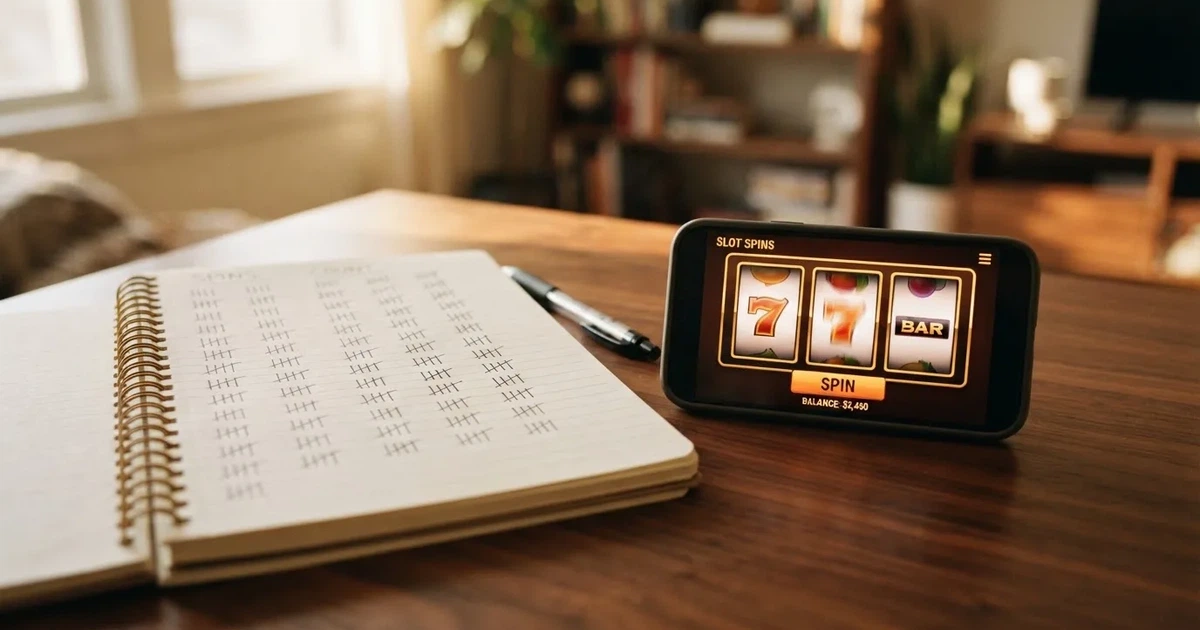
What 100 free spins with no deposit really amount to in the UK market
 Available in US
Data current as of 23 September 2026 and cross-checked against the Gambling Commission’s public register of gambling businesses.

A hundred free spins with no deposit sounds like the cleanest sample a casino can hand out — no money in, no risk on the punter’s side, the reels spin and whatever turns up turns up. The reality sits a little further down the page. The Gambling Commission has to license anyone offering such a promotion to UK players; since 19 December 2025 the wagering attached to any bonus winnings is capped at 10x; the spins themselves have a stake, a clock and a ceiling on what they can pay out; GAMSTOP self-exclusion covers the offer the same way it covers every other bet a licensed site takes. This page walks the practical shape of those rules across the GB-licensed landscape — not a list of places to play, but a working picture of what a “100 free spins, no deposit” offer is on a licensed UK site in 2026.
Table of Contents
- Safer gambling tools that apply to the offer
- How winnings from the spins move back to a bank account
- The bonus itself: 100 spins and what the wagering costs
- The licensed UK landscape at a glance
- Reading the regulation without the legalese
- What “100 free spins, no deposit” tends to mean in practice
- What to check on a specific operator before claiming
- What the regulator does — and does not — do
- Reading the bonus terms as a player, not as a marketer
- Frequently asked questions
Safer gambling tools that apply to the offer
A free-spin promotion is, legally, a bet the casino is placing on the player’s behalf using its own money. Every protection that applies to a deposit-funded spin applies here too, and the rules around them are tighter than most marketing suggests. GAMSTOP self-exclusion is mandatory on every Gambling Commission remote casino licence, and a player who has registered for six months, one year or five years cannot unlock that registration early — the operator cannot, the Commission cannot, the player cannot. The register runs at the customer level, not the site level, so a self-excluded account is self-excluded at every GB-licensed operator from the moment the exclusion begins.

A licensed operator will verify name, address and date of birth before the first deposit or any play, which means a self-excluded player cannot simply open a new account under another name to claim a free-spins offer. Since 7 May 2019 this check has been a condition of every online licence, and the operator that lets an unverified account play forfeits the licence, not the player. Where the data the operator holds does not match the document the player supplies, the account is suspended pending resolution rather than credited with free play.
A reality check pops up on every slot session regardless of how the spin was funded, with auto-play banned across the board since 31 October 2021. Each spin is required to take at least 2.5 seconds and the spin-stake ceiling set on 9 April 2025 (£5 for players aged 25 and over, £2 for 18-24) applies to the free-spin stake on the same game cycle. A “free” spin at £5 per cycle is therefore not free in the regulatory sense — it counts toward the stake limit on that title for that player.
Financial vulnerability checks trigger at £150 of net deposits in any rolling 30-day window, using publicly available data only. The check is on deposited funds, so a no-deposit free-spin offer does not by itself trip it; once any winnings are converted to withdrawable cash and the player starts moving money in and out, the threshold applies from the first pound. Players can also impose their own deposit limits, time-outs and self-exclusion through the responsible-gambling page on every GB-licensed site, and a casino that grants a free-spins bonus to a self-excluded or limit-flagged account is the operator in breach, not the player. The National Gambling Helpline (GamCare) and GambleAware carry the support side; the operator carries the duty.
How winnings from the spins move back to a bank account
The free spin itself costs the player nothing; the cost of moving whatever it produces back to a bank account is what the wagering requirement decides. Once the spins have run and any winnings sit as bonus funds, those funds have to be turned through the wagering requirement — capped at 10x since 19 December 2025 — before they become withdrawable cash. A bonus that credits £10 of winnings with a 10x cap means £100 of qualifying play before any of it can leave the site. The stake on those qualifying spins is the player’s money, not the house’s, and the house edge runs across it as on any other slot session.

The withdrawable cash, once cleared, sits in the casino cashier and can be sent out by bank transfer through the Faster Payments Service (running 24/7 since 2008, with most payments arriving instantly or within a couple of minutes, and the rare transfer taking up to two hours). Faster Payments sets a £1,000,000 per-transaction ceiling at scheme level, though individual banks frequently impose lower limits on their own customers. The casino end is the slower variable: a same-day cashier review is standard, and a withdrawal queued in the morning usually clears Faster Payments the same day, while one queued late on a Friday can wait until Monday morning. The Bank of England is not a direct participant in Faster Payments but oversees the system’s safety and stability and provides final settlement; Pay.UK operates the scheme.
Credit cards cannot fund the wagering that clears the bonus — the credit-card ban has covered all gambling since 14 April 2020, including credit cards routed through e-wallets. Apple Pay, AstroPay and other digital wallets sit on debit rails when they support a UK-licensed casino, and the wallet itself does not change the underlying card type; a credit card funded through Apple Pay is still a credit card for the purpose of the ban. Apple Pay protects card data through tokenization — the actual card number is replaced with a device-specific tokenised Device Primary Account Number and each transaction carries a dynamic security code. AstroPay’s UK entity, Larstal Limited, is an electronic money institution authorised by the Financial Conduct Authority under the Electronic Money Regulations 2011, so funds sitting in an AstroPay balance count as e-money rather than as a deposit with the casino. Bank transfer, debit card and any e-money wallet on the licensed side are the only routes a UK player can move money in and out; nothing else reaches the cashier.
Anonymous play is not available at a GB-licensed casino: name, address, date of birth and a verified payment method are all required before the first deposit or any play, which is also why a self-excluded player cannot route around the offer. The cashier, the GAMSTOP register and the identity check are the same gate, looked at from three sides.
The bonus itself: 100 spins and what the wagering costs
A 100 free-spins, no-deposit offer is a quantity of pre-set spins credited to a named slot title at a fixed stake per spin. The stake matters because it sets the wagering volume, and the wagering cap on that volume matters because it sets the clearing cost. Under the 10x cap that has been in force since 19 December 2025, the bonus winnings from a 100-spin batch are wagered at most ten times before they withdraw, regardless of which game the operator attaches them to. A title with a higher house edge makes that clearing volume cost the player more in expected loss; a lower-edge title costs less. The promotion is not “free” in any statistical sense — the spins themselves are funded, and the wagering volume funded by the player after them is the real cost.
The way to read the offer is in three pieces. The first piece is the stake per spin, which is set by the promotion and which counts against the regulatory game-cycle stake limit on the same title. The second piece is the wagering multiplier on the resulting winnings, capped at 10x and not negotiable inside a GB-licensed site. The third piece is the maximum cashout cap, which most operators impose on no-deposit free-spin winnings and which sets a hard ceiling on what the promotion can ever pay out — £50 is common, but the cap is operator-set and varies.
A worked band, using only the inputs a GB-licensed promotion actually carries. Assume a 100-spin batch at the standard promotional stake of £0.10 per spin on a 96% RTP slot, with the winnings clearing under the 10x cap and a maximum cashout ceiling set by the operator:
| Wagering scenario | Spins to clear | Stake per spin | Turnover required | Time to clear (5s/spin) |
|---|---|---|---|---|
| 10x cap, all bonus wagered | turnover ÷ £0.10 | £0.10 | bonus winnings × 10 | spins × 5 ÷ 3600 hours |
| 10x cap, partial playthrough | partial turnover | £0.10 | partial × 10 | partial spins × 5 ÷ 3600 hours |
The bonus cost is the expected loss across the wagering turnover, calculated as turnover × (1 − RTP). A 96% RTP game carries a 4% house edge, so £100 of clearing turnover on that title costs £4 of expected loss before the winnings become withdrawable. A lower-RTP title widens that figure; a higher-RTP title narrows it. The cap that matters is the operator’s own maximum cashout, because the wagering cost is paid whatever the cap is, and what the player finally walks away with is whichever of those two numbers is smaller.
The arithmetic is a statistical estimate over many spins under the stated assumptions — it is not a guaranteed outcome for any single session, and it promises no win, no payout and no return. The expected loss is what the offer costs on average; the variance around that figure is what any individual session experiences.
The single best measure a player has of how steep a no-deposit free-spin offer really is, is the ratio of maximum cashout to wagering volume. A promotion that caps cashout at £20 against £100 of clearing turnover is more expensive than one that caps cashout at £50 against the same turnover, because the expected loss is paid against a smaller ceiling. The headline “100 free spins, no deposit” carries none of that arithmetic in its wording — it carries the count of spins, the count being the part of the offer most likely to grab a reader and the part least likely to matter once the clearing conditions are on the page.
The licensed UK landscape at a glance
The Gambling Commission’s public register is the only document that decides who is licensed to offer 100 free spins with no deposit to UK players. On 18 September 2026 the register listed 139 businesses holding an active remote casino operating licence, with each licence number taking the form account-R-number-suffix — the leading six digits repeat the licence holder’s account number and the “R” marks a remote (online) licence. The register’s separate domain list tracks each website against the licence account that runs it, with a status of Active, Inactive or White Label — a white-label site trades under another company’s licence. On 18 September 2026 that domain list held 1065 active and 361 white-label entries, which is a useful reminder that a GB-licensed operator can run many more sites than the brand names that most readers will recognise.
| Brand | Licence holder and GB remote casino licence | Domain status on the register | Subject support |
|---|---|---|---|
| PokerStars | Stars Interactive Limited, 039108-R-319334-026 | Active | — |
| Betfred | Petfre (Gibraltar) Limited, 039544-R-319290-010 | Active | — |
| Betfair | PPB Games Limited, 039411-R-319335-010 | Active | — |
| bet365 | Hillside (UK Gaming) ENC, 055149-R-331499-004 | Active | — |
| Unibet | Platinum Gaming Limited, 045322-R-324275-019 | Active | — |
| Coral | LC International Limited, 054743-R-330863-014 | Active | — |
| Casumo | Recro Limited, 061549-R-336718-002 | Active | — |
| 888casino | 888 UK Limited, 039028-R-319297-014 | Active | — |
| kwiff | Eaton Gate Gaming Limited, 044448-R-323408-017 | Active | — |
| Midnite | Dribble Media Limited, 042647-R-321653-022 | Active | — |
The shape of the table matters as much as the rows. Every licence above is held by a different operating company, except that Coral sits under LC International Limited — the same account that also runs Ladbrokes and Gala Bingo. Several large names can share one licence account, so the count of 139 active licence holders is not the count of brand names a reader sees in an advert, and the count of 1065 active domains is wider still. What every row has in common is the GAMSTOP obligation, the 10x wagering cap on bonuses, and the 2.5-second minimum spin interval.
How the comparison reads
A reader looking at the table above is comparing ten GB-licensed operators across four columns, three of which carry the same value down every row — Active licence, Active domain, subject support marked as — because the public register does not separately annotate which operators are running a 100 free-spins, no-deposit promotion in 2026. The arithmetic differs from operator to operator only on the terms the operator sets inside the legal frame: the stake per spin on the promotional title, the wagering multiplier on winnings (capped at 10x), the maximum cashout ceiling and the expiry clock on the bonus. The register carries none of those terms; they sit on each operator’s own promotional page. The job of this page is to spell out the frame the register does carry, and to leave the per-operator promotional terms to the operators themselves.
Reading the regulation without the legalese
A 100 free-spins, no-deposit offer in 2026 sits inside a regulatory frame that is narrower than the marketing around it suggests. Three rules do most of the work, and they are worth holding in mind before any offer is claimed.
The first rule is the licence. Only a Gambling Commission licensee may offer such a promotion to a player in Great Britain, under section 33 of the Gambling Act 2005 — providing gambling to people in GB without a Commission licence is an offence, and a Curaçao, Maltese or Gibraltar licence is not a substitute. The Commission disrupts illegal sites through cease-and-desist notices, search-engine delisting and payment and hosting referrals, but it has no power to block at ISP level, so unlicensed sites do still load. What the player loses on those sites is protection rather than the bonus — no GAMSTOP coverage, no Commission complaints route, no approved ADR.
The second rule is the wagering cap. Since 19 December 2025 the wagering requirement attached to any bonus — including free-spin winnings — is capped at 10x, and mixed-product bonuses (bet on sport, get casino spins) are banned. The cap sits on the multiplier, not the stake, so a promotion that hands out 100 spins at a higher per-spin stake is not breaching the cap as long as the resulting bonus funds clear at no more than 10x.
The third rule is the payment ceiling. Credit cards have been banned for gambling since 14 April 2020, including credit cards routed through e-wallets. A no-deposit free-spin offer is funded by the house, but the wagering that follows is funded by the player, and any of that funding that passes through a credit card — including via Apple Pay or another wallet on top of a credit card — falls foul of the ban. The Gambling Commission estimated that around 800,000 UK consumers used credit cards to gamble in 2018, and found that 22% of online gamblers who used credit cards to gamble were classed as problem gamblers. The cap on stake per game cycle (£5 for 25+, £2 for 18-24) applies on the free-spin stake as on any other stake on the same title.
The fourth rule is identity. A player cannot claim a free-spin offer without verifying name, address and date of birth, and the operator that lets an unverified account play forfeits the licence, not the player. Anonymous play is not possible at a licensed site, and any promotion that promises it is operating outside the frame. Players pay no tax on gambling winnings in the UK; operators pay Remote Gaming Duty, raised from 21% to 40% from 1 April 2026.
What “100 free spins, no deposit” tends to mean in practice
The promotion is a one-off batch of pre-set spins at a fixed stake on a named slot title, with a wagering requirement on the resulting winnings and a maximum cashout cap. The exact shape varies across operators because the regulator caps the multiplier and the age-tiers of stake, not the rest of the offer. Three things tend to be true across the GB-licensed set.
The first is that the stake per spin is small — usually £0.10 or less — because the promotion is paying for the spins itself and needs the math to balance. The second is that the wagering requirement is on the winnings, not on the spins — a 100-spin batch at £0.10 that returns £8.40 of bonus funds clears at 10x as £84 of qualifying play. The third is that there is a maximum cashout, often £50 or less, which sits as a hard ceiling on what the promotion can ever pay out. A reader who knows those three numbers before claiming can compare offers on the only basis that matters: what they cost in expected loss against what they can pay out at most.
A worked illustration, using only inputs the rule already fixes. A 100-spin batch at £0.10 per spin on a 96% RTP slot produces an expected spin cost of £4 (turnover of £10 × 4% house edge) — that cost is paid by the house, not the player. If the resulting bonus is £8.40 and clears at 10x, the wagering turnover is £84 and the player’s expected loss on that turnover is £3.36 (turnover × 4% house edge). The promotion’s statistical cost to the player is therefore the £3.36 expected loss on the clearing play, against a maximum cashout capped at whatever the operator sets — £50 in many cases, lower elsewhere. The arithmetic is a statistical estimate over many spins under the stated assumptions and is not a guaranteed outcome for any individual session.
The promotional title is also part of the cost. A 100-spin batch credited to a 94% RTP slot clears at a higher expected loss than the same batch on a 96% RTP slot, because the house edge runs across the wagering volume and not just across the original spins. A reader comparing offers is comparing three numbers: the per-spin stake, the wagering multiplier (capped at 10x) and the maximum cashout ceiling — and the RTP of the promotional title sits underneath all three of them. The promotion that names a higher-RTP title at the same stake and same cap is the cheaper one to clear, even though the headline “100 free spins” is identical.
When the offer is not really an offer
A free-spin promotion that comes with a high wagering multiple and a low cashout ceiling can cost the player more than it can ever pay out. A 100-spin batch at £0.10 with a 10x wagering cap and a £20 maximum cashout has an upper bound on payout of £20 against a typical expected loss of a few pounds on the clearing play. A 100-spin batch at the same stake with the same multiplier and a £100 cashout ceiling is the same cost on the clearing play but with ten times the upside ceiling — the cost-to-upside ratio is what matters, not the headline.
The promotion also carries an expiry clock. Free spins that are not used within a stated window (often seven days) lapse, and bonus winnings that are not cleared within a stated window (often thirty days) lapse with them. A reader who cannot commit to the clearing turnover inside the window gets nothing from the offer, because the wagering requirement resets with the bonus when the bonus lapses. The expiry clock is part of the offer’s cost in the only sense that matters: if the offer cannot be cleared in the time it allows, the cost is the time rather than the money, and the time has its own value.
What to check on a specific operator before claiming
The four checks that matter on any GB-licensed operator before a 100 free-spins, no-deposit offer is claimed, in order.
The first is the licence. The operator must appear on the Gambling Commission’s public register with an active remote casino licence, and the licence number should match the format account-R-number-suffix. The register can be searched online and downloaded in full as CSV or Excel files; the search itself is the only proof. A brand that cannot be found on the register is not licensed to take UK players, regardless of any other licence it names.
The second is GAMSTOP. The operator should ask whether the player is registered with GAMSTOP before crediting any bonus; a GB-licensed site that does not check is breaching its licence conditions. The player is the one who decides whether to register for six months, one year or five years; the operator is the one who has to honour that registration from the moment it begins.
The third is the wagering requirement. The 10x cap has been in force since 19 December 2025 and applies to every bonus a GB-licensed site offers. A promotion that quotes a higher multiplier is not legal; a promotion that mixes a sportsbook bet with casino spins is not legal. The multiplier on the offer as quoted is the multiplier the player has to clear.
The fourth is the maximum cashout. The number is set by the operator and varies across the licensed set; it is not set by the regulator. A reader comparing offers is comparing that ceiling against the cost of clearing the wagering — the cashout is the upside, the clearing cost is the downside, and the ratio between them is what the offer is actually worth.
A worked example, fully spelled out. A 100-spin batch at £0.10 per spin returns an expected £6.00 of bonus funds on a 96% RTP slot, which clears at 10x as £60 of wagering turnover. The player’s expected loss on that turnover is £2.40 (turnover × 4% house edge). The maximum cashout is set at £50 by the operator. The promotion therefore has an expected cost of £2.40 against a maximum payout of £50 — a cost-to-upside ratio of about 1:20, before the player’s variance on the clearing turnover is taken into account. The same batch on a 94% RTP slot would carry an expected loss of £3.60 on the same turnover, halving the ratio.
What the regulator does — and does not — do
The Gambling Commission licenses operators, sets the rules those operators have to follow, and disrupts unlicensed sites through cease-and-desist notices, search-engine delisting and payment and hosting referrals. It does not have ISP-blocking power, so an unlicensed site that resists disruption can still load; what the player loses on those sites is the protection the licence carries, not the bonus. The Commission is sponsored by the Department for Culture, Media and Sport and operates under the Gambling Act 2005, which covers Great Britain (England, Scotland and Wales) but not Northern Ireland. Since the Gambling (Licensing and Advertising) Act 2014, any operator taking customers in Great Britain needs a Commission licence wherever it is based.
The minimum age for any gambling product in Great Britain is 18; identity verification has been a condition of every online licence since 7 May 2019, and verification runs before the first deposit or any play. The Commission publishes the full register of licensees online, and the register is updated as licences are granted, suspended or revoked; the snapshot used to write this page was taken on 18 September 2026. Players pay no tax on gambling winnings in the UK; the duty sits with the operator as Remote Gaming Duty, raised from 21% to 40% from 1 April 2026. The Commission’s enforcement record is published in its public actions register, and licensees that breach the social responsibility code or the LCCP face financial penalties, licence suspensions and licence revocations.
The player who has a complaint against a GB-licensed operator has a complaints route through the operator, then through an approved ADR (alternative dispute resolution) provider, and finally through the Commission itself. A player on an unlicensed site has none of those routes, and the Commission’s disruption tools do not extend to recovering what the player has already lost. The difference between the two situations is the difference between a complaint and a quiet loss.
Reading the bonus terms as a player, not as a marketer
The terms of a 100 free-spin, no-deposit offer are written for a reader who already understands slots; the marketing around them is written for a reader who doesn’t. The two readers are the same person, and the gap between the two wordings is the gap between what the promotion is worth on paper and what it is worth in play. The reading the marketer wants the player to do is to take “100 free spins, no deposit” as the whole offer; the reading the rules want the player to do is to take the per-spin stake, the wagering multiplier, the maximum cashout and the expiry window as the whole offer. The difference between those two readings is usually a few pounds of expected loss, occasionally more.
A promotion that asks the player to deposit before withdrawing free-spin winnings is not a no-deposit promotion; it is a deposit-gated promotion that hands out the spins without a deposit but gates the cashout on one. The Gambling Commission treats any bonus whose cashout is conditional on a deposit as a deposit bonus for the purposes of the 10x cap, which is the only case in which the distinction matters. A reader who sees “no deposit” in the headline and a deposit condition in the small print is looking at a deposit bonus and should read it as such.
A promotion that credits the free spins on a slot the player does not want to play is a promotion that costs the player the variance of playing it. The cost is not financial in the strict sense — the wagering turnover is the same — but it is real, because the slot’s variance and the player’s risk tolerance are not necessarily aligned. A reader who has a preferred slot at a similar RTP has a rational reason to look for a promotion that credits the spins there.
A promotion that runs on a payment method the player cannot use is not a promotion the player can claim. Apple Pay, AstroPay and bank transfer all reach GB-licensed casinos, but the specific payment method attached to the promotional terms is set by the operator, and the deposit that some bonuses gate the cashout on cannot be made through a credit card. The route into the cashier is part of the offer.
Frequently asked questions
What does 100 free spins with no deposit actually mean?
A 100-spin batch credited to a named slot title at a fixed stake per spin, with the wagering cost funded by the casino rather than by the player. The player does not deposit to claim the spins; the player does have to clear the wagering requirement on any winnings before those winnings can be withdrawn, and a maximum cashout cap usually applies to the result.
Are there wagering requirements on winnings from 100 free spins?
Yes. The winnings from the spins are credited as bonus funds, and those funds must be turned through a wagering requirement before they become withdrawable cash. Since 19 December 2025 the requirement is capped at 10x, which means the bonus amount wagered at most ten times. Mixed-product bonuses such as a sportsbook bet unlocking casino spins are banned.
Is there a maximum win cap on 100 no-deposit free spins?
Yes, almost always. The maximum cashout is set by the operator and varies across the licensed set; it is not set by the Gambling Commission. The cap is the hard ceiling on what the promotion can ever pay out, and it sits above the wagering cost rather than below it — a higher cap with the same wagering cost is the better promotion.
Does GAMSTOP self-exclusion cover a 100 free spins offer?
Yes. GAMSTOP is a mandatory condition of every Gambling Commission remote casino licence, and a player registered for six months, one year or five years cannot unlock that registration early. The register runs at the customer level, so a self-excluded account is self-excluded at every GB-licensed operator from the moment the exclusion begins, including for free-spin offers.
How long do 100 no-deposit free spins stay valid once credited?
It depends on the operator, and the rule is set in the promotional terms rather than by the regulator. The typical window for using the spins is seven days and the typical window for clearing the wagering requirement on the resulting bonus funds is thirty days, though both vary. Free spins and bonus funds that are not used or cleared within the window lapse, and a player who cannot commit to the clearing turnover inside the window gets nothing from the offer.
Must a casino be licensed by the Gambling Commission to offer 100 free spins with no deposit to UK players?
Yes. Only a Gambling Commission licensee may offer such a promotion to a player in Great Britain, under section 33 of the Gambling Act 2005. Providing gambling to people in GB without a Commission licence is an offence, and a Curaçao, Maltese or Gibraltar licence is not a substitute. The Commission’s public register is the test of whether a brand holds a licence; the register can be searched online and downloaded in full as CSV or Excel files.
Published by the jackpotslotsuk team.