Choosing a BNB-Friendly Casino in Britain: Licensed Brands and the Crypto Alternative
 Available in US
A clean casino comparison is supposed to give a reader a ranking to act on. On Binance Coin, the comparison starts with a smaller question — whether the kind of casino a player wants even exists inside British licensing — and only then gets to the brands. The short answer is honest before it is reassuring: no brand on the Gambling Commission’s public register lists Binance Coin among its deposit methods, so a player who wants BNB as a settlement coin is looking outside the licence perimeter, not within it. The longer answer is what this page is for: ten licensed brand entries so the reader knows what they would be giving up, an explanation of how a BNB-friendly operator actually differs in identity checking and player protection, and the arithmetic on bonus wagering that the December 2025 rules force on every site a UK player can reach through a normal search.

The figures and licence holdings below are current as of 23 September 2026, checked against the Gambling Commission’s public register of gambling businesses. Where the register marks a brand as “white label”, that is stated plainly; where a paragraph draws a line, the line is on licensing rather than on which brand runs a better lobby.
Table of Contents
- Two Markets, Not One: Where BNB Sits in the UK Casino Landscape
- Why None of the Licensed Ten Lists BNB
- How a BNB-Friendly Casino Differs from a British Brand
- The Ten Licensed Brands: Where Each Stands on BNB
- The Arithmetic on Bonus Wagering: Reading the 10x Cap as a Time Cost
- The Coin Itself: A Reader’s Quick Briefing on Binance Coin
- Where the Licensed Shelf Stops — and Where the Comparison Has To Continue
- Sizing a Player’s Choice Without Naming One
- Verification, Source-of-Funds, and the Real Difference a British Wallet Makes
- Reading the Slots Lobby the Licensed Ten Actually Have
- Where the Page Stops Recommending — and Where the Comparison Has To Be Honest
- More on What the Register Currently Shows
- Responsible Play on Either Shelf
- Frequently Asked Questions
Two Markets, Not One: Where BNB Sits in the UK Casino Landscape
A British search for “BNB casino” returns two very different kinds of result, and treating them as one comparison is the most common error a reader can make.

The first kind is a Gambling Commission-licensed brand — Grosvenor, Betway, bet365, Casumo, the rest of the ten reviewed below. Each sits inside a regulatory perimeter that decides who can join, what can be staked, how a bonus may be conditioned, and what a player who needs to step back can reach for. None of these ten accepts Binance Coin. The Commission’s own policy paper treats cryptoassets as high-risk and tells licensed operators to apply enhanced customer due diligence before they let crypto-funded play happen at all. Accepting BNB at a licensed brand is not a matter of an integration team waiting on a roadmap; it is a deliberate choice the operator has not made, and any marketing pitch that promises otherwise is reading the player rather than the licence.
The second kind is the offshore crypto casino. It runs on a Curaçao, Anjouan, or Costa Rica licence, advertises BNB alongside Bitcoin, Ethereum, USDT and a list of smaller tokens, and asks for an email and a wallet address before the first spin. The brand has been built around the coin, not around a regulator. GAMSTOP, the Commission’s mandatory self-exclusion scheme since March 2020, does not apply. A player who asks the casino to enforce their own self-exclusion is asking the other side of the counter.
The two markets do not overlap on what they protect; they barely overlap on what they sell. Putting them in one ranked table would invite exactly the comparison they cannot support — a BNB site with a £500 welcome bonus and a fully verified British brand with a 10x-capped, slower-unlocking offer are not the same product at a different price; they are two products under two rule books. The pages below treat them as two shelves of the same comparison, with the licence register deciding which shelf each brand sits on.
Why None of the Licensed Ten Lists BNB
The licensed shelf looks generous on first reading — ten brand names, real-money licences, well-known operators — and then the deposit page quietly drops every cryptocurrency off the menu. The reason is policy, not technology.

The Gambling Commission’s own guidance, published on its digital-technologies and anti-money-laundering pages, classes cryptoassets as a high-risk payment method. A licensed operator does not just need to be able to receive BNB; it needs to pass an enhanced due-diligence test on the player funding it, including source-of-funds checks and ongoing transaction monitoring. The same guidance tells operators to review their anti-money-laundering risk assessment before they touch the payment-method list at all. Adding BNB is therefore a compliance project, not a payments integration, and most licensed brands have concluded that the costs outweigh the player pool.
The Financial Conduct Authority’s perimeter around the same coin does not make the licensed-gambling route easier. Any UK firm carrying out cryptoasset activities — exchange, custody, brokerage — must register with the FCA under the Money Laundering Regulations, and a separate authorisation regime under the Financial Services and Markets Act 2023 opens for applications on 30 September 2026. A casino dealing in BNB sits next to that perimeter rather than inside it; it cannot outsource the regulatory burden to a custodian that itself remains unregistered. Of 417 registration applications the FCA had received by mid-2026, 68 had been registered and 263 withdrawn — the registry is shorter than the demand.
The reader who arrived hoping for a licensed BNB casino has therefore hit three rules at once: a Commission policy that calls the payment high-risk, an FCA regime that gates the on-ramps, and an HMRC view that treats the tokens as property rather than currency. None of those rules is a marketing line; each is a published position a regulator will defend.
How a BNB-Friendly Casino Differs from a British Brand
The shelf is shaped by the rule book behind it, and the practical differences fall into a handful of buckets. Reading them side by side is the closest the comparison comes to a real choice.
Identity checking is the first. A licensed British casino verifies name, address and date of birth before the first deposit; the Commission has required this since 7 May 2019 and the verification uses credit-reference and public-data sources the operator does not curate. A BNB-only casino accepts a wallet address and an email, runs the wallet against a sanctions and chain-analytics filter, and asks for identity only on a withdrawal above a set threshold or when the chain analysis flags the source. The difference is not a technicality; it is the rule the player is consenting to.
Self-exclusion is the second. GAMSTOP covers every online operator that holds a Commission licence; a player who registers for six months, one year or five years is excluded from the whole shelf in one step, and the period cannot be cancelled early. The same protection requires a BNB casino to be reached separately, site by site, by email or by reading the responsible-gaming page of each one. Some offshore sites do run self-exclusion properly. None of them connect to GAMSTOP.
Dispute resolution is the third. A licensed brand exposes the Commission’s complaints route and an approved alternative dispute resolution provider; an unresolved complaint can be escalated outside the operator. A BNB casino exposes its own customer support, sometimes a Curacao Gaming Control Board complaint form, and whatever goodwill the operator chooses to extend. The reader who has a legitimate dispute on a £1,500 withdrawal needs to know which body they are calling before they put the £1,500 in.
Deposit rails and withdrawal speed look like advantages of the BNB route until the reader looks twice. The deposit is an on-chain transaction that settles in minutes rather than the hours a card processor can take; the withdrawal can be faster than a UK Faster Payment when the operator chooses to push the payout immediately. Both of these are real, and neither of them changes the protection picture. A fast payout from a place that did not need to verify you is a fast payout from a place that does not have to honour it if it changes its mind.
Game-cycle and stake rules are the fourth and the one most players never meet until a bonus wager blocks them. Under the Commission’s rules, an online slot spin may not be faster than 2.5 seconds, auto-play is banned, maximum stake per game cycle is £5 for players 25 and over (from 9 April 2025) and £2 for 18-24 (from 21 May 2025), and losses disguised as wins are banned as marketing. A BNB casino has none of these constraints in its licence, and most run autoplay at user-set spin intervals. The speed is real. The reason the speed is real is also the reason the rule was written.
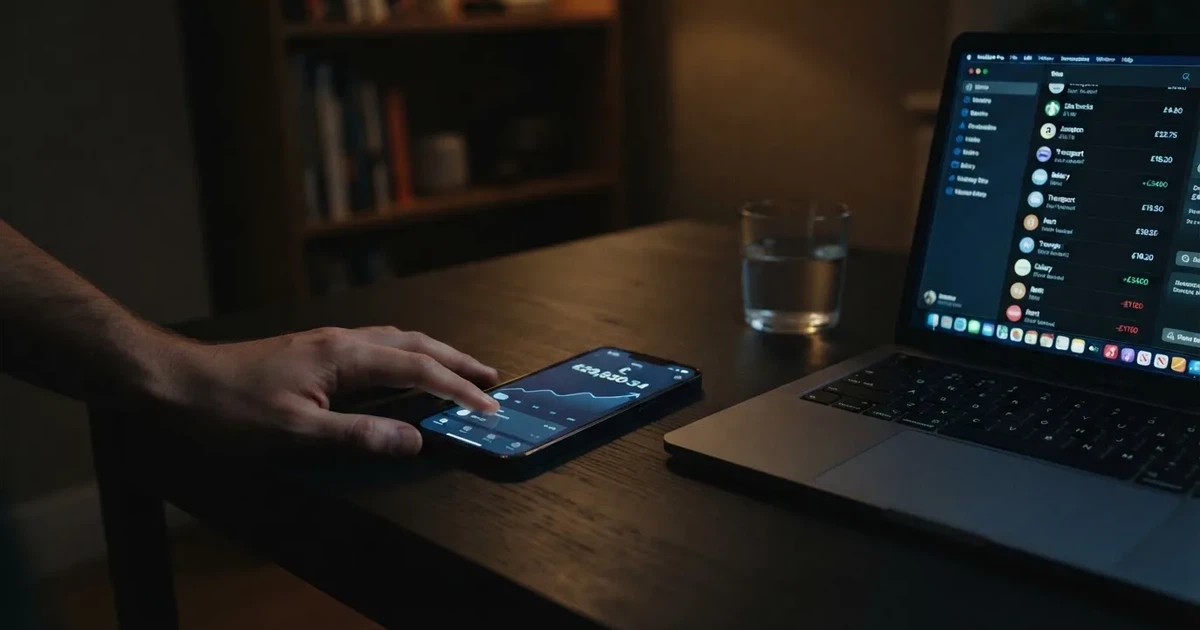
The image at the top of this page shows a wallet balance on a phone beside a casino banking page on a laptop — two screens that ought to belong to one transaction. That two-screen moment is the choice on this page: a fast, lightly checked BNB deposit into a less regulated environment, or a slower, fully checked pound deposit into a brand with GAMSTOP and a complaints route behind it.
The Ten Licensed Brands: Where Each Stands on BNB
The licensed shelf below is built directly from the Commission’s public register, downloaded as a CSV on 18 September 2026. Each row carries the licence holder named on the register, the remote casino operating licence number in the published form, the status of the brand’s domain on the register, and an honest blank where the register does not record BNB support. None of the ten brands is being recommended to the reader; the register shows the licence and the page says what it shows. Where two brands share a licence holder — Paddy Power and Betfair, both under PPB Games Limited — that is stated plainly rather than presented as two independent operators.
| Brand | Licence holder and GB remote casino licence | Domain status on the register | Binance Coin (BNB) support |
|---|---|---|---|
| Grosvenor Casinos | Rank Interactive (Gibraltar) Limited — 057924-R-334666-005 | Active | — |
| Virgin Games | Gamesys Operations Limited — 038905-R-319430-022 | White label | — |
| Betway | Betway Limited — 039372-R-319367-029 | Active | — |
| PokerStars | Stars Interactive Limited — 039108-R-319334-026 | Active | — |
| Betfair | PPB Games Limited — 039411-R-319335-010 | Active | — |
| Paddy Power | PPB Games Limited — 039411-R-319335-010 | Active | — |
| 32Red | Platinum Gaming Limited — 045322-R-324275-019 | Active | — |
| Betfred | Petfre (Gibraltar) Limited — 039544-R-319290-010 | Active | — |
| Casumo | Recro Limited — 061549-R-336718-002 | Active | — |
| bet365 | Hillside (UK Gaming) ENC — 055149-R-331499-004 | Active | — |
A row of em dashes across the final column is not laziness on the page’s part; it is what the register shows. The 18 September 2026 download records 139 businesses with an active remote casino operating licence and 1,065 active and 361 white-label domain entries; nowhere in that file is there a “payment method: BNB” field — the register does not record payment methods at all. The licensed brand that accepts BNB would have to be inferred from the operator’s own site, and none of the ten above advertises it. A reader who has seen a different result on a different review site has either been shown a brand that has since left the GB register, or has been shown a brand that was never on it.
Grosvenor Casinos
Grosvenor’s licence is the one tied to the Rank Interactive account, with the published number 057924-R-334666-005 recorded against the active domain Grosvenor Casinos on 18 September 2026. The brand’s strength sits in its high-street casino estate and a table-game lobby that has been carried over from the floor; it is not the operator readers come to for an experimental payment rail. Grosvenor is the row a player who values a physical presence uses as the licensed anchor, and it carries the same regulated environment as the rest of the shelf. Where it loses to a BNB-friendly competitor is precisely the speed and identity-light access the customer is there for. For a player who wants both, there is no both.
Virgin Games
Virgin Games trades under a Gamesys Operations Limited licence — remote operating licence 038905-R-319430-022 — and its domain is registered as a white label, which means it runs under another company’s licence rather than holding its own. White-label status on the register is not a black mark; it is a routine structure in which the licence holder, here Gamesys, runs the regulated activity on the brand’s behalf. The deposit page stays in pounds and the verification flow stays identical to other Commission-licensed brands; BNB has no place on it. For the reader whose comparison starts from a brand name they already know, Virgin is the row they were looking for; for the reader whose comparison starts from a coin they already own, it is a closed door with familiar signage.
Betway
Betway is held by Betway Limited under remote operating licence 039372-R-319367-029, with Betway recorded as an active domain. It is the multi-product sportsbook-casino on the shelf, and it carries the regulated sportsbook product alongside the slot and live-dealer lobbies. The argument for Betway in a regulated comparison is breadth: a single wallet, a verified KYC, a Commission-overseen product mix. The argument against is the one against the whole shelf on the BNB question — the payment-method list does not include cryptocurrencies. A reader who values a single wallet across many verticals gets something the BNB-first competitor rarely offers; a reader who values a single wallet across verticals and BNB does not.
PokerStars
PokerStars runs under Stars Interactive Limited — remote operating licence 039108-R-319334-026 — with the .uk domain recorded as active. The brand is mostly vertical-aware on the casino side because the parent is best known as a poker operator; the slot and live-dealer product is a separate arm and not the brand’s identity. Holding the licence does not change the BNB picture. For a player who wants regulated poker and a casino on the same wallet, the row makes sense; for a player who is shopping on BNB alone, the row does not address the question.
Betfair and Paddy Power
Both brands run off PPB Games Limited’s remote operating licence 039411-R-319335-010. The Commission expressly publishes the multiple-brand arrangement: Ladbrokes, Coral and Gala Bingo also sit under LC International Limited elsewhere on the register, and PPB Games is the parallel structure covering Betfair and Paddy Power. Treating the two brands as if they were run by different regulated entities is the error the register rules out by naming the same licence against both domains. What the duplication means for the comparison is that the BNB question is answered once and not twice — the answer is the same. What it means for a player’s wallet is that a closure on one closes both.
32Red
Platinum Gaming Limited holds remote operating licence 045322-R-324275-019, and 32red is registered as active. 32Red is the longest-running pure-casino brand on the shelf and the row a long-memory reader reaches for in part because its deposit pages have barely changed in a decade — the absence of BNB from that page is part of why it has not changed. The brand has the strongest case for the player who values continuity over novelty, and the weakest case for the player whose comparison is built around the coin. Both readings are right.
Betfred
Betfred is held by Petfre (Gibraltar) Limited under remote operating licence 039544-R-319290-010, with Betfred registered as active. Like Betway, it sits at the sportsbook/casino intersection; unlike Betway, its identity leans harder to the shop and the high-street tote. The regulated multi-product story is the same and the BNB question is the same. For a player whose comparison starts from a sportsbook brand, Betfred is the row; the row’s BNB cell is still a dash.
Casumo
Casumo is held by Recro Limited under remote operating licence 061549-R-336718-002, with Casumo registered as active. Casumo is the operator a player reaches for when the rest of the shelf feels too sober: the brand has built its identity around a more character-driven product than the others, while remaining inside the regulated perimeter. The BNB cell is a dash, like the others. For a player whose regulated comparison is settled on game-lobby variety, Casumo is the pick; for a player whose comparison is settled on a coin they already own, none of the shelf picks.
bet365
bet365 is held by Hillside (UK Gaming) ENC under remote operating licence 055149-R-331499-004, with bet365 registered as active. bet365 is the largest operator on the shelf by both traffic and product breadth — sportsbook, casino, live-dealer rooms, poker in some markets — and the brand most players would land on first if a search comparison let the lobby size decide. It is also the row that tells the most about what the comparison actually is. bet365 accepts the regulated payment mix at scale; it does not accept BNB. The reader who arrived trusting a gambling leader to have figured out the crypto question correctly has, here, their answer: scale and the willingness to add a high-risk settlement coin are not the same property, and the regulator has decided they should not move together.
The Arithmetic on Bonus Wagering: Reading the 10x Cap as a Time Cost
The wagering rules British bonuses have lived under changed on 19 December 2025. A bonus offer at a licensed operator can no longer carry a wagering multiple above 10x, and bonuses that combine products — for example, a free bet on sport attached to a casino spin package — are no longer permitted at all. The 10x cap is the headline number, but the reader who only sees that figure has not understood what changed. The arithmetic below takes the rules at their literal face and shows what the new ceiling actually costs a player in hours at the slot reels.
The formula is straightforward. Required turnover equals the bonus amount multiplied by the wagering factor; at the 10x cap, a £100 bonus requires £1,000 of qualifying play before any related winnings can be withdrawn.
| Bonus Amount | Required Turnover (10x) | Spins (£2 stake) |
|---|---|---|
| £50 | £500 | 250 |
| £100 | £1,000 | 500 |
| £200 | £2,000 | 1,000 |
The number of slot spins is the required turnover divided by stake-per-spin — for a player staking £2 per spin on a slot with a £2 stake-per-cycle under the 25-and-over rule, that is 500 spins. The time cost at the Commission’s mandated 2.5-second minimum spin interval, expressed in hours, runs from 500 multiplied by 2.5 seconds, which is roughly 21 minutes of pure reel time on the £2 stake at the £100 bonus; at the £5 stake ceiling for the older bracket that comes down to about four minutes.
The honest band is therefore set by the stake end of the rule, not the bonus end. At the same £100 bonus under the 10x cap, a player staking 25p per spin would face 4,000 spins, and at the 2.5-second interval that is 167 minutes of reel time, or close to three hours. A player staking 10p per spin on a low-volatility slot would face 10,000 spins and roughly 6.9 hours. A player staking £2 per spin will clear the same bonus in twenty minutes; a player staking 10p will take the working day. The bonus amount is the lever the rule has clamped; the stake-per-spin and the spin interval are the levers the player still controls, and they change the conclusion by an order of magnitude.
Two caveats bind the band, and a reader who took the headline figure without them would over-credit or over-blame the rule. The first is the bet size ceiling itself: an £18-to-24 player cannot stake more than £2 per game cycle, so that bracket’s fastest clearing time is at the ceiling, not below it, and the band above them is closed by the rule. The 25-and-over player has the wider band, up to £5 per game cycle. The second is game weighting, which still applies inside the rule: many licensed operators weight slots at 100% but table games at 10% or 20%, so a player who plans to clear the bonus at the blackjack table will find their £1,000 turnover requirement converts into £5,000 of table play rather than £1,000, and the time cost rises accordingly.
The bigger read is the one the rule itself implies. A 10x cap on wagering requirements removes the products that fed off higher multiples — the 30x and 40x offers where the bonus shape was invented to keep the player wagering long after the headline number had been earned. The licensed shelf is now closer to a level playing field on wagering than it was before 19 December 2025. The arithmetical gap between a fast and a slow clearer of the same bonus is real and still wide, but the bonus itself no longer carries the multiple that once made the gap punishing. A casino visit planned around clearing a bonus now looks more like a casino visit planned around the game. The 10x cap is what makes that possible; the rest is stake selection.
The Coin Itself: A Reader’s Quick Briefing on Binance Coin
A comparison built around a payment method should not assume the reader already understands the asset. Three short notes are enough for what the page needs.
Binance Coin launched in July 2017 as an Ethereum-based token issued by the Binance exchange, founded the same year by Changpeng Zhao and Yi He. The token raised about $15 million in its initial coin offering, which makes it the kind of asset whose first market was the exchange order book rather than the mine-and-hold audience Bitcoin grew up in. BNB migrated from the Ethereum network to Binance Smart Chain — launched in September 2020 and rebranded to BNB Smart Chain in 2022 — and the chain now runs on a proof-of-stake consensus mechanism. Binance Coin’s maximum supply is capped at 200,000,000 BNB tokens, which is meaningfully tighter than the 21-million-coin cap on Bitcoin and meaningfully looser than the 100-million-coin cap on several other large-chain assets.
By 2021, BNB had reached the third-highest market capitalisation among cryptocurrencies. That position is a market ranking, not a regulatory one; the FCA’s cryptoasset registration list, the Commission’s payment-method guidance and HMRC’s tax treatment are what govern the coin’s standing in a British comparison, and none of them depends on market cap. The fact that the coin is large enough to be on every exchange’s front page is what makes it worth covering at all; what matters for the reader of this page is that the coin and the British licence regime are still being brought into the same frame for the first time.
For the reader who arrived knowing nothing of the chain: a BNB deposit is an on-chain transfer of value, recorded on BNB Smart Chain, paid to a wallet the operator provides, and credited by the operator’s software after a confirmation count. The confirmation count is what replaces the 3-D Secure step on a card. That is the technical surface; the regulatory surface is a separate question, and one the licensed shelf declines to engage with.
Where the Licensed Shelf Stops — and Where the Comparison Has To Continue
A comparison that ended at the licensed shelf would tell the reader “no BNB” and stop, which would be both honest and unhelpful. The reader who has BNB already, or whose decision is whether to acquire it specifically to play, is asking a different question: what is the alternative? The shelf the page does not name in this comparison — the offshore crypto casino shelf — is the structural inverse of the licensed ten. A few facts about the structure, drawn from the rule book and not from any individual brand, are useful to the reader who is about to weigh it.
First, providing gambling to people in Great Britain without a Commission licence is an offence under section 33 of the Gambling Act 2005, and what that means in practice is that the offshore shelf reaches the player, but it is not licensed to reach the player from Britain. The Commission’s enforcement powers — cease-and-desist notices, payment referrals, search-engine delistings — do not include ISP-level blocking. The brand is reachable by direct URL; the regulator’s tools aim at the operator, not at the player’s screen.
Second, no penalty is aimed at the player. The harm the player takes on is what they leave at the door: GAMSTOP, the Commission complaints route, the approved alternative dispute resolution provider, the source-of-funds checks that bind the British brand to a regulated payment perimeter. None of these protections travel with a deposit to an unlicensed brand, because they exist only in the licence that brand does not hold. A regulated brand that closes an account pays the player their balance. A brand that closes an account for any reason it deems appropriate is harder to argue with.
Third, the tax position the player sits in does not depend on the licence of the casino. HMRC does not treat BNB as currency; it treats it as property, so a player who sells BNB for pounds owes Capital Gains Tax on the gain, and a player who receives BNB from staking or mining owes Income Tax on the receipt at receipt. Gambling winnings themselves are untaxed in the UK, which the reader may have heard; the property treatment of the coin does not change that, and converting a gambling win out of BNB into pounds does trigger the disposal-event rules the property treatment implies. A reader who intends to play-and-cashout in BNB should read the property treatment carefully before doing it.
Fourth, the player has the right to ask the licensed brand whether it will accept a BNB deposit. The honest answer from every brand reviewed above is that the answer is no, and that the answer will not change before the Commission’s payment-method policy is revised; the regulation that is currently opening for applications on 30 September 2026 under the Financial Services and Markets Act is a separate regime. The two paths — a Commission licence that does not cover the coin, and an FCA authorisation regime that does cover the firm dealing in the coin — are being built at the same time and have not yet met.
Sizing a Player’s Choice Without Naming One
A comparison that ended at “no licensed BNB option” would tell the reader what is true but would not give them a way to act on it. The page’s role is to make the choice legible rather than to make it for the reader. Three figures tell the comparison.
The 10x wagering cap, in force since 19 December 2025, is the cost ceiling a British-licensed bonus now respects. The unregulated shelf has no cap, which is simultaneously the fastest way to clear a bonus and the easiest way for the bonus to be designed in a shape the player cannot clear. The arithmetical band earlier in the page applies to both shelves in its own terms: 4,000 spins clear a £100 bonus at 25p a spin; 10,000 spins clear it at 10p. The licensed shelf’s cap on stake-per-game cycle — £5 for 25-and-over, £2 for 18-to-24 — is what the bonus-clear arithmetic is built against; the unregulated shelf has no such cap and may run a £20 stake per spin on the same promotional offer.
The Commission’s automatic GAMSTOP enrolment since 31 March 2020 is the protection a player on the licensed shelf has by default. The unregulated shelf offers its own self-exclusion, on its own terms, and offers it inconsistently. The player who registers with GAMSTOP for six months and then deposits to an unlicensed site has not stopped — they have changed sites.
The Commission’s enforcement record since the 19 December 2025 rules is what tells the reader the regulator has the new instrument loaded. Wagering caps and stake ceilings are not fiscal nudges; they are licence conditions with the Commission’s complaints and financial penalty framework behind them. A licensed brand found advertising a 30x wagering offer after the 19 December 2025 effective date is in breach and the operator pays; the consumer reading the page pays nothing extra, which is the design.
The same protection does not exist on the offshore shelf. A player who arrives at an unlicensed BNB casino with a 50x bonus and a £5,000 max cashout has not been told the bonus is unenforceable; they have been told the bonus is worth pursuing, and the only body that can read the bonus fine-print back is the player.
Verification, Source-of-Funds, and the Real Difference a British Wallet Makes
A reader who has decided between the two shelves on speed alone would be making the comparison on the wrong axis. The axis the regulator publishes is verification, and the difference on verification is the difference between a regulated product and an unregulated one.
The Commission’s rules require that a player’s name, address and date of birth be verified before the first deposit or any play, and that financial vulnerability checks run at £150 of net deposits in a rolling 30-day window using public-data sources. The rules state what the check may use and what it may not, and they create a paper trail a player can ask to see. The interpretation of those rules at the licensed brand is that withdrawal is fast because verification has already happened — the player has already been cleared, and the regulator has already been told how. A withdrawal that triggers an additional source-of-funds check on a regulated brand is a sign the system is working, not a sign it is failing.
On the unregulated shelf, verification is a withdrawal-stage event rather than a deposit-stage event. The wallet address is the only identifier until the operator’s policy or a chain-analytics flag asks for more. Source-of-funds checks are operator-dependent, often narrower than the Commission’s, and frequently rerun on each withdrawal rather than once. A player whose wallet has been funded through a mix of centralised and decentralised exchanges is more exposed at the withdrawal stage than the deposit stage, and the unlicensed brand has the discretion the licensed brand does not.
Reading the Slots Lobby the Licensed Ten Actually Have
A reader who has used a licensed brand to play slots before knows the game library sits behind a regulator-shaped floor: maximum stake per game cycle at the published ceiling, spin intervals at the 2.5-second minimum, autoplay banned, losses-disguised-as-wins banned, every spin logged for dispute purposes. The lobby is smaller than the unregulated shelf’s, the volatility ceiling is lower, and the new-release cadence is slower. Each of those constraints is the visible trace of a rule the licensed operator has decided not to litigate.
The image of a slot-lobby grid on a laptop screen, with the same familiar thumbnails in a familiar order, is the visual trace of those rules. The unlicensed shelf’s lobby will look very different: more games, faster spin intervals as a default, autoplay on, a higher-volatility profile, and a stable of bonus-buy games that the licensed brand does not carry because the Commission has signalled it does not want bonus-buy games in the GB library. A player who values the broader lobby is looking at the regulated shelf’s choice and seeing a constraint; a player who values the regulator’s protection of the lobby is looking at the same shelf and seeing the point.
A reader comparing the two shelves on RTP is comparing different sets: a slot the licensed brand carries at 96% RTP may not be on the unlicensed shelf, and a slot the unlicensed shelf carries at 97% RTP may not be on the licensed one. The Casino.mx and Pragmatic Play games that span both shelves are the overlap, and they are not the majority of the catalog on either side. Comparing RTPs across the two shelves is a category error, because the catalogues are built by different routes to different rules.
Where the Page Stops Recommending — and Where the Comparison Has To Be Honest
This page is written so that the comparison is useful without endorsing an action the regulator would not endorse. The licensed ten are presented as the comparison shelf because they are the shelf the regulator audits; the BNB-friendly shelf outside the perimeter is named as a shelf rather than as a ranked alternative, because ranking it would mean writing the kind of recommendation the licence cannot back.
What the comparison does do is name the trade. A player who values speed and identity-light access above Commission protection is choosing the offshore shelf; a player who values Commission protection above speed and identity-light access is choosing the licensed shelf. A player who values both has to accept that the regulator has decided they cannot have both at once, and that the licensed shelf is the policy-side of that decision while the offshore shelf is the market-side of it. The 19 December 2025 wagering cap and the regulation opening on 30 September 2026 are the two pieces of the policy-side puzzle that are most relevant to the BNB player, and both are recent enough that the page names them by date.
More on What the Register Currently Shows
The Commission’s public register is the only place a reader can confirm that any of the names above actually hold a GB remote casino operating licence on the day the reader is checking, and the register is open to anyone. The version the page draws from was downloaded as a CSV on 18 September 2026; the same file can be re-downloaded today and may already differ.
The register lists each licence account against its trading domains, with a status of Active, Inactive or White Label. Active and White Label are both current licence relationships; Inactive is a domain a licence holder has chosen not to run, or has not yet started to run. The Paddy Power and Betfair row of this page is a White Label-style fact under the surface: both run under PPB Games Limited’s single licence. The Virgin Games entry is also a White Label. The other seven brands sit under their own licence holders with their own active domains.
The licence number format — account-R-number-suffix — is what a player can read back to the operator and confirm on the register. The leading six digits are the licence holder’s account number; the “R” marks the licence as a remote, online licence rather than a non-remote land-based licence; the suffix marks the iteration the licence has reached, with -001 being the first and -005, -010, -022 etc. being renewals or material variations. A reader can copy a licence number from the operator’s terms page and paste it into the register’s search box to confirm the licence is current.
Responsible Play on Either Shelf
GAMSTOP is the national online self-exclusion scheme that every Commission-licensed online casino must take part in by licence condition; enrolment is free, the minimum period is six months, the maximum is five years, and the registration cannot be undone early. The registered player is excluded from every Commission-licensed online casino in one step. The same protection is the floor, not the ceiling: a player can also set a deposit limit, take a time-out, request a reality check at set intervals, and — at the licensed shelf — sit in front of a financial vulnerability check that runs at £150 of net deposits in a rolling 30 days.
The GamCare National Gambling Helpline and GambleAware are the two statutory-funded support services the player can call without giving a name. The Commission’s own rules direct players to GamCare when the registered GAMSTOP account is set up. None of these protections belongs to the licensed shelf in the way a loyalty scheme belongs to it; they belong to it because the licence demands them, and they are the part of the deal the player is paying the licence fees for.
A BNB casino outside the Commission’s perimeter offers none of these protections by default. Some operators have built self-exclusion tools that look similar — duration choices, exclusion-from-promotional-mail status, deposit-limit sliders — but the player has opted in on a site-by-site basis, and the tools have no obligation to function across sites, across brands under the same holding company, or after a site is rebranded and relaunched. A player with a self-exclusion decision to make must make it once at the GAMSTOP register if they want it to stick across the licensed shelf, and once at each unlicensed brand they want it to cover.
The image at the foot of the page, of a UK passport and a bank card beside a sign-up screen, captures what the verification step looks like in physical form: a name, an address, a date of birth, a card that ties the player to those data, and a screen the verification flow gets to populate. The same data is the data GAMSTOP relies on; the offshore shelf does not have it; the licensed shelf cannot let a player play without it. The choice on this page is bounded by that gap.
Frequently Asked Questions
Can a licensed British casino accept Binance Coin as a deposit method?
No Casino listed on the Gambling Commission’s public register as holding a GB remote casino operating licence advertises Binance Coin as an accepted deposit method. The Commission’s policy classes cryptoassets as a high-risk payment method and tells licensed operators to apply enhanced customer due diligence before letting crypto-funded play happen at all. A player who wants to deposit BNB into a Commission-licensed casino is being told the licensed casino does not exist.
What identity checks apply to a BNB casino outside UK licensing?
A BNB-friendly casino typically asks for an email and a wallet address on sign-up and runs the wallet against chain-analytics and sanctions filters. Source-of-funds checks are operator-dependent and tend to fire on withdrawal rather than on deposit. The Commission’s required name, address and date-of-birth verification at first deposit is not part of the unlicensed brand’s flow, and the financial vulnerability check at £150 of net deposits in a rolling 30-day window does not apply to the unlicensed brand at all.
Is a casino accepting BNB automatically unlicensed in Britain?
A casino accepting BNB and serving British players without a Commission licence is providing gambling to people in Great Britain without a licence, which is an offence under section 33 of the Gambling Act 2005. The player is not penalised for using such a brand, but the brand itself is operating against the Gambling Act. A brand in this position is, by construction, unlicensed in Britain; that does not mean every brand the player meets is unlicensed, only that the BNB-accepting subset sits outside the GB register.
What self-exclusion protection does a player lose by using a BNB-only casino?
The player loses GAMSTOP, the national online self-exclusion scheme that has applied to every Commission-licensed online operator since 31 March 2020. They also lose the Commission’s mandatory financial vulnerability checks, the approved alternative dispute resolution providers and the route into the Commission’s complaints process. The offshore brand may offer its own self-exclusion, but the player has to opt in on a site-by-site basis, and there is no cross-brand coverage.
How does a Binance Coin deposit differ from a standard bank transfer at a UK casino?
A BNB deposit is settled on the BNB Smart Chain in minutes rather than the hours a card or Faster Payment can take, and the deposit is an on-chain transfer of value to the operator’s wallet rather than a card-authenticated payment. The withdrawal is similarly on-chain and can be faster than a bank transfer when the operator pushes the payout immediately. The operator’s identity-checking rules are different; the regulator’s protections are different; the dispute route is different. The fast payment is the visible benefit; the absent protection is the cost the marketing rarely names.
Why do most Gambling Commission-licensed casinos not accept cryptocurrency such as BNB?
The Commission’s policy classes cryptoassets as a high-risk payment method and tells licensed operators to do enhanced customer due diligence before they let crypto-funded play happen. Operators must review their anti-money-laundering risk assessment before they change the payment-method list. The FCA’s separate cryptoasset regime, opening for applications on 30 September 2026, deals with the firms handling the asset rather than the casinos letting it in. The licensed brand has, on the regulator’s published view, more compliance work to do in accepting BNB than the player demand justifies, so it declines.
Prepared by the jackpotslotsuk editorial staff.