
Best casinos for online craps in the UK — a comparison of ten licensed sites
 Available in US
23 September 2026 · verified against the Gambling Commission’s public register of gambling businesses.
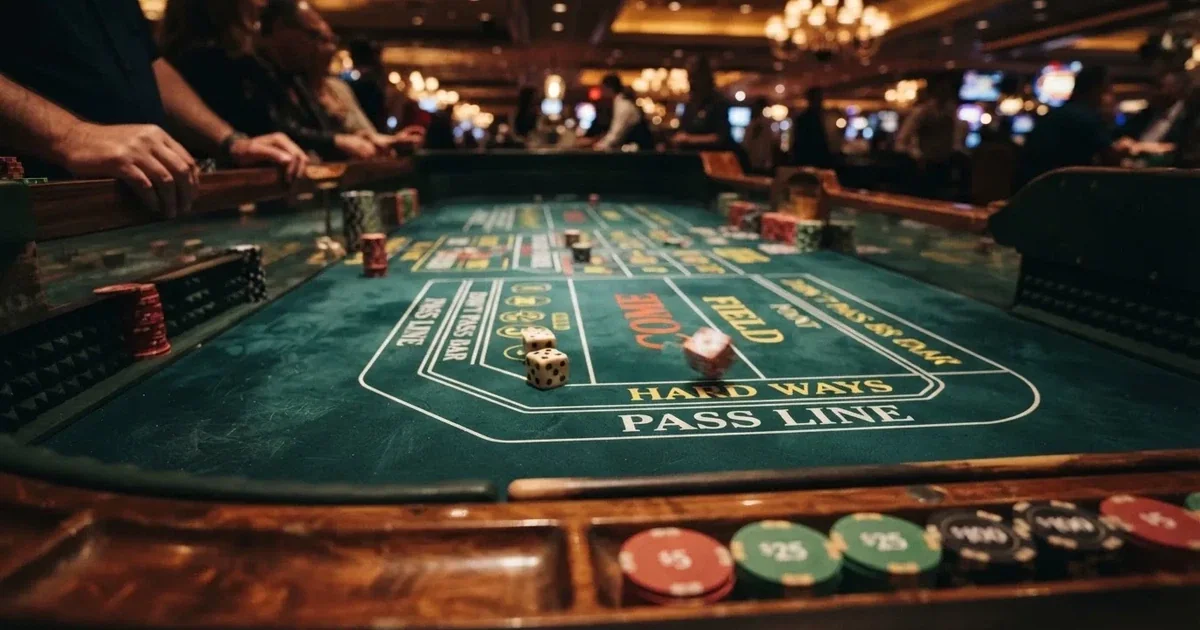
Craps is a thin shelf on the British market. The wider UK casino scene runs on slots, blackjack, roulette and a few live game-show formats, and most remote casino licences are built around that mix. A player who wants craps needs two things to line up at once: a Gambling Commission licence, which is the only thing that makes taking a UK deposit legal, and a craps table in the lobby, which is not a given. This page lays out how that picture actually looks — which sites clear the licence test, where the craps table sits, what the bonus terms cost a player who wants to use one on a dice game, and where mobile and live-dealer craps fit. It is a comparison, not a recommendation: every brand here holds a valid Commission licence, and the page does the work of saying what each one offers in its own terms.
Table of Contents
- The UK online casino landscape for craps
- Legality: what a Gambling Commission licence actually means
- Responsible gambling around craps
- Crypto, e-wallets and anonymity at UK craps tables
- Bonuses and craps: what the terms actually cost
- Mobile and apps: craps on a phone
- Craps on a UK licensed site: games, providers and live tables
- The ten operators, side by side
- The operators in detail
- What the comparison comes down to
- Frequently asked questions
The UK online casino landscape for craps
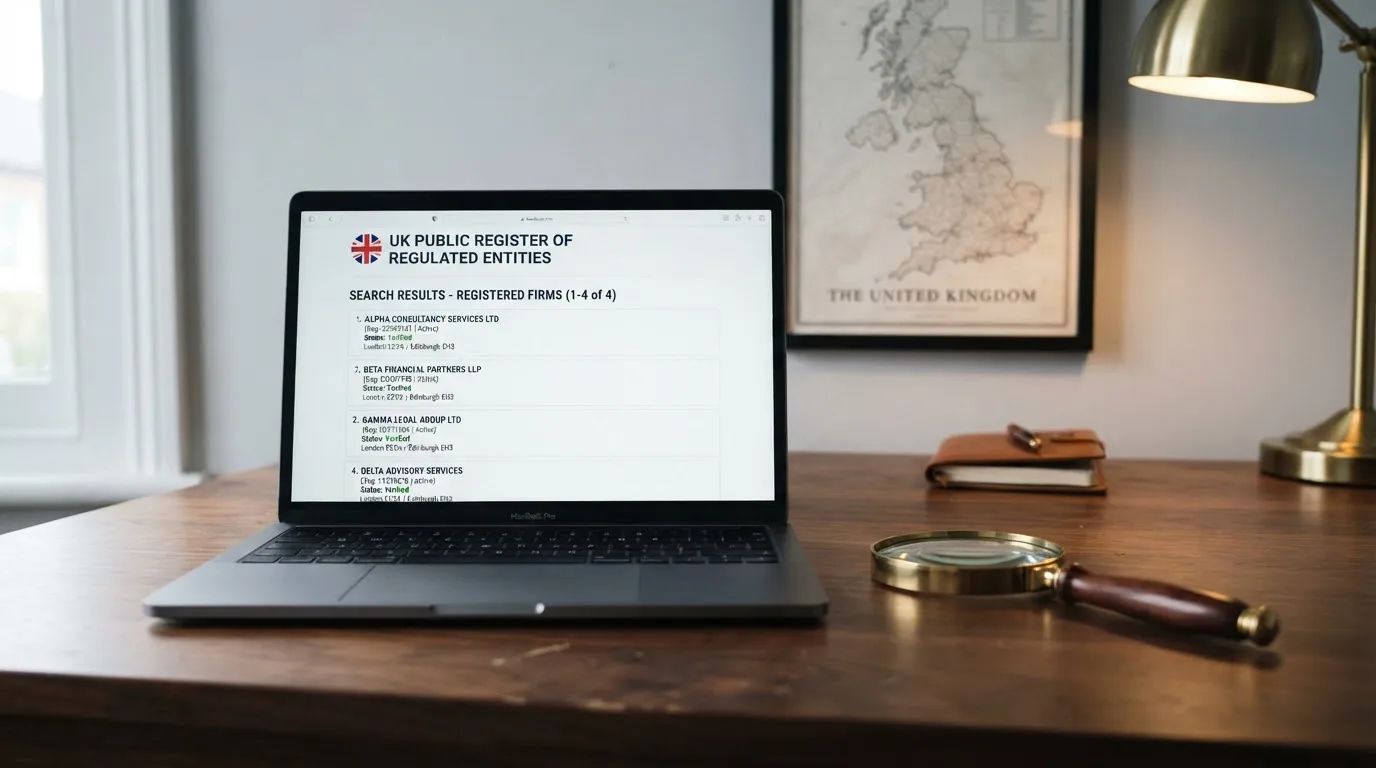
The Gambling Commission’s public register listed 139 businesses holding an active remote casino operating licence on 18 September 2026, and the register’s separate domain list held 1,065 active and 361 white-label website entries on the same date. A white-label site trades under another company’s licence; an active domain is one the licence holder runs itself. The register can be searched online and downloaded in full as a CSV or Excel file, and that is the test of whether a brand actually holds a licence — not a footer line on a homepage. A remote casino licence number on the register follows the form account-R-number-suffix, where the leading six digits repeat the licence holder’s account number and the ‘R’ marks a remote, online licence.

Ten brands from that register sit at the centre of this page. They are not the only licensed sites, and they are not chosen as a ranking — they are a worked sample of the register, large enough to compare on licence, craps availability, bonus terms and mobile. Several of them share a single licensee: Ladbrokes and Betfair both run off PPB Games Limited’s account 39411, while Virgin Games and Jackpotjoy both run off Gamesys Operations Limited’s account 38905. A player who has self-excluded through GAMSTOP on one of them is excluded from all the others on the same licence.
How the comparison is set up
| Brand | Licence holder and GB remote casino licence | Domain status on the register | Subject support |
|---|---|---|---|
| Grosvenor Casinos | Rank Interactive (Gibraltar) Limited, 057924-R-334666-005 | Active | — |
| Betfred | Petfre (Gibraltar) Limited, 039544-R-319290-010 | Active | — |
| 32Red | Platinum Gaming Limited, 045322-R-324275-019 | Active | — |
| BetVictor | BV Gaming Limited, 039576-R-319370-028 | Active | — |
| William Hill | WHG (International) Limited, 039225-R-319373-015 | Active | — |
| Virgin Games | Gamesys Operations Limited, 038905-R-319430-022 | White-label | — |
| Ladbrokes | LC International Limited, 054743-R-330863-014 | Active | — |
| Paddy Power | PPB Games Limited, 039411-R-319335-010 | Active | — |
| Betfair | PPB Games Limited, 039411-R-319335-010 | Active | — |
| Jackpotjoy | Gamesys Operations Limited, 038905-R-319430-022 | Active | — |
Legality: what a Gambling Commission licence actually means
Every brand that takes deposits from customers in Great Britain needs a Gambling Commission licence. That obligation comes from the Gambling (Licensing and Advertising) Act 2014, which closed the route by which operators based outside the UK could serve British customers on a home-country licence. A Curaçao, Maltese or Gibraltar registration is not a substitute. The Commission’s public register is the test; an operator that does not appear there is not licensed to take a UK deposit, and providing gambling to people in Great Britain without a licence is an offence under section 33 of the Gambling Act 2005.
A Commission licence carries a set of conduct conditions that show up in the player experience. The Licence Conditions and Codes of Practice (LCCP), the social responsibility code and the Remote Technical Standards all sit behind the licence number, and they shape what a player sees as much as the games themselves. Minimum age is 18. Name, address and date of birth have to be verified before the first deposit or any play, since 7 May 2019 — no anonymous play at a licensed site, and a player who is asked to prove identity is not being singled out, that is the rule. Credit cards have been banned for gambling since 14 April 2020, including credit cards routed through e-wallets. The Commission’s published package of changes on safer game design banned reverse withdrawals by 31 October 2021, banned auto-play on online slots, and capped slot spin speeds at a minimum of 2.5 seconds per spin.
The limits on slots are not the limits on craps, and the comparison should keep that distinction clear. The £5 maximum stake per game cycle for adults 25 and over, in force from 9 April 2025, and the £2 maximum stake for 18 to 24 year olds, in force from 21 May 2025, apply to online slots; craps is a table game and is not covered by those tiers. There is no state-set deposit or loss ceiling in Great Britain. From 31 October 2025 operators must prompt a customer to set a financial limit before the first deposit, but the prompt is not a cap — it is the operator’s duty to ask. Financial vulnerability checks run at £150 net deposits in a rolling 30-day window, using public data only, from 28 February 2025.
What the licence does not cover
A Commission licence does not protect every part of a player’s stake. Player funds at a licensed site are held under the Commission’s segregation rules, but the level of protection depends on the operator’s chosen status — and that status has to be checked on the operator’s own terms page, not inferred from the licence number. Disputes that the operator’s customer service cannot resolve are handled by an alternative dispute resolution (ADR) provider approved by the Commission; the ADR is named on the operator’s site. The Commission’s enforcement powers — cease-and-desist notices, search-engine delisting, payment and hosting referrals — apply to unlicensed operators that target British customers, and the Commission does not have ISP-blocking power. The penalty for playing on an unlicensed site falls on the operator; the player is not prosecuted. What the player gives up is the protection layer: no GAMSTOP cross-check, no Commission complaints route, no approved ADR.
Responsible gambling around craps
The responsible-gambling layer at a licensed UK site is built around three pieces: GAMSTOP, the deposit-limit prompt and the financial vulnerability check. Every operator that holds a remote casino licence must take part in GAMSTOP, the national online self-exclusion scheme. Self-exclusion periods are six months, one year or five years, and they cannot be cancelled early — a player who signs up for five years is out for five years. Registration runs through GAMSTOP directly, not through the casino, so a player who has self-excluded cannot reverse it by contacting the operator.
The deposit-limit prompt is the second piece. From 31 October 2025 operators must ask a customer to set a financial limit before the first deposit. The limit is the customer’s own figure, and the operator must honour it; it is not a state-imposed ceiling. Players who want a tighter grip on spend than a self-set limit can apply additional controls through the operator: time-outs, reality checks at fixed intervals, and session timers that lock the account after a chosen window. The third piece is the financial vulnerability check, which runs at £150 net deposits in a rolling 30 days and uses public data only. A check that turns up a marker does not block the deposit by itself; it routes the customer to a conversation with the operator about what they have set.
Craps as a game sits in a particular place in this framework. It is fast — a shooter can throw several dice pairs in a minute — and it carries a cluster of proposition bets with a high house edge that a player can place without realising it. The Pass Line carries a house edge of 1.41%, and Odds bets placed behind a Pass or Don’t Pass wager pay at true mathematical odds and carry a 0% house edge, but only alongside the underlying bet. The proposition bets on the centre of the layout, by contrast, run into double-digit house edges. A player who treats craps as a single uniform game misses the spread. The Commission’s player-information requirements mean that the licensed site has to publish the return-to-player figure for each game variant on the craps page, and that figure is the figure to read before staking.
Where to get help outside the casino
The National Gambling Helpline, run by GamCare, is the front line for anyone whose gambling has stopped being fun. GambleAware funds treatment and education across Great Britain. Both are reachable without going through the casino. A player who has self-excluded through GAMSTOP and finds themselves trying to find a way back into play on another licensed site is the player the system is built to catch; the self-exclusion period exists precisely because the urge to play does not stop the moment the account closes. The point of repeating these routes on a page about craps is not to lecture; it is to put them where a player reading about the game will see them.
Crypto, e-wallets and anonymity at UK craps tables
A Gambling Commission-licensed casino has to verify a player’s name, address and date of birth before the first deposit or any play. That duty applies whatever the payment method is — debit card, bank transfer, e-wallet, prepaid voucher, or cryptocurrency. The payment rail can be fast and the deposit can clear in minutes, but the identity check sits in front of it, and a player who refuses to complete it cannot deposit. The offshore marketing line that pairs “crypto” with “anonymous” does not apply to a licensed UK site: the licence forbids it. The closest a licensed operator can come to a low-friction deposit is an e-wallet like PayPal or Skrill, which speeds up the deposit and the withdrawal without changing the identity check.
Crypto-specific craps marketing tends to point at offshore sites licensed in Curaçao or Anjouan that take Bitcoin and other coins, run a craps or dice game in their lobby, and pay out in the same coin. The Commission’s register does not list any of them, because they do not hold a GB licence. A player who values the privacy that an offshore crypto casino offers has weighed the loss of the Commission’s protection layer against it — no GAMSTOP, no ADR, no recourse if the site declines to pay out — and made that choice with eyes open. This page does not run that comparison on the player’s behalf. A UK-licensed site and an offshore crypto site are different products serving different priorities, and the rest of this comparison is about the licensed side.
What low-friction payments do change
A licensed operator that supports an e-wallet can clear deposits inside minutes and withdrawals inside hours, and that is a real change from the bank-transfer baseline of one to three working days. Cryptocurrency as a deposit method at a licensed site is unusual: most Commission-licensed brands do not take it, and those that do convert the coin to sterling on receipt so that play, bonuses and withdrawals all run in pounds. The deposit may feel anonymous at the wallet end; the casino end still knows who the player is. The anonymity that crypto marketing trades on is a property of the network, not of the licensed casino.
Bonuses and craps: what the terms actually cost
Craps bonuses in the UK market are a narrower field than slot bonuses, and the reason is the wagering cap. Since 19 December 2025 wagering requirements have been capped at 10x, and mixed-product bonuses — a free bet on sport bundled with casino spins, for instance — have been banned. The cap applies to the bonus amount, the deposit amount, or the combined stake, depending on the offer, but the 10x ceiling is the same. The headline number on a promotional page is rarely the number that matters; the number that matters is the multiplier on the bonus, and the player has to find it in the terms.
Game weighting is the second clause that matters. Slots typically count 100% towards wagering; table games like craps, blackjack and roulette frequently count 10%, 20% or are excluded entirely. A bonus advertised as “use on any game” with craps at 10% weighting means a player has to wager ten times the headline turnover to clear the same bonus on craps as they would on slots. Some sites restrict the bonus to slots altogether and exclude table games from the contribution list. The wagering requirement is the same; the path to clearing it is much longer.
Worked example: a £50 bonus at the 10x cap
A £50 bonus at the 10x wagering cap means £500 of qualifying turnover before withdrawal. That is the rule from 19 December 2025, applied to a single bonus amount. If craps counts 100% towards wagering on that bonus, the player needs £500 of craps turnover; if craps counts 20%, the player needs £2,500 of craps turnover; if craps is excluded, the bonus cannot be cleared on craps at all. The 10x cap is the ceiling on the operator; the game-weighting rule is the multiplier that decides whether the cap is reachable.
Pass Line bets at a £5 stake clear £5 of turnover per resolved bet; proposition bets in the centre of the layout clear the same £5 per spin but cost the player more in expected loss because the house edge is higher. At the table’s best edge of 1.41% on the Pass Line, £500 of turnover carries an expected loss of about £7. At 20% game weighting, £2,500 of turnover carries an expected loss of about £35 — and the player is still clearing the same bonus. The bonus number is unchanged; the cost to clear it is not.
What the page does with this
The 10x cap is a ceiling, and a £50 bonus cleared on craps at full weighting costs the player about £7 in expected loss; at 20% weighting the same bonus costs about £35. This is the range of costs a player should consider before claiming. Whether an offer uses full weighting or a lower percentage is down to the operator’s terms, but this example illustrates how game-weighting rules directly affect the cost of clearing a bonus.
Mobile and apps: craps on a phone
A craps table on a phone is, in practice, a browser page or a native app; both routes work on a Commission-licensed site. The browser route is the common one: the operator’s mobile site carries the same craps game as the desktop site, scaled to the screen, with touch controls in place of mouse clicks. The native app route is the rarer one, and it tends to belong to the larger brands — Betfair, Paddy Power, William Hill and a handful of others run apps that include the live-dealer lobby, and a craps game that is in the live lobby on desktop is also in the live lobby on the app.
Mobile craps has two practical limits. The first is screen real estate: a craps table layout is wider than a phone screen in portrait mode, and the proposition bets in the centre of the layout sit close together. The licensed operators that run a live-dealer craps product handle this with a collapsible bet panel and a separate area for the dice outcome. The second limit is connection: a live-dealer craps stream is a video feed, and a mobile connection that drops mid-roll voids the bet. That is not an operator policy; it is how live-dealer products work, and the operator’s terms confirm it.
Apps versus browser play
A native app downloads the game client to the phone, which speeds up repeat sessions and pushes notifications about bonuses and reality checks; a browser session re-downloads on each visit. The Commission’s safer-gambling rules apply equally to both: reality checks at fixed intervals, time-outs, and self-exclusion through GAMSTOP work the same way whether the player is on the app or in the browser. The Commission’s player-information requirements apply equally too: the return-to-player figure for the craps variant has to be published, and the app’s game-info panel has to carry it. A player choosing between the two routes is choosing between push notifications and a slightly faster repeat session on one side, and a smaller download footprint and no background updates on the other.
Craps on a UK licensed site: games, providers and live tables
The craps shelf on a UK licensed site is small. The bulk of any lobby is slots, with blackjack, roulette and live game-show formats taking most of the rest. Craps appears in two forms: a digital table game, which is a random-number-generator version of the layout, and a live-dealer craps game, which is a video feed from a studio with a real dealer and real dice. The digital version is faster, runs on the same RNG that drives slots, and is the cheaper of the two to run for the operator. The live version is rarer, costs more to operate, and tends to come from a single provider.
Evolution’s Live Craps sits at the centre of the live craps market for UK-licensed sites. The product is set in a speakeasy-themed studio and includes a built-in interactive tutorial plus an “Easy Mode” aimed at players new to the game. Each round splits into a Come Out roll followed by a Point roll; some bets resolve after a single roll and others span several rolls. A licensed site that runs Evolution’s live lobby exposes Live Craps to its UK customers, and the game’s presence on the site depends on the operator’s deal with Evolution rather than on the Commission’s rules. The Commission does not approve individual games; it approves the operator, and the operator chooses what goes in the lobby.
What the paytable looks like
The Pass Line bet in craps carries a house edge of 1.41%. Odds bets placed behind a Pass or Don’t Pass wager pay at true mathematical odds and carry a 0% house edge, but only alongside the underlying bet. The Don’t Pass bet carries a slightly lower house edge of 1.36%, but most players avoid it because it bets against the shooter. Proposition bets in the centre of the layout — single-roll bets on specific dice combinations — run house edges from roughly 5% up to over 13%, depending on the bet. A regulation craps table has a U-shaped layout with duplicate betting areas at each end and pyramid-textured walls designed to randomise the dice throw; the digital versions replicate that layout, and the live versions run in a studio with a physical layout.
The historical thread is worth knowing in passing. Craps developed in the United States as a simplification of the earlier European dice game Hazard. The name “craps” derives from London slang “crabs,” a term used for the losing dice rolls of 2 and 3 in the game of Hazard. Around 1907 Philadelphia dicemaker John H. Winn introduced the betting layout that added a “Don’t Pass” wager, becoming the standard for modern casino craps tables. That layout let casinos profit whichever way a bet went, since players could now bet against the shooter as well as with them, removing the casino’s incentive to use unfair dice. The game on a UK licensed site today is a direct descendant of that 1907 layout.
The ten operators, side by side
The table below lays the ten operators from the Gambling Commission’s public register against each other. The brand column is the customer-facing name; the licence column names the holder and gives the GB remote casino licence number; the domain status column tells the reader whether the domain is active or white-label on the register; the craps column carries what the page’s evidence supports, marked as not on the page’s evidence where the public-facing material does not say either way.
| Brand | Licence holder and GB remote casino licence | Domain status on the register | Subject support |
|---|---|---|---|
| Grosvenor Casinos | Rank Interactive (Gibraltar) Limited, 057924-R-334666-005 | Active | — |
| Betfred | Petfre (Gibraltar) Limited, 039544-R-319290-010 | Active | — |
| 32Red | Platinum Gaming Limited, 045322-R-324275-019 | Active | — |
| BetVictor | BV Gaming Limited, 039576-R-319370-028 | Active | — |
| William Hill | WHG (International) Limited, 039225-R-319373-015 | Active | — |
| Virgin Games | Gamesys Operations Limited, 038905-R-319430-022 | White-label | — |
| Ladbrokes | LC International Limited, 054743-R-330863-014 | Active | — |
| Paddy Power | PPB Games Limited, 039411-R-319335-010 | Active | — |
| Betfair | PPB Games Limited, 039411-R-319335-010 | Active | — |
| Jackpotjoy | Gamesys Operations Limited, 038905-R-319430-022 | Active | — |
The craps column is empty across the row because the public-facing evidence on each brand’s site does not, on the page’s evidence, state that craps is on the lobby. That is not the same as saying craps is unavailable on these sites; it is the same as saying this page cannot confirm it from what the brands publish. The Commission’s register does not list games. A player who has a specific brand in mind should check that brand’s live-dealer lobby for Evolution’s Live Craps, which is the most common route to a real craps table on a UK licensed site, before depositing. The page does not pretend to know what it does not.
What the licence column tells a player
The licence holder is the company that the Commission’s register names as the licensee. Several brands share a holder: Ladbrokes and Betfair both run off PPB Games Limited’s account 39411, and Virgin Games and Jackpotjoy both run off Gamesys Operations Limited’s account 38905. A self-exclusion through GAMSTOP on one of them is a self-exclusion on all of them. A player who wants to know who is actually behind the brand they are signing up with can read the licence number in the table footer on the brand’s site and match it to the register.
The active-versus-white-label distinction matters because a white-label site trades under another company’s licence, and the contract behind the site is between the player and the white-label operator, not the licence holder. Virgin Games is the only white-label entry in this sample; the rest are active domains. A white-label site that gets into dispute with a player escalates the dispute through its own ADR, named on the site’s terms page, and the Commission’s complaints route is still open but routes through the licence holder.
Reading the rest of the page in light of the table
The operator write-ups below carry the same data the table carries, plus what the brand’s terms and lobby say on craps, bonuses and mobile. The table is the index; the write-ups are the detail. None of the ten brands is recommended over another; each is described on its own evidence, and the verdict at the foot of each write-up is the page’s own judgement of where the brand sits in the comparison.
The operators in detail
Grosvenor Casinos
Grosvenor Casinos holds a Commission licence (Rank Interactive (Gibraltar) Limited, account 57924, number 057924-R-334666-005) and is an active domain. Part of the Rank Group, it integrates seamlessly with their broader UK retail operations. The site features Evolution’s live-dealer suite, where craps availability depends on current lobby rotations. Its welcome package covers multiple products, so verify table game weighting before claiming. Browser-based mobile play is the standard route here, keeping things lightweight. For a craps player, this brand is a stable, regulated choice, though checking the daily lobby is recommended.
Betfred
Betfred trades on a Commission licence held by Petfre (Gibraltar) Limited, account 39544, with the GB remote casino operating licence 039544-R-319290-010; Betfred.com is listed on the public register as an active domain. The brand is a large UK bookmaker with a casino vertical running alongside the sportsbook. The craps shelf on the brand’s published site is not visible on the page’s evidence, and the live-dealer lobby carries the Evolution suite where the operator’s deal exposes it. The bonus offering is sportsbook-led, with a smaller casino welcome attached, and craps weighting on the casino side is the part of the terms a player should read.
The brand runs a native mobile app alongside the browser site, which puts it on the app side of the mobile split and exposes push notifications and reality-check reminders through the app’s own channel. GAMSTOP registration runs through the same channel whether the player is on the app or in the browser.
32Red
32Red trades on a Commission licence held by Platinum Gaming Limited, account 45322, with the GB remote casino operating licence 045322-R-324275-019; 32Red is listed on the public register as an active domain. The brand sits inside the Kindred Group’s stable of UK-facing sites. The craps shelf on the brand’s published site is not visible on the page’s evidence, and the live-dealer lobby is Evolution-led where the operator’s deal exposes it. The bonus offering is a casino welcome package, and craps weighting on that bonus is the part of the terms a player should read.
The brand’s mobile offering runs on a browser-based site rather than a dedicated app, which keeps the download footprint small. Reality checks and time-outs run through the browser session. Verdict: the licence is clean and the brand’s live-dealer footprint is consistent with the wider Evolution-led UK market.
BetVictor
BetVictor trades on a Commission licence held by BV Gaming Limited, account 39576, with the GB remote casino operating licence 039576-R-319370-028; Betvictor.com is listed on the public register as an active domain. The brand is a long-established UK bookmaker with a casino vertical running alongside the sportsbook. Craps availability on the brand’s published site is not confirmed by the page’s evidence; the live-dealer lobby carries the standard suite where the operator’s deal exposes it. The bonus offering is sportsbook-led, with a casino welcome attached, and craps weighting on the casino side is the part of the terms a player should read.
The brand runs a native mobile app alongside the browser site, on the app side of the mobile-split.
William Hill
The brand is one of the largest UK-facing gambling operators, with a casino vertical of meaningful size. Mobile play here goes through a native app rather than the browser alone.
Virgin Games
Virgin Games trades on a Commission licence held by Gamesys Operations Limited, account 38905, with the GB remote casino operating licence 038905-R-319430-022; Virgin Games is listed on the public register as a white-label domain. The white-label status means the site trades under another company’s licence, and the contract behind the site is between the player and the white-label operator.
The brand’s mobile offering runs on a browser-based site rather than a dedicated app. Jackpotjoy, the other brand on the same Gamesys licence, sits in the same position.
Ladbrokes
The brand is one of the largest UK-facing bookmakers, with a casino vertical of meaningful size.
Coral and Gala Bingo sit on the same LC International Limited licence, and a GAMSTOP registration on Ladbrokes covers them too.
Paddy Power
The brand sits inside the Flutter Entertainment group alongside Betfair on the same account 39411. It runs a native mobile app alongside the browser site.
Betfair
The brand sits inside the Flutter Entertainment group and runs an exchange-led product alongside the casino vertical, with its own native mobile app sitting beside the browser site.
Jackpotjoy
Craps availability on Jackpotjoy is not confirmed by the page’s evidence, and the live-dealer lobby runs through Gamesys’s platform where the operator’s deal exposes it.
The brand’s mobile offering runs on a browser-based site rather than a dedicated app.
What the comparison comes down to
The ten brands all clear the licence test. They do not all expose craps on their public-facing material on the page’s evidence, and the Commission’s register does not list games. A player who wants craps specifically has three practical routes: check the live-dealer lobby for Evolution’s Live Craps, which is the most common route to a real craps table on a UK licensed site; check the digital table-game lobby for an RNG craps variant, which runs on the Commission’s RNG standards; or contact the operator’s customer service and ask, which is a slow route but the one that confirms before depositing.
The bonus side of the comparison is the part that costs the player the most. A £50 bonus at the 10x wagering cap means £500 of qualifying turnover before withdrawal; if craps counts 20% towards wagering, the player needs £2,500 of craps turnover to clear the same bonus. The expected loss on £500 of Pass Line turnover at the table’s best edge of 1.41% is about £7; the expected loss on £2,500 is about £35. The bonus number is unchanged; the cost to clear it has multiplied by the game-weighting rule. That is the comparison that matters, and it is the comparison the player has to make before claiming.
A note on what this page does not do
The page is a comparison, not a recommendation. It does not rank the ten brands against each other on craps, because the public-facing evidence does not let it, and it does not name one as a better place to play than another. It does not list a bonus, promo or voucher code. It does not describe any operator as anonymous, offshore, or unlicensed. A player who wants those things is looking for a different comparison; the brands in this sample are not it.
Frequently asked questions
How do craps payouts work at a licensed UK online casino?
A Pass Line bet pays 1:1 and carries a house edge of 1.41%. Don’t Pass pays 1:1 with a 1.36% edge. Odds bets behind Pass or Don’t Pass pay at true odds and carry 0% edge. Proposition bets in the centre of the layout pay at higher multiples but with double-digit house edges that vary by bet. The licensed operator must publish the return-to-player figure for each variant on the craps page.
Is online craps available as a live-dealer game or only as a digital table?
Both. Most UK licensed sites run a digital RNG craps table alongside their slot library, and a smaller number carry Evolution’s Live Craps as part of their live-dealer lobby. The live version runs from a studio with a real dealer and real dice, splits each round into a Come Out roll and a Point roll, and includes an interactive tutorial plus an Easy Mode for new players.
Can craps be played through a casino app on a phone?
Yes. Native apps from the larger UK licensed brands — Betfair, Paddy Power, William Hill, Betfred and others — include the live-dealer lobby, and a craps game that is in the live lobby on desktop is also in the live lobby on the app. Smaller brands tend to run browser-only, which works on a phone but does not push notifications.
Do UK craps tables use the same bet types as a physical casino table?
Yes. The Pass Line, Don’t Pass, Come, Don’t Come, Odds, Place, Field and proposition bets all appear on a UK licensed craps table in the same form as a US casino floor table. The layout is the same U-shape with duplicate betting areas at each end and pyramid-textured walls in the live version. The return-to-player figure is published on the operator’s game-info panel.
What bonus terms usually apply when a bonus can be used on craps?
The 10x wagering cap, in force since 19 December 2025, is the ceiling. The number that decides whether the bonus is reachable on craps is the game-weighting percentage. Slots typically count 100%; table games frequently count 10% or 20%, or are excluded. A £50 bonus cleared on craps at full weighting takes £500 of turnover; at 20% weighting it takes £2,500. The bonus is the same; the path to clearing it is not.
Published by the jackpotslotsuk team.