Best live casino UK 2026: a register-first read of ten licensed tables
 Available in US
A live casino table in the UK is not a stylistic preference. It is a stream from a studio that the Gambling Commission has separately licensed, audited and staffed under rules no offshore supplier has to meet. So the question a comparison has to answer first is not which studio looks best, but which site sits on a register the player can check before sending a deposit.

This page reads the public register of the Gambling Commission as its spine and works outward from there. It pairs ten brands that hold an active remote casino operating licence with the rest of what a live table player has to weigh: the rules the licence enforces, the wallet conditions that change after 19 December 2025, the game shows and crash titles now sitting alongside the wheel, and the limits that apply when the same site runs on a phone in a pocket. The subject of the read is the cost — what each condition takes out of the bankroll, what each limit takes out of the session, and what the player loses by stepping off the licensed path.
Data current as of 23 September 2026, verified against the Gambling Commission’s public register of gambling businesses.
Table of Contents
- The ten licensed live casinos side by side
- What the register actually tells the reader
- The legal frame that holds the licence in place
- What the licence costs the operator, and what that means at the table
- Responsible play and the GAMSTOP line
- Crypto, iDEAL and the friction the licence insists on
- Payments and payout speed on a licensed site
- Bonuses and the 10x cap that took effect on 19 December 2025
- Mobile and the live dealer stream
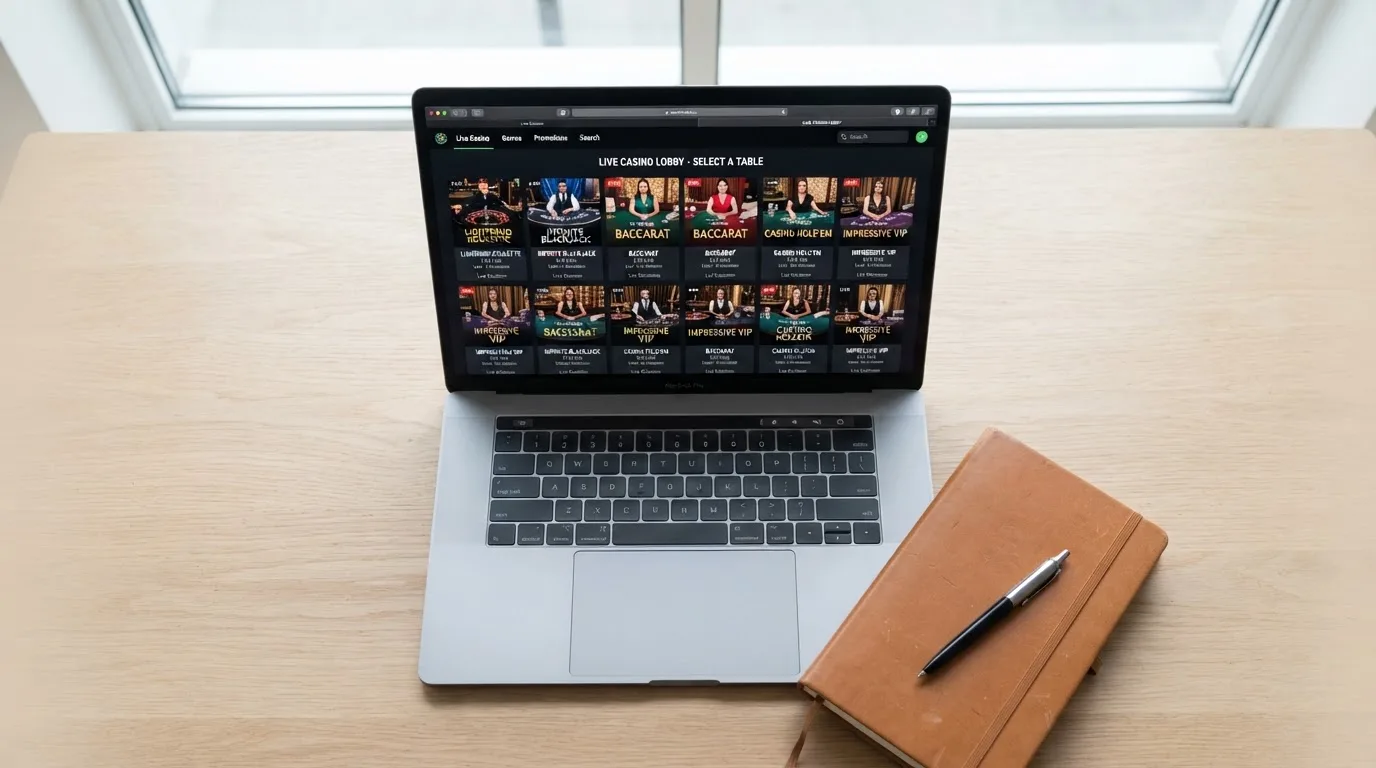
- Specific games, providers and the live lobby
- What the £2 and £5 slot caps mean for the mixed session
- The reviewed operators, in register order
- What the comparison leaves the reader holding
- Frequently asked questions
The ten licensed live casinos side by side
Every brand on this page is taken from the Commission’s public register. The table reads the register as the page’s source: who holds the licence behind each domain, whether the register marks the domain active or white-label, and whether the same register gives a verdict on the operator’s coverage of the live casino subject.
| Brand | Licence holder and GB remote casino licence | Domain status on the register | Subject support |
|---|---|---|---|
| MrQ | Tek Fox Ltd, 060629-R-337532-004 | Active | — |
| bet365 | Hillside (UK Gaming) ENC, 055149-R-331499-004 | Active | — |
| PokerStars | Stars Interactive Limited, 039108-R-319334-026 | Active | — |
| Paddy Power | PPB Games Limited, 039411-R-319335-010 | Active | — |
| Betfair | PPB Games Limited, 039411-R-319335-010 | Active | — |
| William Hill | WHG (International) Limited, 039225-R-319373-015 | Active | — |
| BetVictor | BV Gaming Limited, 039576-R-319370-028 | Active | — |
| Sky Vegas | Bonne Terre Gaming Limited, 065519-R-339675-002 | Active | — |
| Virgin Games | Gamesys Operations Limited, 038905-R-319430-022 | White Label | — |
| Gala Bingo | LC International Limited, 054743-R-330863-014 | Active | — |
Two points the table hands the reader before the prose does. First, Paddy Power and Betfair share a licensee in PPB Games Limited, and that means a complaint about one of them goes to the same Commission account the other sits under; a reader who treats them as two independent operators is reading the wrong register. Second, Virgin Games sits as a white-label rather than an active entry, which is the register’s way of saying the domain trades under another company’s licence — in this case Gamesys Operations Limited’s, and the live tables on the site are still operated under that licence, but the brand itself is a skin rather than a separately licensed entity. The subject-support column reads as a dash across the row because the register does not pass a verdict on whether a domain runs a particularly strong live casino product, only on whether it is licensed to operate one in Great Britain at all. That separation is the whole reason the register is a register and not a review site.
What the register actually tells the reader
The Gambling Commission’s public register is not a list of recommendations. It is a list of businesses that have satisfied the Commission’s licence conditions on the day the register was last refreshed, with each domain attached to the licence account that runs it. On 18 September 2026 that register held 139 businesses holding an active remote casino operating licence, plus a separate domain list covering 1,065 active and 361 white-label website entries. A white-label site trades under another company’s licence — its domain is recorded against an existing account rather than as an entry in its own right.

The licence number itself follows a fixed shape. A remote casino operating licence reads as account-R-number-suffix, where the leading six digits repeat the licence holder’s account number and the R marks a remote, online licence. So 055149-R-331499-004 names account 55149 — Hillside (UK Gaming) ENC — and the four-digit suffix records the licence in the order it was issued against that account. A reader who finds a site quoting a licence number can read those six digits back to a real account, and a site that cannot be matched to one is not on the register at all.
Three things follow from that. First, the register is the test of whether a brand is licensed, and a brand not on it is operating in Great Britain without authority. Second, the domain list records the legal operator of each website, which is why several familiar brands can sit under one account number and one fresh brand can sit as a white-label entry — both arrangements are licensed, but only one is the licence holder. Third, the register is searchable and downloadable as CSV or Excel, and the page’s underlying figures come from that download, not from a marketing page.
The legal frame that holds the licence in place
The Commission issues its licences under the Gambling Act 2005, which covers Great Britain — England, Scotland and Wales, not Northern Ireland — and the Gambling (Licensing and Advertising) Act 2014 closed the offshore loophole so that any operator taking customers in Great Britain needs a Commission licence regardless of where the company is seated. A Curaçao, Maltese or Gibraltar licence is not a substitute; it is a permission to operate in that jurisdiction, not in this one.
The Act’s section 33 makes providing gambling to people in Great Britain without a licence an offence. The Commission’s enforcement response is a mix of cease-and-desist notices, search-engine delisting referrals, and payment and hosting referrals. The Commission has no power to order ISP blocking, which means an unlicensed site can still be reached from a British IP address unless the upstream layers cut it off. What the Commission does not do is penalise the player. The cost of playing on an unlicensed site falls on the player alone, and the Commission lists it explicitly: no GAMSTOP, no ADR route, no Commission complaints procedure.
The Commission’s live-dealer standard sits inside this frame as RTS 17, issued under sections 89 and 97 of the Gambling Act 2005. RTS 17 requires that live dealer operations be fair and independently auditable, with equipment and consumables of commercial casino quality and designated staff monitoring operational integrity. The studio must run video surveillance covering all predefined gaming areas in enough detail to confirm whether dealing procedures and game rules were followed. Croupiers must receive adequate training to deal fairly according to documented procedures and game rules, with evidence of that training and refresher training maintained on file. None of this is theoretical — RTS 17 is the rule the licence is granted against, and a breach is a breach of the licence condition.
What the licence costs the operator, and what that means at the table
The same Act and its subordinate codes put paid to the more aggressive marketing the live lobby used to carry. Several of those changes do not target live tables directly, but they change the texture of a session and are worth carrying in the same read.
Age and identity are verified before the first deposit. The minimum age is 18 and has been since the Act came into force; the name, address and date of birth have been verified since 7 May 2019, before any play and before any deposit. Anonymous play is not available at a licensed site, and that includes sites that accept cryptocurrency. The Commission runs the rule for any first deposit, even when the funding source looks frictionless.
Slot stakes carry a per-cycle cap that has been in force since 2025. For players aged 25 and over the cap is £5 per game cycle, in force from 9 April 2025; for 18-to-24-year-olds it is £2, in force from 21 May 2025. The lower cap for the younger group was justified by reference to a higher average problem gambling score, lower disposable income, and ongoing neurological development. The cap sits on the slot product, not on the live table, but a session that mixes a few live hands with a few slot rounds has to count the slot side against the cap.
Deposit ceilings are not state-set. There is no statutory deposit or loss ceiling, but every operator must prompt a customer to set a financial limit before the first deposit, and that requirement has been in force since 31 October 2025. The Commission also runs a financial vulnerability check at £150 net deposits in a rolling 30 days using public data only — that figure took effect on 28 February 2025 — and a deeper financial risk assessment is announced but not yet in force. The roll-out is staged, but the direction is fixed: more friction around deposits, more frequent prompts to set a limit, and a regulatory expectation that the operator asks the player before the player has to ask themselves.
Auto-play on slots has been permanently banned since 31 October 2021, after research indicated that the feature caused players to lose track of their gambling activity. A slot spin may not be faster than 2.5 seconds, and losses disguised as wins are banned. None of these touch the live table, but a session that drifts between products picks all of them up, and a reader who plays both should know which product is the constrained one.
Reverse withdrawals — the ability to re-gamble funds already requested for withdrawal — were banned as of 31 October 2021. A player who clicks withdraw on a licensed site after that date gets the funds out of the playing balance and cannot undo it. That is a player-protection measure, but it is also a session-shape change: a live-table run that has lost its bankroll is over the moment the player presses withdraw.
Responsible play and the GAMSTOP line
Every GB-licensed online operator must take part in GAMSTOP. That has been a mandatory licence condition since 31 March 2020, so the choice between participating and not is not open to a licensed brand. Self-exclusion runs in three fixed periods — six months, one year and five years — and cannot be cancelled early. Once a player registers with GAMSTOP, every licensed brand is required to refuse their account and to close any open account held under that identity for the duration of the exclusion.
The questions readers often have include “live casino sites not on gamstop”, and the answer the register gives is also the answer the licence gives. A site not on GAMSTOP is not on the register as a GB-licensed remote casino operator; it sits outside the framework that requires participation, which means it also sits outside the framework that requires affordability checks, complaints routes, ADR and the other protections that come with the licence. The player pays nothing for breaking that line, in either direction — there is no penalty on the player for using an unlicensed site — but the player loses the protection that line carried.
Help outside the self-exclusion mechanism runs through GamCare and the National Gambling Helpline, with GambleAware funding the broader treatment and education work. None of those are substitutes for the licence; they are the support structure around it.
Crypto, iDEAL and the friction the licence insists on
The questions readers often have include crypto live casino, bitcoin live casino and live casino ideal. A crypto-funded live table is operationally identical to a bank-funded one: a stream from a studio, a chip stack on a virtual seat, a bet placed and settled. The funding side is where the licence applies. A Gambling Commission licensee must still verify name, address and date of birth before the first deposit — cryptocurrency included. The Commission’s published position is that no payment method bypasses the verification step, and the live table does not change that. The wallet can be anonymous; the account cannot.
iDEAL is a Dutch instant-payment scheme and is not a standard UK deposit route at a Commission-licensed site. A site that markets itself as accepting iDEAL to UK players is either routing through an offshore processor or operating outside the GB framework. Either way, the verification rule still applies.
The wider point is that the funding method changes the wallet, not the licence. A player who funds a live table with bitcoin is still bound by the same stake, age, identity and GAMSTOP conditions as a player who funds it with a debit card. The marketing word for the crypto side is frictionless; the licence’s word for the same player is verified. The two cannot be reconciled on the same account.
Payments and payout speed on a licensed site
Live tables sit on the same cashier as the rest of a licensed site, and the cashier has its own rules. Credit cards have been banned for gambling since 14 April 2020, including credit cards routed through e-wallets. That excludes a meaningful slice of the UK card base from the deposit side and forces the cashier to decline rather than accept. Debit cards, bank transfer, and a narrower set of e-wallets remain.
The payment flow at a licensed site is: deposit cleared to the playing balance; funds played; withdrawal requested; verification check if not already complete; payment returned to a method in the player’s name. The reverse-withdrawal ban means the withdrawal is one-way: the funds leave the playing balance at the click and cannot be reversed into play.
Payout speed is therefore a function of the payment method and the operator’s processing queue, not a marketing promise. E-wallets tend to clear within hours on a verified account, bank transfers within one to three working days, and card withdrawals within two to five working days. None of those windows are tied to the live-table product; they are tied to the payment rail, and the rail is the same rail whether the player came from a slot or a blackjack seat.
Bonuses and the 10x cap that took effect on 19 December 2025
Bonuses were the part of the offer that most needed a rule, and the rule arrived in the form of a wagering cap. Since 19 December 2025, wagering requirements on GB-licensed sites are capped at 10x, and mixed-product bonuses — bet on sport, receive casino spins, or any arrangement that mashes products across categories — are banned. The cap applies to the bonus amount, not to the deposit-and-bonus combined total, and the rule sits in the social responsibility code rather than as a guideline.
The value of the cap is what it does to the offer headline. A site advertising a 35x wagering requirement was, by definition, no longer compliant after 19 December 2025, and a site advertising 10x is now at the ceiling rather than at the bottom of the market. The advertised figure has lost the comparative meaning it used to carry. What remains is the bonus size itself, the games the bonus is restricted to, the maximum stake per round, and the maximum cashout — and the comparison has to read those rather than the multiple.
How long to clear a bonus under the cap, by stake size
The arithmetic the page runs is a wagering-turnover band, since the cap is the only part of the formula that varies. Required turnover equals bonus multiplied by the wagering factor, spins equals turnover divided by stake per spin, and play time in hours equals spins multiplied by a 5-second interval divided by 3,600. The 10x cap is the cap in force, so the band that matters runs from the lowest bonus the licensed market advertises to the highest one a player is likely to see, with stake per spin as the variable that swings the hours figure most.
Reading the band rather than the point: a £10 bonus cleared at 10x is £100 of required turnover, which is 200 spins at a £0.50 stake and 100 spins at a £1 stake; the latter runs under seven minutes at the 5-second slot cadence the Commission enforces. A £100 bonus at 10x is £1,000 of turnover, 2,000 spins at £0.50 stake and 1,000 spins at £1 stake; the £1 run is just under fourteen hours of continuous play. The two figures are not alternatives — they are the lower and upper ends of what the cap permits, and the bonus size is the player choice that moves between them. The cap does not shorten a heavy bonus; it caps the multiple on one. The hours still have to be played, and the bankroll has to fund them.
The deeper cost sits in the RTP. An expected loss for the playthrough is turnover multiplied by one minus RTP, and at the slot product that sits in the mid-to-high single digits as a percentage of turnover. A £1,000 turnover played at a 96% RTP carries an expected loss in the £40 region; at a 94% RTP it is £60. None of that is paid back by the bonus itself, which is the part of the offer the marketing words usually celebrate. The cap limits the multiple; the math determines whether the offer is worth clearing.
A live-table playthrough changes the texture. Wagering requirements on live tables are not uniformly honoured at the same percentage as on slots — many licensed sites restrict live-table contribution to 10% or 20% of stake, or exclude live tables entirely — so a player who intends to clear the bonus on a live seat has to read the contribution table before picking the offer. The 10x cap applies to the requirement; the contribution rate applies to the game the player intends to play it on.
Mobile and the live dealer stream
Live casino mobile means the same stream on a smaller screen, and the constraints are stream-side rather than product-side. A live roulette or blackjack hand does not render as a slot does; it renders as a video feed plus a chip overlay, which is a different bandwidth problem on a 4G connection than on a fixed line. Studios licensed under RTS 17 must keep the surveillance feed running, and the player’s feed is a parallel stream that the operator compresses to whatever the network carries.
The browser route is the default. Every site in the ranking set runs in a mobile browser at the same address, with the lobby rebuilt to a smaller viewport and the chip controls adapted to touch. A live seat at a £5 blackjack table is the same live seat on the phone as on the desktop; the studio does not change, the croupier does not change, and the rules do not change.
Dedicated apps add two things the browser route does not: a saved login and a push channel. The saved login is a convenience; the push channel is the marketing side of the trade, with promotional alerts and bonus reminders running through it. A player who wants the saved login without the push channel can disable notifications in the device settings and keep the rest. The licence does not require an app; the app is a delivery choice.
The stake caps and age-based rules that apply on desktop apply on mobile in the same form. A £2 stake per slot game cycle for an 18-to-24-year-old is enforced at the same level on a phone browser as on a desktop browser, because the rule is on the game cycle, not on the device. The same applies to the auto-play ban and the 2.5-second slot minimum — both are game-side, and the device does not change them.
Specific games, providers and the live lobby
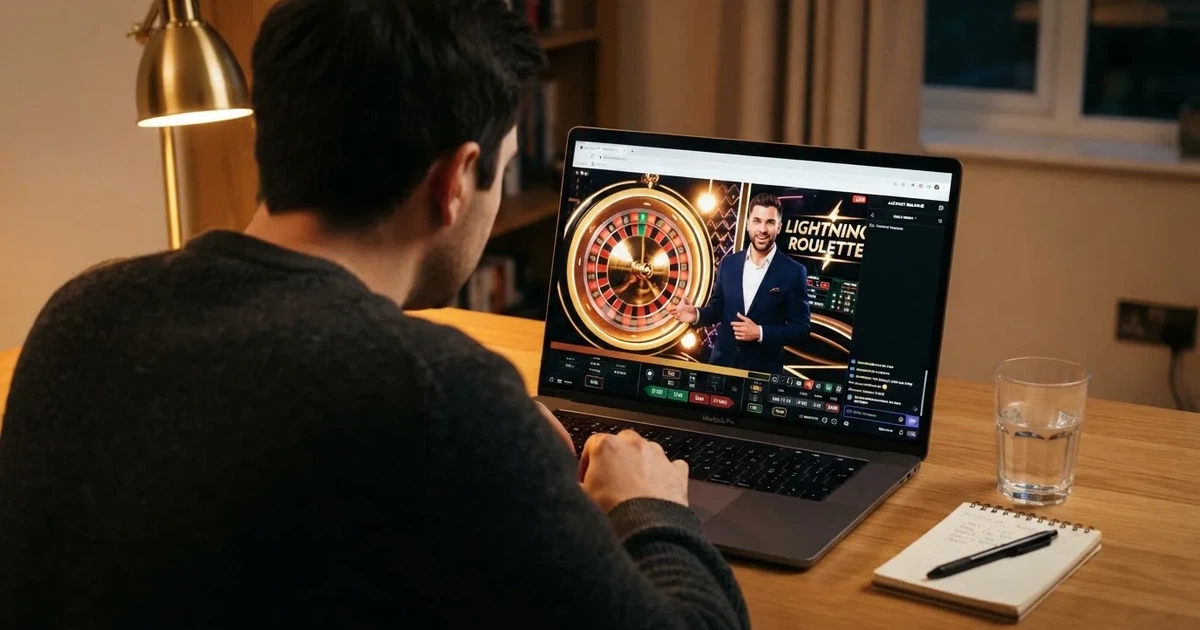
The live lobby in the UK is dominated by Evolution AB, the Stockholm-listed supplier founded in 2006 by Jens von Bahr and Fredrik Österberg. Evolution launched its first live dealer games, including live roulette and live blackjack, in 2007, listed on Nasdaq First North Premier in 2015, moved to Nasdaq Stockholm under the ticker EVO in 2017, acquired NetEnt in 2020, and acquired Big Time Gaming in 2021. The 2023 figures the company has reported put revenue at €1.798 billion and headcount at 19,221. The Evolution game-show catalogue runs from Dream Catcher in 2017 through Lightning Roulette in 2018, Monopoly Live in 2019, Crazy Time in 2020 and Funky Time in 2023 — a stack of titles that has changed what a live lobby looks like as much as the camera and sensor kit behind it.
The mainstream live staples — roulette, blackjack, baccarat — sit alongside the game-show titles. Baccarat in the Punto Banco variant that dominates live lobbies is a casino-banked game with no player strategy: both hands are dealt out according to fixed drawing rules, and the player chooses where to place the chip. Chemin de Fer, the French variant with strategic choices, is rarer in the live lobby and almost absent online; Punto Banco is the version the camera is trained on. The origins of baccarat are disputed — 19th-century France and 15th-century Italian soldiers both have a claim — but the variant on the screen is the Havana-developed Punto Banco of the 1940s, and the player’s role is to choose a side.
Crash games sit at the edge of the live and RNG product. Aviator, developed by Spribe — a studio founded in 2018 — was released in 2019 and has been described by Spribe’s chief executive as “the first true multiplayer crash game in the regulated igaming space”. The mechanic is a multiplier curve rising from 1.00x until the round randomly crashes; the player must cash out before the crash to win the stake multiplied by the current value. The product has reported more than 42 million active users and around 350,000 bets per minute across more than 5,000 operators worldwide, and that scale matters because it tells the reader where the studio sits in the market even when the game is not the operator’s flagship. Crash games are not the same product as a roulette wheel; the curve is RNG-driven rather than physics-driven, and the house edge is on the crash distribution rather than on a wheel zero. A player who treats Aviator as a live table is reading the wrong register.
Roulette and blackjack are the live staples the licence is built to cover. RTS 17 covers the studio, the camera coverage, the training, and the surveillance; the wheel and the shoe are the consumables the rule was written against, and the consumer’s trust in the stream sits on the rule rather than on the studio’s word.
What the £2 and £5 slot caps mean for the mixed session
The stake caps are not on live tables, but a session that opens on live blackjack and ends on a few slot spins has to count the slot side against the cap. A player aged 25 or over pressing spin at £5 per cycle is at the ceiling; a player aged 18-24 pressing spin at £2 is also at the ceiling. The cap is a per-cycle number, not a session total, and the operator has to enforce it.
The financial-vulnerability check at £150 net deposits in a rolling 30 days is a separate prompt, not the same one as the cap. The check uses public data and runs without the player having to do anything; it is a check on the operator’s side, with the result a soft or hard friction point the operator manages. The wider financial risk assessment is announced but not yet in force, and its roll-out will add a second layer of friction at higher deposit thresholds.
The reviewed operators, in register order
The ten brands below are listed in the order the public register gives, not in a preference order the page has chosen. Each write-up reads the register line and adds the comparison the register cannot make on its own.
MrQ — the smaller licensed site with a single-line register entry
MrQ holds a remote casino operating licence 060629-R-337532-004, issued to Tek Fox Ltd (account 60629). The licence is one of the more recent numbers in the register; the suffix indicates the licence in the order it was issued against the account, and the six-digit prefix reads back to Tek Fox Ltd rather than to a larger group. The site runs without the corporate weight of the bigger names lower in the ranking, and the register carries it as a standalone licence rather than as a white-label entry.
What the licence means in practice: MrQ is bound by the same RTS 17 standard as the bigger names, including the studio-side surveillance and training rules, and the brand sits inside GAMSTOP and the affordability-check framework the Commission runs. The site’s smaller scale does not exempt it from the rules; it means the rules apply to a smaller operator. For a reader looking for a licensed brand that is not one of the multi-account groups, MrQ is the cleanest single-line entry in the set.
bet365 — the multi-product licensed brand
Bet365 operates under the remote casino operating licence 055149-R-331499-004, held by Hillside (UK Gaming) ENC (account 55149). The account number reads back to Hillside, and the licence suffix sits deeper in the history of that account than the suffix on MrQ’s — an older operator with a longer licence trail on the register.
The licence covers the full product: sports, casino, live casino, poker, and the side markets the brand runs. RTS 17 sits on the live-dealer side of that product in the same way it sits on every other licensed brand; the studio, the cameras, the croupier training are all governed by the standard. The brand’s breadth is not a register question, and the register does not score it; what the register does score is the licence status, and that status is active.
PokerStars — the poker-rooted brand with a live casino lobby
PokerStars maintains the remote casino operating licence 039108-R-319334-026, held by Stars Interactive Limited (account 39108). The account number is one of the older six-digit prefixes on the register, and Stars Interactive Limited is the Stars Group entity that sits behind the brand in Great Britain.
The brand’s centre of mass has historically been poker rather than live tables, but the live casino lobby has been part of the GB-licensed product since the licence was issued. RTS 17 applies to the live studio the same way it applies everywhere else; the poker heritage is not a register exemption from the live-dealer standard. The licence account and the licence suffix both confirm that the brand is operating under a Commission licence rather than a related-jurisdiction licence.
Paddy Power and Betfair — two brands, one licensee
Paddy Power and Betfair both sit on the register as active domains of account 39411, held by PPB Games Limited under the remote casino operating licence 039411-R-319335-010. The single licence number covers both brands; a complaint about either goes to the same Commission account. A reader who treats them as independent operators is reading the wrong register.
The shared licence matters because the live studios on both brands are run by the same licensee under the same RTS 17 obligations. The brands differ in product emphasis — Paddy Power is broader, Betfair carries the exchange heritage — but the licence conditions on the live side are identical. The Commission’s complaints procedure, the ADR route, and the GAMSTOP participation are all routed through PPB Games Limited, not through the brand.
William Hill — the older UK high-street brand
William Hill uses the remote casino operating licence 039225-R-319373-015, issued to WHG (International) Limited (account 39225). The account number is older still, and the suffix places the licence well back in the history of the account. WHG (International) Limited is the online-side entity behind the high-street name, and the licence covers the online casino and live casino product in Great Britain.
The licence carries the same RTS 17 obligations as the rest of the set; the heritage of the high-street brand does not exempt the live studio from the studio-side rules. The brand’s GB-only scope is the register’s scope; a player on William Hill in Northern Ireland sits outside the Gambling Act 2005’s geographical frame.
BetVictor — the family-rooted licensed brand
BetVictor holds the remote casino operating licence 039576-R-319370-028, issued to BV Gaming Limited (account 39576). BV Gaming Limited is the Victor Chandler group’s online-side entity, and the licence is held directly rather than through a parent brand.
The live casino lobby runs under the same RTS 17 standard as the rest of the set, and the licence conditions on bonuses — the 10x cap, the mixed-product ban — apply on the same terms as on every other licensed site. The brand’s positioning as a single-licence operator is a register fact; the licence number reads back to BV Gaming Limited directly, with no parent brand named in the account entry.
Sky Vegas — the broadcast-linked licensed brand
Sky Vegas operates under the remote casino operating licence 065519-R-339675-002, held by Bonne Terre Gaming Limited (account 65519). The licence is one of the newer numbers on the register; the suffix indicates the licence in the order it was issued against the Bonne Terre Gaming account.
The licence carries the same RTS 17 obligations on the live studio as the rest of the set. The broadcast-linked branding — Sky as a broadcast name — does not change the regulatory status: the live studio is licensed under the same standard, and the brand is bound by the same stake caps, age checks and affordability framework as every other licensed operator. The account number and the licence suffix both confirm the brand is operating under a Commission licence.
Virgin Games — the white-label entry
Virgin Games sits on the register as a white-label domain of account 38905, held by Gamesys Operations Limited under the remote casino operating licence 038905-R-319430-022. A white-label entry is the register’s way of saying the domain trades under another company’s licence — in this case Gamesys Operations Limited’s. The live casino product on the Virgin Games site is operated under Gamesys’s licence rather than under a Virgin-specific licence.
What this means for the player: the live tables are run under Gamesys Operations Limited’s licence, and any complaint or query routes through that account. The white-label status does not weaken the licence; it changes who holds it. The RTS 17 obligations on the studio side are the same obligations as elsewhere, and the bonus conditions are the same 10x-capped terms that apply across the licensed market.
Gala Bingo — the bingo-rooted licensed brand
Gala Bingo maintains the remote casino operating licence 054743-R-330863-014, issued to LC International Limited (account 54743). LC International Limited is the Ladbrokes Coral group’s online-side entity, and the licence covers the Gala brand alongside other brands the group runs. The account number reads back to LC International Limited directly; the licence suffix places the licence in the history of that account.
The bingo heritage does not exempt the live casino product from the RTS 17 obligations. The live studio, the cameras and the croupier training are all under the same standard as the rest of the set. The bonus terms — including the 10x wagering cap and the mixed-product ban — apply on the same basis, and the brand’s GAMSTOP participation is mandatory under the same licence condition.
What the comparison leaves the reader holding
The register is not the marketing. A live table on a licensed site runs in a studio under RTS 17 with a camera system, a trained croupier and a surveillance feed; that is the same on every brand in the ranking set. The differences between brands are in product emphasis, bonus terms, mobile delivery and the corporate shape behind the licence — and those differences matter less than the shared obligation the licence enforces.
The cap that landed on 19 December 2025 changes the way the bonus headline reads. A 10x offer is now at the ceiling, not at the bottom; a 35x offer is not a legal offer. The marketing words have lost the comparative meaning they used to carry, and the comparison has to read the bonus size, the contribution rate, and the maximum cashout instead. The stake caps and the affordability checks are part of the same direction: more friction around the wallet, more prompts before play, fewer of the marketing moves that worked when the licence was less prescriptive.
A live casino on a GB-licensed site costs the operator the licence fees, the RTS 17 obligations, the GAMSTOP integration, the affordability framework and the 10x wagering cap. The cost the player pays is the house edge on the wheel or the hand, in the form the player has always paid it. What the licence buys the player is the camera that confirms the dealing procedures were followed, the training record the studio has to keep, and the complaints route to the Commission if the brand does not hold to its side. None of that is a recommendation to play; it is the description of what the licence costs and what it returns.
Frequently asked questions
What makes a table a “live casino” game rather than a standard digital one?
A live casino game streams real-time footage of a human dealer and physical equipment — a roulette wheel or a shoe of cards — with outcomes captured by cameras and sensors and relayed to the player online. A standard digital game is rendered by software from a random-number generator with no dealer and no physical equipment in the loop. The distinction is what the player is watching, not what the maths is doing.
Can a live casino table be played through a mobile casino app?
Yes. Every brand in the licensed set runs the live lobby on a mobile browser, and most publish a dedicated app that saves the login and routes notifications through the device. The stream is the same stream as on desktop; the studio, the croupier and the dealing procedures do not change because the player is on a phone. The stake caps and the age-based rules apply on the phone in the same form as on desktop.
What happens to GAMSTOP protection on a live casino site that is not on GAMSTOP?
There is no GAMSTOP protection on such a site, because GAMSTOP participation is a mandatory condition of a GB remote casino operating licence. A site not on GAMSTOP is not on the register as a GB-licensed operator, which means it is also outside the Commission’s complaints procedure, ADR route and affordability framework. The player pays nothing extra; the player loses the protection the licence carried.
Are live casino tables available to fund with iDEAL or cryptocurrency?
iDEAL is a Dutch instant-payment scheme and is not a standard deposit route at a Commission-licensed UK site. Cryptocurrency is a payment method and not an exemption from the licence; a Gambling Commission licensee verifies name, address and date of birth before the first deposit regardless of the funding source. The wallet can be anonymous; the account cannot.
Do live casino no-deposit bonuses usually carry different wagering to slot bonuses?
Live-table contribution to wagering requirements is often restricted at licensed sites — frequently to 10% or 20% of stake, or excluded entirely — so the same headline multiple plays out very differently on a live seat than on a slot. The 10x cap introduced on 19 December 2025 applies to the requirement; the contribution rate applies to the game the player intends to play. A player has to read the contribution table before picking the offer, because the multiple is not the whole story.
Created by the ”jackpotslotsuk” editorial team.