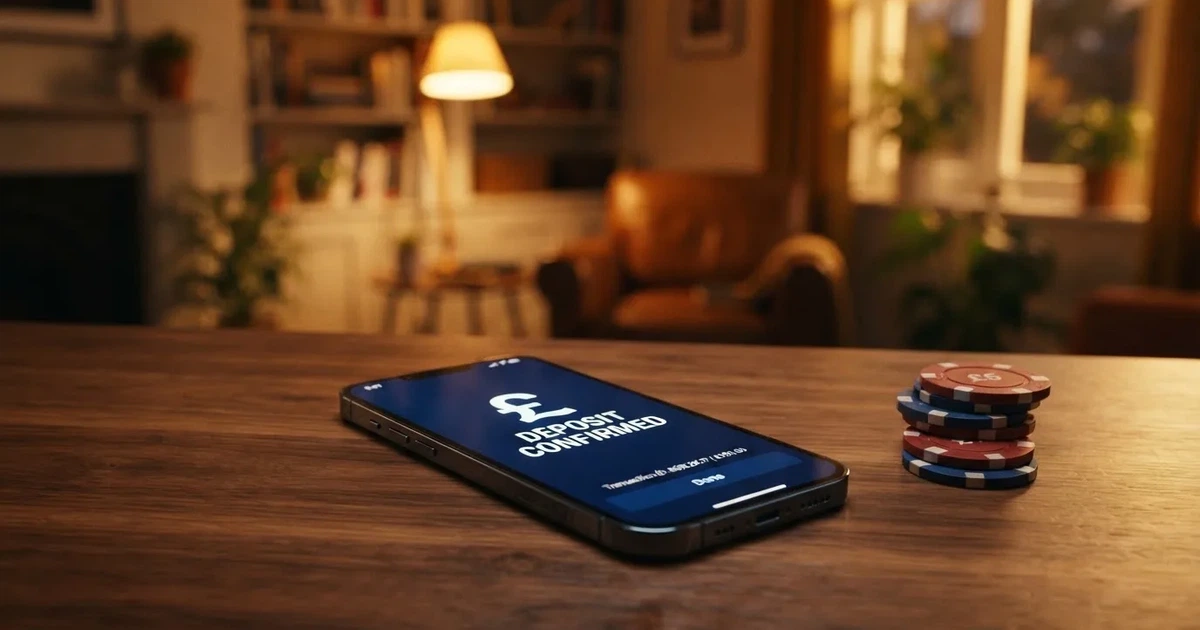
A UK casino app that pays real money has to be licensed first — what that buys you and what it costs
 Available in US
The fastest path to a casino app in the UK is the same as the slowest: every brand worth a deposit runs on a Gambling Commission licence, and the registered domain list is the public proof of it. The difference between apps is downstream of that — how stable the build feels, how quickly withdrawals clear, which payment methods the cashier accepts, how heavy the welcome bonus sits once the wagering is done, and what safer-play tools sit one tap away when the balance starts to slip. What follows compares ten such apps side by side, drawn from the Commission’s own public register, and works through the mechanics a player meets on the way.

Current as of 23 September 2026 · verified against the Gambling Commission’s public register of gambling businesses.
Table of Contents
- How the UK licensing frame shapes every app on the list
- What safer play actually looks like inside a licensed app
- Deposits and withdrawals on a UK casino app
- The 10x wagering cap and what a welcome bonus actually costs
- What “mobile” means for a casino app in practice
- How the ten licensed apps stack up
- The ten apps, in the order they appear on the register
- What the page does not promise
- Frequently asked questions
How the UK licensing frame shapes every app on the list
A casino app taking real money from someone in Great Britain runs on a Gambling Commission remote casino operating licence. The 2014 Act closed the loophole that let offshore operators serve British customers on a Maltese or Curaçao ticket; what matters from a player’s seat is that the licence is a hard precondition, not a nice-to-have. Section 33 of the Gambling Act 2005 makes taking a UK deposit without one a criminal offence on the operator’s side, and the Commission’s own enforcement work — cease-and-desist notices, search-engine delistings, payment and hosting referrals — is the visible end of that.
The register itself is the test. On 18 September 2026 it listed 139 businesses holding an active remote casino operating licence, each tied to one or more domains. A licence number on the register has the shape account-R-number–suffix, where the leading six digits repeat the licence holder’s account number and the R flags it as a remote (online) licence. That string is worth memorising as a habit: any app whose licence cannot be matched against it is not licensed, regardless of what its footer says.

Two register statuses matter most. An Active domain is one the listed account operates directly. A White Label domain trades under another company’s licence — the brand on the screen and the licence holder behind it are different entities, and the player is dealing with the licence holder for complaints purposes. On 18 September 2026 the register’s domain list held 1065 active and 361 white-label entries; the split matters because a white-label site carries the licence holder’s safer-play obligations, not the brand’s.
Minimum age is 18. Identity is checked before the first deposit or any play — that obligation has stood since 7 May 2019, so the days of an anonymous £10 flutter on a credit card are gone for good. Credit cards themselves have been banned for gambling since 14 April 2020 across every online and offline product in Great Britain, with the carve-out for non-remote lotteries paid for face-to-face; the ban extends to credit cards routed through e-wallets, so Apple Pay funding from a credit line fails at the cashier, not the bank. Debit cards and bank transfers were never touched by the ban and remain the spine of UK casino deposits.
What safer play actually looks like inside a licensed app
The cheapest way to describe a UK casino app’s safer-play toolkit is to run through what the licence conditions force every operator to ship, because they are uniform across the list and a reader comparing two apps is not comparing the existence of these tools — they are present on all of them — but their visibility.
GAMSTOP, the national online self-exclusion scheme, is a mandatory condition of every online licence since 31 March 2020. Self-exclusion runs for six months, one year or five years and cannot be cancelled early. A registered GAMSTOP exclusion blocks new account openings at every licensed UK operator; the app a player has already signed up with must close the account and return the balance. The scheme is the one piece of the system that spans brands, which is precisely the point: a self-exclusion that stops at one operator is barely a self-exclusion.
Deposit and time controls live inside the app. Operators must prompt a customer to set a financial limit before the first deposit; the prompt is the licence obligation, and it has been in force since 31 October 2025. Reality checks and time-outs are mandatory under the social responsibility code, and so is the display of safer-play information. The National Gambling Helpline (run by GamCare) and GambleAware for support and information appear in the responsible-gaming section of every licensed app.
A second safety lever landed in February 2025. Financial vulnerability checks run at £150 net deposits in a rolling 30-day window, using publicly available data; wider financial risk assessments have been announced but are not yet in force. The £150 figure is the trigger, not a cap — a player depositing £149 over thirty days sees no check, and the operator is not allowed to perform one unsolicited.
What an offshore site does not carry is the same set of obligations. No GAMSTOP exclusion blocks a new account there, no Commission complaints route exists, no ADR provider is approved, and the deposit-limit prompt is whatever the operator chooses to ship. The Commission’s enforcement against unlicensed sites is real but partial: cease-and-desist notices, search-engine delistings, payment and hosting referrals — but no ISP-blocking power. The player on an unlicensed site loses protection; the player on a licensed one loses nothing except, sometimes, a few minutes of paperwork at sign-up.
Deposits and withdrawals on a UK casino app
Three rails do almost all the work: debit cards, bank transfers and a handful of e-wallets. Apple Pay sits in a separate category because it depends on the operator’s integration rather than on a scheme the player can assume.
Apple Pay is developed and operated by Apple Inc., launched on 20 October 2014 initially for US-issued cards, with UK card support following on 14 July 2015. The mechanic a player meets is tokenisation: the actual card number is replaced with a device-specific Device Primary Account Number and each transaction carries its own dynamic security code. In-store payments use NFC to talk to contactless terminals; in-app and online, the wallet’s button on the cashier triggers the same token flow. On an iPhone with Face ID the transaction authenticates by a double-click of the side button; on Touch ID models, the same gesture on the Home button. Apple is explicit that Apple Pay is not available in every market, and that a supported card from a participating issuer is required — a Maestro-only card or a card from a smaller issuer will not appear in the wallet even on a supported device.
The regulatory frame around Apple Pay is worth knowing about because it sets the boundary of trust. In November 2024 the US Consumer Financial Protection Bureau finalised a rule bringing large nonbank digital wallet operators, including Apple Pay, under bank-like federal oversight; in 2020 the European Commission opened an investigation into whether Apple abused its control of iPhone NFC hardware to block rival payment apps’ access to contactless payments. Both are background context rather than casino-specific rules, but they explain why Apple Pay’s availability on a casino app is the operator’s integration choice rather than something a player can demand.
Bank transfers in the UK go through the Faster Payments Service, launched in 2008 and operated by Pay.UK. The scheme runs 24 hours a day, seven days a week, and most payments arrive instantly or within a couple of minutes; occasional delays stretch up to two hours. The per-transaction scheme limit is £1,000,000, though individual banks impose their own ceilings below that. The Bank of England oversees safety and stability and provides final settlement but is not a direct participant. Faster Payments is the rail most UK debit withdrawals run on, which is why a withdrawal to a UK bank account is typically minutes rather than days.
AstroPay, for completeness on the e-wallet side, was founded in 2009 and is headquartered in Uruguay. It operates as a global digital wallet for online payments, virtual and physical debit cards, and peer-to-peer transfers. The UK entity, Larstal Limited, is an electronic money institution authorised by the Financial Conduct Authority under the Electronic Money Regulations 2011; the Isle of Man entity is licensed by the Isle of Man Financial Services Authority for money transmission; the Brazilian entity is authorised by the Brazilian Central Bank as an electronic currency issuer; the Danish entity, Larstal Denmark ApS, is authorised by the Danish Financial Supervisory Authority. AstroPay’s payment-processing business, dLocal, was spun off as a separate company in 2016. AstroPay serves users across Argentina, Australia, Brazil, Canada, Colombia, Denmark, Spain, the UK, the US and Uruguay. Whether a UK casino app lists AstroPay at the cashier is the operator’s call; the regulatory scaffolding around the brand is the reason it can be listed at all.
What this means in practice is that a UK player has three rails by default (debit card, bank transfer, Apple Pay on iPhone) and one or two more only if the operator has integrated them. A PayPal deposit, an AstroPay deposit, a Trustly deposit — each is an integration choice rather than a feature of the licensed market. The “best” rail is the one the player already has and the one the operator already supports; chasing a specific method across ten apps is a worse use of an evening than picking the app on other grounds and using whatever it accepts.
The other half of payments is withdrawals, and the same logic applies in reverse: the withdrawal method is usually the deposit method, and the time is whatever the operator and the rail decide. Faster Payments withdrawals are typically minutes once the operator releases them; debit card withdrawals run on the card scheme’s refund rails and take longer; e-wallet withdrawals are operator-dependent. A claim that any UK app pays out “instantly” should be read as “instantly after the operator has approved the withdrawal”, which is a separate step.
The 10x wagering cap and what a welcome bonus actually costs
The Commission’s December 2025 rule capped wagering requirements at 10x and banned mixed-product bonuses — the kind that offer a sports bet in exchange for casino spins. The cap applies to every licensed UK operator; a bonus advertising “30x wagering” or “40x wagering” is either from an unlicensed site or from before the rule and has since been retired. The cap changes what a welcome bonus is worth because it shortens the play required to clear it, but it does not change the underlying cost — every bonus carries an expected loss, and the expected loss is a function of the turnover the bonus forces the player through.
The arithmetic is straightforward once the inputs are honest. Required turnover is the bonus amount multiplied by the wagering factor. Under the 10x cap, a £100 bonus requires £1,000 of wagering. The number of spins depends on stake per spin — at £1 a spin that is 1,000 spins; at £0.10 a spin, 10,000 spins. Play time at a 5-second-per-spin interval runs to roughly 1.4 hours for the £1 stake and 13.9 hours for the £0.10 stake. A £50 bonus at the same 10x wagering needs £500 of turnover — 500 spins at £1 or 5,000 spins at £0.10.
The expected loss follows from the turnover. At a 96% return to player, the player loses 4% of turnover on average across a long session; on £1,000 of turnover that is £40 of expected loss, on £500 of turnover £20, on £250 of turnover £10. A 94% slot raises the loss to £60 on £1,000 of turnover; a 98% slot lowers it to £20. The bonus is worth its face value only when the expected loss is smaller than the bonus itself, which is the case the marketing leans on without saying so — the bonus is funded by the house edge, and the house edge on the wagering turnover is the cost.
The right way to think of the 10x cap is as a band rather than a single number. A modest £25 bonus at 10x requires £250 of turnover, runs to 250 spins at £1 stake, and costs roughly £10 of expected loss at a 96% slot. A heavy £200 bonus at 10x requires £2,000 of turnover, runs to 2,000 spins at £1 stake, and costs £80 of expected loss at the same slot. The upper end of the band — anything with a max-cashout cap, a stake restriction during wagering, or a game-weighting table that pushes slots to 100% and table games to 10% — narrows the practical value of the bonus further, because the player is forced through slots to clear it. Free spins are a separate case: each spin carries its own stake and its own expected loss, and a “50 free spins” line item has a small expected loss at the spin stake and a clean cash value at the end if no wagering applies.
What the cap does not do is make a welcome bonus free. It removes the worst-case offers from the market — the 50x and 60x bonuses that used to require a fortnight of grinding — and leaves a narrower band where the cost of clearing the bonus is contained. A player who would never have deposited £200 anyway does not gain anything from a £200 bonus, because the wagering forces a volume of play that is itself a cost. The honest framing is that a welcome bonus is a discount on the first session’s expected loss in exchange for committing a volume of play; the 10x cap makes that discount cheaper to claim, but it does not turn the bonus into house money.
What “mobile” means for a casino app in practice
The Commission’s Remote Technical Standards set the floor; what an app does above it is the brand’s own work. Three things vary across the ten apps and are worth measuring: load time on a typical UK 4G connection, stability across the spin-reel-heavy games, and the cashier’s behaviour on a small screen.
A native iOS or Android build — a downloadable app from the App Store or Google Play — handles touch input more cleanly than a browser tab because the gesture stack is the device’s, not the browser’s. A swipe to change the stake is a swipe; a tap to spin is a tap. A browser session inside Safari or Chrome gets close, but the gesture stack adds latency and the page has to redraw on rotation, which is why a £5 max-stake slot spinning on the train feels different between a native app and a browser tab on the same phone.
The 2.5-second minimum spin interval, in force since 31 October 2021, is the pace every app has to obey. Auto-play is banned under the same rule; the player hits the spin button each time. The pace is one reason the play-time figures in the wagering calculation run long: a 10x bonus at a £0.10 stake takes 13.9 hours of active play, and that is thirteen hours of pressing a button. The 2.5-second rule is a player-protection rule dressed up as a technical one.
What varies between apps is how well they handle the failure modes. An app that drops a session on a weak 4G handover and reconnects cleanly is qualitatively different from one that leaves the player staring at a frozen reel. The withdrawal flow on mobile is the other place the seams show: a withdrawal request on a small screen that opens a full desktop-style cashier is a worse experience than one that fits the form factor, and the time to release the withdrawal is the same on both.
A separate decision is whether to download at all. A web app — the operator’s mobile site, no download — avoids the storage cost and the App Store / Google Play friction. The trade is gesture quality and offline behaviour: a web app is at the mercy of the browser and the connection. Most of the licensed UK operators ship both, and the player’s choice is whether the install is worth the gesture quality.
How the ten licensed apps stack up
The table below compares the ten featured apps on the four fields the register and the public facts carry: the licence holder, the Gambling Commission licence number, the domain’s status on the register, and whether the operator’s own materials give the page anything to confirm on the app-payment subject. Where the public register does not cover a field, the cell stays empty.
| Brand | Licence holder and GB remote casino licence | Domain status on the register | Subject support |
|---|---|---|---|
| Paddy Power | PPB Games Limited — 039411-R-319335-010 | Active | — |
| kwiff | Eaton Gate Gaming Limited — 044448-R-323408-017 | Active | — |
| Betway | Betway Limited — 039372-R-319367-029 | Active | — |
| bet365 | Hillside (UK Gaming) ENC — 055149-R-331499-004 | Active | — |
| Unibet | Platinum Gaming Limited — 045322-R-324275-019 | Active | — |
| 888casino | 888 UK Limited — 039028-R-319297-014 | Active | — |
| Virgin Games | Gamesys Operations Limited — 038905-R-319430-022 | White Label | — |
| Midnite | Dribble Media Limited — 042647-R-321653-022 | Active | — |
| Betfred | Petfre (Gibraltar) Limited — 039544-R-319290-010 | Active | — |
| BetVictor | BV Gaming Limited — 039576-R-319370-028 | Active | — |
Three readings the table supports. First, every brand sits on a Commission licence — the test that makes them eligible for this list at all. Second, one sits on a white-label domain — Virgin Games trades under Gamesys Operations Limited’s licence rather than holding its own, which is a structural fact a player should know because the safer-play and complaints obligations run to Gamesys, not to the brand. Third, the licence numbers are not interchangeable: the leading six digits are the account number, and the suffix is per-licence. Two brands can share a parent company but never a licence, because a Commission licence is per-entity.
The subject support column is empty for every row, by design: the public register does not record payment-method availability, and the operator’s own materials are the only source for that. A reader who needs a specific method at the cashier checks the operator’s banking page, not the register. The empty cells are honest gaps rather than missing data.
The ten apps, in the order they appear on the register
Paddy Power — the longest-running UK bookmaker app on the list
Paddy Power’s domain Paddy Power sits on account 39411, held by PPB Games Limited, with the active remote casino operating licence 039411-R-319335-010. The brand has been on the British high street longer than most of its peers, which is the reason its app carries the kind of cashier that supports debit card, bank transfer and the wallet integrations the UK market uses by default. The licence is the same one the brand has operated under for years, so the safer-play infrastructure (GAMSTOP enrolment, deposit limits, reality checks) is mature rather than improvised. The verdict: Paddy Power is a strong choice for players looking for a long-established name and a reliable, familiar interface.
kwiff — the small account with a single licence
Kwiff.com sits on account 44448, Eaton Gate Gaming Limited, holding the active remote casino operating licence 044448-R-323408-017. The account number is one of the newer ones on the list, and the licence is correspondingly recent. A newer account does not mean a weaker licence — every remote casino operating licence on the register passes the same fitness and financial checks — but it does mean the safer-play tooling is what the Commission required at the point of grant rather than a stack built up over a decade. The verdict: kwiff suits a player who values a smaller operation over a household name and is comfortable with a thinner public track record.
Betway — the established multi-product brand
Betway’s Betway.com is listed as an active domain of account 39372, Betway Limited, with the active remote casino operating licence 039372-R-319367-029. The brand’s UK footprint spans sports and casino, and the licence covers both. The app carries the same safer-play obligations as every other entry on this list, plus the multi-product complexity of a casino that shares a wallet with a sportsbook. The verdict: Betway is the right fit for a player who keeps casino and sports on one wallet and wants a single safer-play control panel to cover both.
bet365 — the largest UK-facing brand on the register
bet365 (Bet365.com) operates on account 55149, Hillside (UK Gaming) ENC, which holds the active remote casino operating licence 055149-R-331499-004. The brand’s UK scale is the headline fact: an app that has to handle peak-hour concurrency across millions of accounts is engineered differently from a small-operator app, and the seam shows in load times and session stability. The licence is the newer of the older ones by virtue of how the Commission has re-issued numbers over time; the obligation set is the same as every other row. The verdict: bet365 is a robust solution for power users who prioritise platform stability and high-end engineering.
Unibet — the multi-jurisdiction brand with a UK licence
Unibet (unibet.co.uk) runs through account 45322, Platinum Gaming Limited, and the active remote casino operating licence 045322-R-324275-019. The brand’s wider footprint does not change the UK licence: the player on unibet.co.uk is dealing with Platinum Gaming Limited for complaints and ADR purposes, and the safer-play obligations are the UK ones, not those of any other jurisdiction the brand operates in. The .co.uk domain is itself a signal that the brand maintains a UK-specific build rather than routing British customers to a global product. The verdict: Unibet is an ideal choice for players who want a globally recognised brand fully integrated into the UK regulatory environment.

888casino — the casino-only brand
888casino uses account 39028, 888 UK Limited, which operates under the active remote casino operating licence 039028-R-319297-014. A casino-only brand does not split the player’s attention across sports and poker, and the app’s product surface is correspondingly narrower. The licence is one of the older ones on the list by account number, which is the reason the brand’s safer-play stack is mature. The verdict: 888casino is a top pick for dedicated slots and table game players who prefer to avoid a crowded multi-product environment.
Virgin Games — the white-label on this list
Virgin Games is listed on the register as a white-label domain of account 38905, Gamesys Operations Limited, which holds the active remote casino operating licence 038905-R-319430-022. The white-label status is the fact that matters: the brand on the screen and the licence holder behind it are different entities. The player’s complaints and ADR rights run to Gamesys, not to the Virgin brand, and the safer-play obligations are Gamesys’s. A white-label is not a weaker arrangement — the licence holder is still fully responsible — but it is a different one, and a player who values transparency may want to know whose name is on the licence. The verdict: Virgin Games suits a player who is happy to play on a white-label brand under a known licence holder.
Midnite — the newer UK-facing brand
Midnite.com sits on account 42647, Dribble Media Limited, with the active remote casino operating licence 042647-R-321653-022. The brand is one of the newer entries on the register by account number, and the app’s product surface is correspondingly tighter. A newer brand is not a weaker brand — the Commission’s fitness test is the same — but the public track record is shorter. The verdict: Midnite fits a player who prefers a smaller, UK-focused brand and is comfortable with a thinner public history.
Betfred — the high-street bookmaker with a casino app
Betfred.com sits on account 39544, Petfre (Gibraltar) Limited, with the active remote casino operating licence 039544-R-319290-010. The licence holder’s name carries the Gibraltar reference because the operating company is Gibraltar-incorporated; what matters for a UK player is the Commission licence, not the place of incorporation. A Gibraltar-incorporated holder with a Commission licence is a normal structure on this list — several rows are similar — and the UK-facing obligations are the same as for a UK-incorporated holder. The verdict: Betfred works well for those who value heritage alongside a focused mobile experience.
BetVictor — the established casino-and-sports brand
Betvictor.com operates under account 39576, BV Gaming Limited, and the active remote casino operating licence 039576-R-319370-028. The brand has been on the UK market long enough that the safer-play stack is mature and the licence is one of the older entries by account number. The verdict: BetVictor stands out as a highly stable, long-running choice for players who prioritise a reliable, history-backed platform.
What the page does not promise
A UK casino app on a Commission licence is not a guarantee of any particular outcome on any particular spin. The house edge on every slot is built in; the 10x wagering cap shortens the play required to clear a bonus, not the cost. Faster Payments withdrawals are fast because the rail is fast, not because the operator is generous with timing. The £5 max stake for over-25s and £2 for 18-24-year-olds is the regulatory ceiling, not the brand’s choice. And the safer-play tools — GAMSTOP, deposit limits, reality checks, financial vulnerability checks — are the licence conditions that protect the player and exist whether the player uses them or not.
The list above is built from the Commission’s own public register and the public facts the operator pages publish. A reader comparing two apps on this list is comparing them on the same facts, and the gaps in the comparison are gaps in the public record rather than gaps in the work. A brand not on the list is not unlicensed; it is simply not featured here. The featured set is not the whole market, and a Commission licence register lists far more brands than any article can carry.
Frequently asked questions
What makes a casino app the safest option for real-money play?
A UK casino app is safe to the extent it sits on a Gambling Commission remote casino operating licence, participates in GAMSTOP for self-exclusion, prompts the player to set a deposit limit before the first deposit, and runs affordability checks at the £150 net-deposit trigger. None of these is a brand’s gift; all of them are licence conditions. The offshore alternative carries none of them.
Can I deposit into a casino app using Apple Pay?
Apple Pay works at a casino cashier if the operator has integrated it; the integration is the operator’s choice rather than a feature of the licence. Apple Pay is unavailable on a credit card under the Commission’s April 2020 ban, because the ban extends to credit cards routed through e-wallets. A debit card or a bank-issued card funding Apple Pay is fine.
Does a casino app support PayPal for deposits and withdrawals?
PayPal support is the operator’s integration decision and varies across the licensed UK market. A PayPal deposit is typically processed through PayPal’s own rails rather than Faster Payments; a PayPal withdrawal is typically faster than a debit card withdrawal once the operator releases it. The page above does not carry a per-brand PayPal status because the public register does not record payment-method availability.
What welcome bonus terms typically apply inside a casino app?
Every welcome bonus on a UK-licensed casino app since 19 December 2025 carries a wagering requirement capped at 10x and excludes mixed-product bonuses. The bonus’s real cost is the expected loss on the wagering turnover, which runs at the slot’s house edge — typically 4% on a 96% slot. A modest bonus at 10x is cheaper to clear than a heavy bonus at the same cap, because the volume of play scales linearly with the bonus size.
How well do casino apps handle touchscreen controls compared with a browser site?
A native iOS or Android app handles touch gestures through the device’s stack, which is lower-latency than a browser tab on the same phone. The 2.5-second minimum spin interval and the auto-play ban apply equally on app and browser. The practical difference shows up in stability on a weak 4G handover and in how the cashier fits a small screen.
Must a UK casino app be licensed by the Gambling Commission?
Yes — section 33 of the Gambling Act 2005 makes it an offence to provide gambling to people in Great Britain without a Commission licence, and the 2014 Act closed the offshore-licence route for UK customers. The licence number is verifiable on the public register, and any app that cannot be matched against the register is unlicensed regardless of what its footer claims.
Published by the jackpotslotsuk team.