
Ten UKGC-licensed debit card casinos, ranked and reviewed
 Available in US
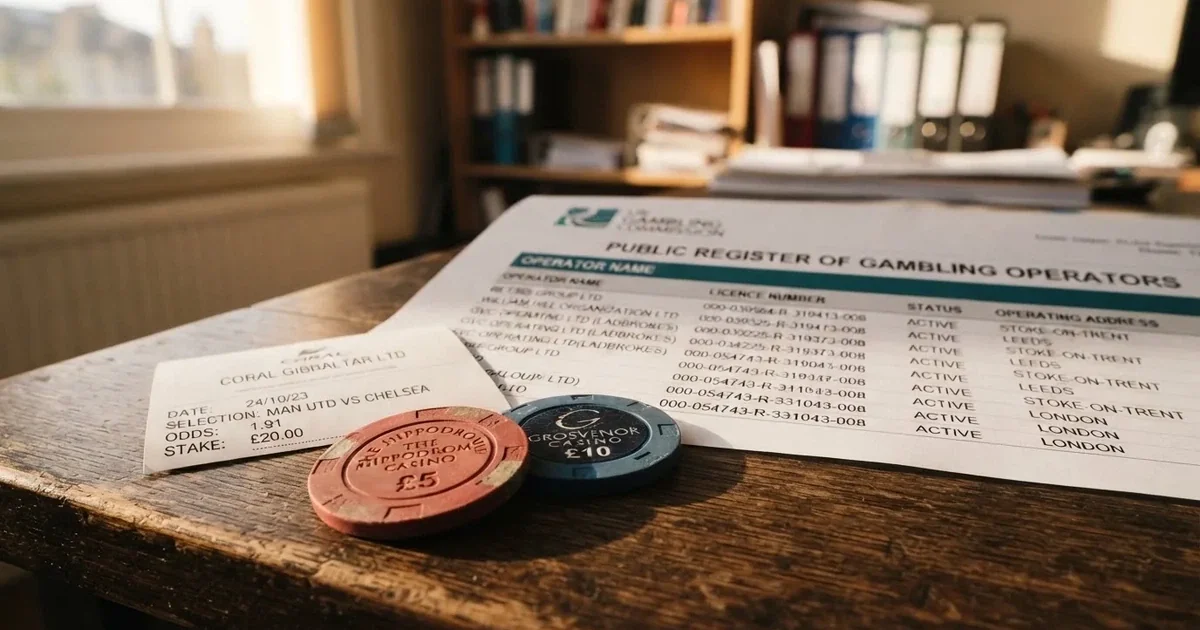
A debit card still works at every licensed UK casino a player would consider opening an account with, and that is the short version of a much longer picture. The longer one starts with the Gambling Commission’s public register, where the list of remote casino operating licences tells anyone with a browser who’s actually allowed to take a deposit from a customer in Great Britain, and ends with the specific terms each operator puts on that deposit: the identity check that runs before it, the deposit limits that surround it, the slot stake cap that decides how a single spin can be funded, and the 10x wagering cap that sets the upper bound on how long a bonus takes to clear. This page walks that whole line, using ten operators from the public register as the comparison set, so a reader who plans to fund an account by debit card knows exactly which lever to pull and which one to leave alone.
Current as of 23 September 2026 · verified against the Gambling Commission public register.
Table of Contents
- How a debit card deposit flows through a UK casino
- Settlement ranking: ten UKGC-licensed debit card casinos compared
- The fundamental landscape of debit card play at UK casinos
- The regulatory floor under every licensed UK casino
- Responsible play at a debit card casino
- The ten operators and what each one delivers a debit card player
- How long it takes to clear a bonus under the 10x cap
- Frequently asked questions
How a debit card deposit flows through a UK casino
The journey of a debit card transaction at a UK online casino has three distinct phases, and they do not all move at the same speed. Knowing which is which is the difference between expecting a deposit to clear by bedtime and watching it stall over a long weekend.
A debit card deposit, once authorised at the cashier, posts to the casino’s account in seconds. The card network — Visa, Mastercard or Maestro — moves the authorisation request from the issuing bank to the operator’s acquirer, the bank confirms the funds are there, and the casino’s wallet lights up. From the player’s seat this looks instant, and at most licensed UK casinos it is.
What sits in parallel, and what most players don’t see, is the verification. The Gambling Commission requires every licensed operator to confirm the customer’s name, address and date of birth before the first deposit plays through, a rule in force since 7 May 2019. The casino does not wait for the deposit to verify the player; it verifies before the money moves. A first-time deposit can therefore appear to clear, then sit pending until documents are uploaded and matched against the operator’s record.
The withdrawal leg is where most of the friction lives, and it is the same friction for every payment method. Once the casino’s finance team approves a payout, the money returns to the debit card through the card network’s settlement rails — the same rails that brought it in. Depending on the operator’s internal review queue, this takes minutes for the cleanest accounts and up to three working days for accounts the operator has not seen before, and that is the outer bound of what research shows for the licensed UK market. New accounts, large withdrawals and accounts that have changed banking details sit at the slow end of that range.
The headline is that the deposit leg is fast and the withdrawal leg is slow, and neither speed is unique to a debit card. Bank transfers move at a similar pace on the way in; e-wallets edge ahead on the way out. What a debit card offers over both is the absence of a third-party intermediary — no wallet to top up, no intermediary to fail, no separate verification step with a payment provider that may or may not recognise a UK bank. That is the structural advantage, and it is the reason a debit card remains the funding method the comparison set lists first.
The catch sits in the second paragraph: verification. The casino that processes the deposit in seconds can also hold the withdrawal for the same number of days if it has not yet seen the player’s documents. A debit card funded account is a UKGC-verified account, and the verification runs once, at the front door, not at the cashier.
That structural shape — fast in, slow out, verified once — is the frame against which the rest of this page measures the ten operators below. It is also the frame the rest of the regulated UK market sits inside, because the licensed casino set is a closed pool and the comparison set is drawn from it.
Settlement ranking: ten UKGC-licensed debit card casinos compared
The starting figure is 139. On 18 September 2026 the Gambling Commission’s public register held 139 businesses with an active remote casino operating licence — the kind of licence a casino needs to take deposits from customers in Great Britain. The ten operators below are a small slice of that set, chosen to give the comparison a working spread across the licensed field rather than a tight group of household names. The full list of 139 is downloadable from the register, sorted, filtered and verifiable by anyone with a browser.
The register also records a second layer: the domains. Each licence account runs one or more websites, and on 18 September 2026 the register’s domain list held 1,065 active entries and 361 white-label entries. A white-label site is one that trades under another company’s licence; many licensed operators therefore appear in the register more than once if they run multiple brands. The ten operators in this page are the domain entries that fit the comparison set, not the full list of licence holders — and the column below makes that distinction plain.
| Operator | Licence holder and GB remote casino licence | Domain status on the register | Debit card support |
|---|---|---|---|
| Betfair | PPB Games Limited (account 39411) — 039411-R-319335-010 | Active | — |
| kwiff | Eaton Gate Gaming Limited (account 44448) — 044448-R-323408-017 | Active | — |
| 888casino | 888 UK Limited (account 39028) — 039028-R-319297-014 | Active | — |
| Grosvenor Casinos | Rank Interactive (Gibraltar) Limited (account 57924) — 057924-R-334666-005 | Active | — |
| Gala Bingo | LC International Limited (account 54743) — 054743-R-330863-014 | Active | — |
| Virgin Games | Gamesys Operations Limited (account 38905) — 038905-R-319430-022 | White-label | — |
| PokerStars | Stars Interactive Limited (account 39108) — 039108-R-319334-026 | Active | — |
| 32Red | Platinum Gaming Limited (account 45322) — 045322-R-324275-019 | Active | — |
| bet365 | Hillside (UK Gaming) ENC (account 55149) — 055149-R-331499-004 | Active | — |
| MrQ | Tek Fox Ltd (account 60629) — 060629-R-337532-004 | Active | — |
The final column reads “—” across the board, and that is not an oversight. The register confirms a brand holds a remote casino operating licence; it does not record which funding methods the cashier accepts. The comparison can therefore weigh the operators on licence standing, parent company, domain status and position within the licensed set, and stop there. Whether the cashier at any one of them accepts a Visa debit card is a fact the operator’s own deposit page confirms, not the Commission’s register. The em dash in the table is honest about the gap; research did not record the answer for any of the ten operators, so this page does not state it for any of them either.
Where the comparison lands is on the columns research covers. Nine of the ten domains sit as Active on the register; Virgin Games is the lone White-label entry, trading under Gamesys Operations Limited’s licence rather than running its own. Several of the licence holders — PPB Games Limited, Hillside (UK Gaming) ENC, LC International Limited, Stars Interactive Limited, Platinum Gaming Limited — are multi-brand holding companies that carry other names on the same register, which means the comparison list has a structural overlap with the wider licensed field a reader won’t see from the operator names alone. Reading the table well means reading the holding-company column as well as the brand column, which is where most of the comparison’s value lies.
The table is the comparison set. The ten sections below it walk through each operator in turn, in the order the register set the page, and work out what the licence and the corporate structure buy the player who plans to fund by debit card.
The fundamental landscape of debit card play at UK casinos
The first thing to settle is what a debit card actually is, because the term covers more instruments than the comparison table suggests.
A debit card draws money directly from the cardholder’s bank account at the point of sale. That is the structural feature: the card is not a separate line of credit, it is not a deferred payment, and it is not a prepaid balance waiting to be spent. It is an instruction to the issuing bank to move a specific sum to a specific merchant at a specific moment. The five dominant networks the card sits on are UnionPay, American Express, Discover, Mastercard and Visa, and a UK customer will most often hold one of the last two, in their debit form. The UK’s former Switch and Solo networks have been folded into Maestro for international compatibility, so an older customer may still hold a card branded Maestro rather than Mastercard — a rebrand, not a different instrument, and one a UK cashier will route through the same rails either way.
What the issuer sees is the merchant category code for online gambling, attached to the authorisation request the moment the player hits confirm. Barclays customers can manage what that code does at the bank’s end: the Barclays app lets a customer block gambling transactions the bank can detect, with the bank reminding the customer that transactions it cannot detect remain their responsibility. That block is set at the bank, not at the casino, and it sits across every gambling merchant the bank can identify — there is no operator-by-operator opt-out within it. Monzo and Starling Bank, both UK challenger banks headquartered in London and both now full UK banks under the Prudential Regulation Authority — Starling since July 2016, with total assets of £16.6 billion as of 2026 — offer their own versions of the same control through the card-freeze feature in their apps. The customer’s bank is the second veto point after the casino, and it is the one most players forget exists until they need it.
What the casino sees is the acquirer and the payment processor. The acquirer is the bank that holds the casino’s merchant account; the processor routes the authorisation request through the card network to the customer’s issuing bank. None of this is invisible to the customer: the deposit confirmation carries the merchant descriptor, and most licensed UK operators include the operator’s registered trading name in that descriptor, so a customer who later searches their statement can match the entry to the brand they played at. That descriptor is also the data point the bank uses to apply a gambling block, which is why a card-freeze toggle in a banking app can stop the next deposit before the cashier ever sees it.
The number that sits behind this whole machinery is the register count. The 1,065 active and 361 white-label domain entries recorded on 18 September 2026 represent the licensed surface of UK online gambling. Most of those domains are not headline casinos; many are slot brands, sportsbooks, bingo rooms and white-label skins that route through a parent licence. The ten operators in the comparison table are the recognisable names within that larger list, and the structure of the licensed field is the reason ten operators can offer such varied products under one regulatory regime: each is bound by the same UKGC licence conditions, but each runs its own cashier, its own bonus structure and its own game library.
The reason a debit card works at every licensed UK casino is structural, not promotional. UK banks are integrated into the global card networks, the networks are integrated into the UK’s gambling-acquiring infrastructure, and the Gambling Commission requires licensed operators to verify customers before the first deposit — not to verify their funding method. A debit card sits at the intersection of all three, and the rest of the page works out the consequences.
The regulatory floor under every licensed UK casino
A remote casino operating licence is what the Gambling Commission calls a permission to provide facilities for remote gambling, and holding one is the only legal way to take deposits from customers in Great Britain. The Commission’s authority sits under the Gambling Act 2005, which covers England, Scotland and Wales — Northern Ireland runs its own regime — and the Gambling (Licensing and Advertising) Act 2014 closed the loophole that had let operators locate offshore and still serve British customers. A Curaçao, Maltese or Gibraltar licence on its own does not cover a player based in Great Britain; the operator needs a UKGC licence alongside it.
The register is the test. Anyone can search it on gamblingcommission.gov.uk, filter by licence type and read the licence number in the form account-R-number-suffix, where the leading six digits repeat the licence holder’s account number and the “R” marks a remote licence. The 139 businesses with an active remote casino operating licence on 18 September 2026 are the firms that pass that test today.
For each of the ten operators in the comparison, the licence number ties the brand back to a named account holder. PPB Games Limited holds Betfair’s licence; Hillside (UK Gaming) ENC holds bet365’s; LC International Limited is the parent of Gala Bingo and several other brands in the same group; Stars Interactive Limited holds the PokerStars UK licence. The corporate structure matters because the licence conditions bind the holding company, not just the brand: a breach at one of LC International’s domains puts the whole group’s standing on the register under review.
What a UKGC licence does for the customer is concrete and consistent across the licensed set:
- Mandatory identity verification before the first deposit or any play, in place since 7 May 2019
- Minimum age of 18, with operators obliged to act if a younger customer slips through
- Participation in GAMSTOP, the national online self-exclusion scheme, mandatory since 31 March 2020
- Auto-play banned on slots, with no spin faster than 2.5 seconds, since 31 October 2021
- Loss-disguised-as-win audio and visuals banned on slots, since 31 October 2021
- A maximum stake per game cycle on online slots — £5 for players 25 and over since 9 April 2025, £2 for 18-24 since 21 May 2025
- A prompt to set a financial limit before the first deposit, in place since 31 October 2025
- A financial vulnerability check at £150 net deposits in a rolling 30-day period, from 28 February 2025, drawing on public data only
- A 10x cap on wagering requirements, in force since 19 December 2025
- A ban on credit cards for gambling, including credit-card-funded e-wallet deposits, since 14 April 2020
- A ban on mixed-product bonuses such as “bet on sport, get casino spins”, also from 19 December 2025
The whole package is the LCCP — the Licence Conditions and Codes of Practice — and the social responsibility code sits inside it. The Commission does not supervise each spin; it supervises the operator and trusts the operator’s own controls. When those controls fail, the regulator can revoke the licence, suspend the operating company or fine the holder, and it uses those powers.
| Regulation | Effective Date | Detail |
|---|---|---|
| Identity verification | 7 May 2019 | Before first deposit |
| GAMSTOP | 31 March 2020 | Mandatory participation |
| Slot stake cap (25+) | 9 April 2025 | £5 per cycle |
| Slot stake cap (18-24) | 21 May 2025 | £2 per cycle |
| Financial vulnerability check | 28 February 2025 | £150 net deposits |
| Wagering cap | 19 December 2025 | 10x limit |
| Regulation | Effective Date | Detail |
|---|---|---|
| Identity verification | 7 May 2019 | Before first deposit |
| GAMSTOP | 31 March 2020 | Mandatory participation |
| Slot stake cap (25+) | 9 April 2025 | £5 per cycle |
| Slot stake cap (18-24) | 21 May 2025 | £2 per cycle |
| Financial vulnerability check | 28 February 2025 | £150 net deposits |
| Wagering cap | 19 December 2025 | 10x limit |
For players, the offshore alternative is not a free choice. Providing gambling to people in Great Britain without a Commission licence is an offence under section 33 of the Gambling Act 2005. The Commission disrupts unlicensed sites — cease-and-desist notices, search-engine delisting, payment and hosting referrals — but it has no power to block them at ISP level. The penalty for the operator is real; the penalty for the player is none. What the player loses on an unlicensed site is the protection: no GAMSTOP, no Commission complaints route, no approved alternative dispute resolution. A debit card deposit at an unlicensed site also typically runs against the bank’s own gambling block, where the customer has set one.
On the tax side, players pay no tax on gambling winnings in the UK; operators pay Remote Gaming Duty, raised from 21% to 40% from 1 April 2026 — the operator’s bill, not the player’s. The register is therefore not a list of who is licensed and who isn’t. It is the operational floor under every brand the comparison names, and the floor is the same for all ten of them.
Responsible play at a debit card casino
The gambling controls attached to a UKGC licence do not distinguish between funding methods. A debit card funded account is a fully regulated account, and the safety measures attached to it apply in full. The shape of those measures has changed three times in the last two years, and each change has tightened the loop the player is held in.
GAMSTOP
The national self-exclusion scheme is a mandatory condition of every online licence since 31 March 2020. A customer registering with GAMSTOP chooses an exclusion period of six months, one year or five years, and cannot cancel it once active. Every licensed operator must check new customers against the GAMSTOP database before the first deposit or any play, and must refuse service to anyone on the register. A debit card deposit at a UK casino is, by definition, a deposit at a GAMSTOP-participating site — there is no licensed alternative.
Deposit limits
There is no state-set deposit ceiling at a UK casino. Operators are required to prompt the customer to set a financial limit before the first deposit, a rule in force since 31 October 2025, and most go further with daily, weekly and monthly caps the customer can adjust downward without notice and upward only after a cooling-off period. The limit sits at the operator’s cashier, not at the issuing bank. A customer who hits the operator’s weekly cap can still authorise the transaction at the bank, but the cashier rejects it before the money moves. That two-layer split — operator cap on one side, bank authorisation on the other — is the reason a UK customer who wants to enforce a hard ceiling has to set the cap on the casino, not just rely on the bank’s own controls.
Financial vulnerability checks
From 28 February 2025, operators run a check at £150 net deposits in any rolling 30-day window, using public data only — court records, insolvency registers, the electoral roll. The check flags markers the operator has to consider before accepting further deposits; the operator decides what to do with the flag. Wider financial risk assessments, drawing on open banking and credit reference data, have been announced but are not yet in force. The current rule is a lighter version of the model the Commission consulted on, and the heavier version is the one to watch.
Slot stake caps
Online slots carry a maximum stake per game cycle — £5 for players aged 25 and over since 9 April 2025, £2 for 18-24 since 21 May 2025. The cap sits on the spin, not on the session, and it does not vary by deposit method. A debit card funding a £5 spin is the maximum the spin will accept; a debit card funding a £20 spin is a transaction the cashier will refuse to authorise once the operator’s software enforces the cap. This is the most concrete of the controls, because it is the only one the player experiences directly at the slot rather than through the cashier or a pop-up.
Reality checks and time-out
Auto-play has been banned since 31 October 2021, with no spin faster than 2.5 seconds, and the operator must display a reality-check pop-up at intervals the customer can set. The pop-up carries session time and net position; it does not carry a recommendation. The customer can take a time-out — 24 hours, one week, one month — from the responsible gambling page, and a longer self-exclusion from the same page or directly through GAMSTOP.
Help lines
GamCare runs the National Gambling Helpline, and GambleAware funds treatment and research. Both names sit on every licensed operator’s responsible gambling page; both are independent of the operator.
What all of this means for a debit card user is that the bank block, the operator limit, the GAMSTOP exclusion and the slot stake cap stack on top of each other. The deposit can be refused at any of four points — the bank, the operator’s cashier, the operator’s responsible-gambling trigger or the GAMSTOP check — and the customer controls the first two and is governed by the last two. The structure is a layered defence: each layer catches something the layer below doesn’t, and none of them is a substitute for the others.
The ten operators and what each one delivers a debit card player
This section reads each of the ten operators the comparison set names, working through the licence holder, the standing on the register and what the comparison is actually buying. The format is the same for each block: a licence line, a short positioning sentence, and a closing judgement.
Betfair — the long licence and the Flutter parent behind it
Betfair’s domain sits on the register as an active entry under account 39411, with the licence held by PPB Games Limited and numbered 039411-R-319335-010. PPB Games is Flutter Entertainment’s UK-facing gaming arm, the same holding group that holds the PokerStars UK licence; the account number sits toward the older end of the comparison set, reflecting the brand’s long history on the UK market. The structural feature is the Flutter membership — a regulatory breach at any of the group’s UK-facing licences puts every other Flutter licence under the same Commission review.
A Flutter-backed UKGC licence is a parent group with the depth to absorb a regulatory finding, and a brand long enough on the register that its compliance milestones are documented publicly. The trade-off is the matching one — a group that large also draws the largest regulatory scrutiny, and that is the price of the standing.
kwiff — the single-brand standalone with a middle-range licence
Under account 44448, kwiff is listed as an active domain. The licence belongs to Eaton Gate Gaming Limited and carries the number 044448-R-323408-017. Eaton Gate is not part of a multi-brand holding group on the register — the company holds this one UK-facing licence and runs one main brand, which puts the operator’s structure on the simpler end of the comparison set. The account number is in the middle of the register’s range, neither the longest-running licence nor the newest grant.
A single-brand operator on its own licence offers the reader a simpler corporate structure behind the cashier and a quieter position in the licensed set than the holding-group names. What it costs is the cross-brand integration the holding groups carry — a regulatory issue at one Flutter licence draws on the same parent company’s standing, while a regulatory issue at kwiff’s single licence is kwiff’s alone to answer for.
888casino — the brand under 888 UK Limited
888casino sits on the register as an active domain under account 39028, with the licence held by 888 UK Limited and numbered 039028-R-319297-014. The licence holder is the brand’s UK-specific entity rather than a Gibraltar or Maltese parent, which puts the operator among the most UK-domiciled entries in the comparison set. The account number is among the older in the register, reflecting 888’s long presence on the UK market.
A UK-domiciled licence holder narrows the distance between the operator and the Commission that supervises it. The trade-off is the licence’s age relative to the current regulatory architecture: a licence granted under the post-2014 regime has been tested against the modern UKGC framework from day one, while an older licence has been migrated into that framework, which is a different operational journey.
Grosvenor Casinos — the high-street name behind a Gibraltar-licensed operator
Grosvenor Casinos is the active domain associated with account 57924, where Rank Interactive (Gibraltar) Limited holds licence 057924-R-334666-005. The licence holder’s name references Gibraltar, but the licence is a UKGC remote casino operating licence, granted under the post-2014 regime that requires the Commission to licence every operator serving British customers regardless of where it is based. Grosvenor’s UK high-street casino estate operates under separate premises licences and is not part of this register entry.
The brand heritage is land-based, and the licence is wholly remote. The two are different files, and the high-street past does not flow into the online licence standing. The reader picking Grosvenor for the brand’s UK high-street name is reading across two distinct operations.
Gala Bingo — one slot in the LC International group
Account 54743 is the home of Gala Bingo on the register, an active domain under LC International Limited’s remote casino operating licence 054743-R-330863-014. LC International is the parent of several well-known UK-facing gambling brands — Ladbrokes, Coral and others sit under the same holding company. The licence conditions bind the group, not the brand alone, which means a regulatory action at any of LC International’s other domains puts Gala Bingo’s licence under the same Commission review.
The reader picking Gala Bingo is picking one slot in a multi-brand licence holding, and the group’s standing is the asset the licence travels on. The cost is the same as the benefit — a regulatory issue elsewhere in the group is a regulatory issue here too, even though the cashier and the bonus terms are independent of the sister brands.
Virgin Games — the comparison’s lone white-label entry
Virgin Games is the comparison’s lone white-label entry: Virgin Games operates under account 38905, with Gamesys Operations Limited carrying licence 038905-R-319430-022. White-label means the domain trades under another company’s licence rather than holding its own; the brand recognition belongs to Virgin, and the regulatory standing belongs to Gamesys. The operator behind the cashier is Gamesys; the operator behind the homepage is Virgin.
The white-label structure does not weaken the player protection on the account. GAMSTOP, the verification rules, the slot stake cap, the 10x wagering cap — all apply because they apply to the licence, and the licence is fully UKGC. What it changes is corporate transparency, and that is the only material difference between a white-label entry and an active entry on the same register.
PokerStars — Stars Interactive’s UK-domestic entry
The .uk TLD of pokerstars marks it as the UK-domestic licence entry: Stars Interactive Limited, account 39108, holding licence 039108-R-319334-026. Stars Interactive is the Flutter Entertainment entity that holds several UK-facing licences; the .uk domain ties this entry to the UK regulatory regime specifically rather than the broader PokerStars global operation.
A reader choosing between PokerStars and Betfair is choosing between product positions within one holding group, not between two distinct regulatory frameworks. The Flutter orbit is the same, the licence family is the same, and the comparison simplifies once that is read in. What the comparison still has to do is weigh the two on what they actually offer the player — the poker product versus the casino and sportsbook product — within a parent group that supervises both.
32Red — the Kindred entity with a long register history
32red sits as an active domain under account 45322, held by Platinum Gaming Limited on licence 045322-R-324275-019. Platinum Gaming is a Kindred Group entity; the account number sits in the middle of the register’s range, indicating a licence that has been active through several regulatory cycles without being one of the oldest or the newest. The Kindred membership confirms the corporate structure; the licence confirms the standing.
A reader looking for a Kindred-owned brand with a long register history has the 32Red position. What the licence does not confirm is the product’s edge over the other Kindred brands on the register — that comparison sits on the operator’s own product pages, not on the Commission’s register. The structural standing is settled; the product comparison is operator-side.
bet365 — the family-owned licence and the breadth of the product
The bet365 domain is recorded as an active entry against account 55149, with Hillside (UK Gaming) ENC holding licence 055149-R-331499-004. Hillside is the bet365 family company’s UK-facing entity; the licence covers the full UK online casino product rather than sports betting alone. The brand recognition is the largest in the comparison set; the licence sits with the family company rather than a separately listed plc.
The family-company ownership is the structural feature, and the product breadth is the operational one — a brand with a thousand lines carries a cashier that follows them. The reader prioritising brand familiarity over a quieter comparison pick has it; the reader picking on the basis of a leaner product offering does not.
MrQ — Tek Fox’s standalone licence and its jurisdictional position
Tek Fox Ltd, account 60629, holds the licence under which MrQ sits as an active domain — remote casino operating licence 060629-R-337532-004. The account number is the highest in the comparison set, marking Tek Fox as one of the more recently licensed holders among the ten, and the company is independent of the holding groups behind the other nine. The licence is a full remote casino operating licence with no white-label structure and no parent-company overlay.

A recently licensed standalone operator is the simplest corporate structure in the comparison set, and that simplicity trades regulatory history for operational clarity. The reader prioritising a clean single-licence setup over the longer compliance history has it; the reader looking for the deeper regulatory track record has it elsewhere on this list.
How long it takes to clear a bonus under the 10x cap
The 10x cap on wagering requirements, in force since 19 December 2025, changes the arithmetic that decides how long a bonus takes to clear. The formula belongs to the writer; the result is best stated as a band rather than one figure, because the band’s width is set by the slot stake cap the player sits under, not by the formula itself.
Required turnover equals the bonus amount multiplied by the wagering factor, and with the 19 December 2025 cap in force the wagering factor cannot exceed 10. The number of spins needed is the turnover divided by the stake per spin. The play time in hours is the spins multiplied by the 5-second spin interval, divided by 3600.
For a £100 bonus at the 10x cap, the required turnover is £1,000. At a £1 stake per spin that is 1,000 spins, taking roughly 1 hour 23 minutes of play; at the £2 stake cap that applies to 18-24 players it is 500 spins and about 42 minutes; at the £5 cap that applies to players 25 and over it is 200 spins and about 17 minutes. The band is from 17 minutes at the high stake end to about 1 hour 23 minutes at the low stake end, and the band is the wagering requirement’s real footprint.
For a £200 bonus the turnover doubles to £2,000, and the band stretches from about 33 minutes at the £5 stake cap to roughly 2 hours 47 minutes at a £1 stake. For a £50 bonus the turnover is £500, with the band running from about 8 minutes at the £5 cap to about 42 minutes at a £1 stake. The pattern holds across bonus sizes — the band’s upper end roughly doubles with a doubling bonus, and the bandwidth is set by the stake the player picks.
The honest summary: at the 10x cap, even a substantial bonus clears within a single afternoon of moderate play at the highest legal stake. The wagering requirement is no longer the time-eater it was under the pre-cap regime — the speed limit is now a single-digit multiple of the bonus, and the band’s width is the stake range the player chooses, not the cap itself. The key assumption is that only the bonus amount is being wagered; if the operator requires the deposit to be wagered too, the turnover doubles and the band stretches accordingly.
This is a statistical estimate, an average over many spins under the stated assumptions. It promises no win, no payout and no return.
Frequently asked questions
Is it legal for a UKGC-licensed casino to accept a debit card?
Yes. A UKGC-licensed casino operates under the Gambling Act 2005 and the Gambling (Licensing and Advertising) Act 2014, and the framework restricts credit cards for gambling but does not restrict debit cards. Every operator in this comparison holds the relevant licence, and a debit card deposit at any of them sits within the regime.
What is the minimum deposit I can make with a debit card?
The minimum is set by the operator’s cashier, not by the regulator. Most UK-licensed casinos set their minimum debit card deposit somewhere in the £5 to £20 range, and the figure is published on the operator’s own deposit page rather than on the Gambling Commission’s register. The £5 floor on online slot stakes for over-25s sets a practical lower bound at many brands.
How quickly does a debit card deposit reach my casino account?
A debit card deposit at a UK-licensed casino typically posts to the player’s account within seconds of cashier authorisation, on the Visa, Mastercard or Maestro rails. The cashback leg is slower: withdrawal times at the same operator run from minutes for a previously verified account to several working days for a first-time withdrawal under internal review.
Will I need to verify my identity before my first debit card deposit?
Yes. The Gambling Commission requires every UK-licensed operator to confirm the customer’s name, address and date of birth before the first deposit or any play, a rule in place since 7 May 2019. The casino usually lets the deposit clear, then holds withdrawals until the documents are uploaded and matched against the operator’s record.
Does GAMSTOP apply if I fund my account with a debit card?
Yes. GAMSTOP is a mandatory condition of every UK online licence since 31 March 2020, and it applies to every account at every UKGC-licensed operator regardless of funding method. A customer on the GAMSTOP register will be refused at the cashier of every UK-licensed casino, debit card included.
Written by the editors at jackpotslotsuk.