Anjouan casino licence in the UK: the gap between offshore authority and British protection
 Available in US
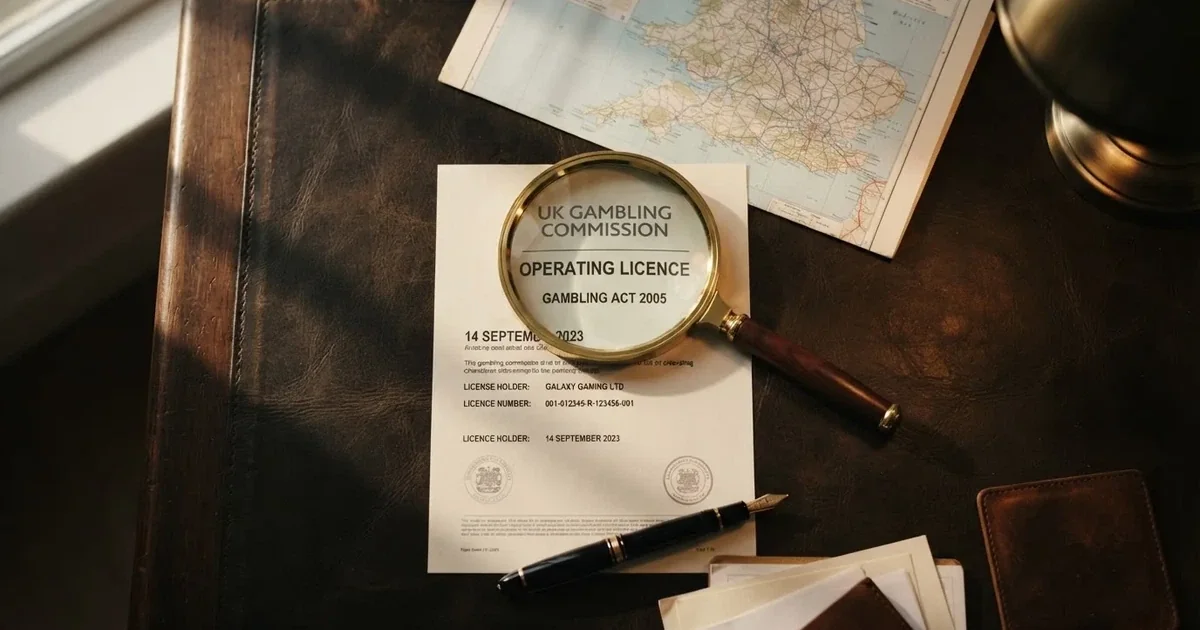
An Anjouan licence comes from a small autonomous island in the Comoros archipelago, advertised as a low-cost route into online gambling. For a player based in Great Britain, that single line of fact decides the rest of the page. A licence issued on Anjouan has no standing under the Gambling Act 2005, which means an Anjouan-licensed site cannot lawfully accept a UK player’s deposit on the strength of that licence alone. What the player trades for the lower friction is the layer of protection that the Gambling Commission requires: mandatory GAMSTOP self-exclusion, the stake and wagering caps introduced over the past two years, and access to a UK route for complaints when a withdrawal stalls.

The £ sign here is the one that matters. The rest of the page works through what an Anjouan licence is, why the Commission treats it the way it does, and what a UK player is signing up for when they open an account at one of the offshore sites that operate under it.
Current as of 23 September 2026 · verified against the Gambling Commission’s public register and the Gambling Act 2005.
Table of Contents
- What an Anjouan gaming licence actually is
- Why a UK player meets an Anjouan-licensed site at all
- The Gambling Commission’s own register, and what it actually lists
- The four protections a UK player gives up on an Anjouan licence
- Responsible gambling safeguards at a Commission-licensed site
- The offshore sites the Commission does disrupt, and how it does it
- How a Commission-licensed casino is actually set up
- Where the player can verify, and where they cannot
- Top ten UK-licensed casinos compared on licensing grounds
- What a UK player trades when they choose an offshore site
- The wagering-requirement cap and what it changes
- Where the player sees the gap in practice
- A note on payments
- Frequently asked questions
What an Anjouan gaming licence actually is
Anjouan is the easternmost island of the Comoros, an autonomous territory with its capital at Mutsamudu. The Anjouan Offshore Finance Authority was set up in 2002 to market the island as a low-tax financial centre, and Anjouan Gaming, trading as the “Internet Gaming Regulatory Authority”, sits inside that authority and issues separate B2C and B2B internet gaming licences. The licence itself is real in the sense that a piece of paper exists and a fee is paid: that is the limit of “real” once the question is what it authorises a site to do for a player in London or Manchester.

The structure is offshore from the ground up. The Central Bank of Comoros stated in 2014 that no licence had been delivered for offshore financial activities on Anjouan and that it does not recognise licences issued by the Anjouan Offshore Finance Authority. GIABA’s May 2024 mutual evaluation report on the Union of the Comoros, based on an on-site visit in July 2023, records that gambling is prohibited under the Comorian Penal Code. A reader does not need the geopolitics to feel the point: the body that issues the licence is not recognised by the central bank of the country it sits inside, and the country’s own anti-money-laundering assessor reports gambling as prohibited. None of that makes the licence worthless everywhere. It makes it worthless as evidence that the regulator of the player’s jurisdiction has done the work.
Two practical consequences follow for a UK resident. First, an Anjouan-licensed site has no obligation to enforce any UK rule, because no UK rule binds it through that licence. The Commission’s stake caps, the wagering-requirement cap introduced on 19 December 2025, the credit-card ban, the mandatory identity check before the first deposit — none of those are conditions of an Anjouan licence. Second, the player has no Commission-backed complaints route if the site refuses a withdrawal, because that route is a privilege of holding a Commission licence. What the player has is whatever the site’s own terms say and whatever dispute process the site itself sets up.
A licence from Anjouan is therefore best read as a marketing fact, not a regulatory one. It tells a player the operator chose a low-friction jurisdiction. It does not tell the player anyone competent to act on a complaint has looked at the games, the wallet segregation, or the self-exclusion mechanics.
Why a UK player meets an Anjouan-licensed site at all
The pipeline that brings an offshore site in front of a UK customer is the same one the Commission has been trying to close since the Gambling (Licensing and Advertising) Act 2014 came into force on 1 December 2014. Before that Act, operators licensed in the European Economic Area, Gibraltar or “white-listed” jurisdictions such as Alderney, the Isle of Man, Tasmania and Antigua and Barbuda could serve Great Britain customers without a Commission licence. After 1 December 2014, any operator transacting with or advertising to consumers in Great Britain must hold a Commission licence regardless of where it is based, and must pay 15% point-of-consumption tax on gross gambling yield from GB customers. Under section 33 of the Gambling Act 2005, providing or advertising remote gambling facilities to GB consumers without a Commission licence is a criminal offence, irrespective of any other licence the operator holds.

Anjouan is not on the post-2014 whitelist. It was not on the pre-2014 whitelist either. The pattern of how an Anjouan-licensed casino ends up advertising to UK players is therefore not “different regulatory lane” but “the regulatory lane that the Commission is set up to disrupt”. The Commission’s enforcement toolkit is limited: cease-and-desist notices, search-engine delisting, payment and hosting referrals. It has no power to compel ISPs to block sites. What it cannot do, it relies on payment processors and ad networks to do. What those channels cannot do, the player walks through, which is the slot the offshore site occupies.
For a player, the marketing line that says “internationally licensed” usually means exactly this: a licence from a jurisdiction the Commission does not recognise for the purpose of taking GB deposits, sold as if recognition were a marketing choice rather than a statutory one. The first deposit is the test. If the site lets it through without a Commission licence behind it, the regulatory position is exactly what the Act says: the operator is acting unlawfully, and the player is on the wrong side of the protection gap.
The Gambling Commission’s own register, and what it actually lists
The Commission’s public register is the only thing that resolves whether a brand holds a Commission licence. The register can be searched online and downloaded in full as CSV or Excel files, and on 18 September 2026 it listed 139 businesses holding an active remote casino operating licence. The register’s domain list records each website against the licence account that runs it, with one of three statuses: Active, Inactive or White Label. On the same date the register held 1065 active and 361 white-label domain entries. A white-label site trades under another company’s licence; the player sees one brand, the licence sits in another name.
A remote casino licence number on the register has the form account-R-number-suffix, where the leading six digits repeat the licence holder’s account number and the “R” marks a remote (online) licence. Reading the licence number is therefore reading the operator: a player who knows the pattern can pull up the licence account and see who actually holds it, what other domains run against it, and whether the status is active or white-label. A brand that refuses to give the licence number is one a player cannot verify, full stop.
The register is also a list of who is not on it. Every Anjouan-licensed site that takes a GB deposit is by definition not on this list, because holding an Anjouan licence does not put a brand on the Commission’s register. The presence of 139 active remote casino licensees and 1426 active or white-label domains is the picture of the regulated side of the UK market; the offshore side is invisible to the register by design.
The four protections a UK player gives up on an Anjouan licence
The cleanest way to read the gap is to read the four protections a UK licensee must provide, then to read each one as a missing condition of an Anjouan licence. None of these is optional at a Commission-licensed site. All four are absent at an Anjouan-licensed site, by structure rather than by accident.
Identity check before the first deposit. A Commission-licensed operator must verify name, address and date of birth before the first deposit or any play, a rule in force since 7 May 2019. The check is mandatory because the regulator has decided anonymous play is unacceptable in a market that runs real-money games. An Anjouan-licensed site sets its own onboarding rules; some run full KYC, some run a watered-down version, some let a player deposit and play first and ask for documents on withdrawal. The Commission position is that anonymous play is not possible at a licensed site; the offshore position is whatever the operator’s terms say.
GAMSTOP self-exclusion. GAMSTOP is the national online self-exclusion scheme and a mandatory condition of every online Commission licence since 31 March 2020. A player who registers for six months, one year or five years is excluded from every GB-licensed site by force of contract. An Anjouan-licensed site is not on that scheme and has no obligation to honour a GAMSTOP registration. A player who has self-excluded and then opens an offshore account has not bypassed the system; they have stepped outside it. The “self-exclusion” feature an offshore site offers is its own product, sitting on its own database, with its own terms, and is not the same instrument.
Stake and wagering caps. Online slots carry a maximum stake per game cycle — £5 for players aged 25 and over (from 9 April 2025) and £2 for 18-24 (from 21 May 2025). Since 19 December 2025 wagering requirements are capped at 10x and mixed-product bonuses are banned. These caps are conditions of the licence, not industry norms: an operator that wants to keep its Commission licence cannot offer a £20 auto-spin or a 40x wagering requirement. An Anjouan-licensed site has no such ceiling. The “freedom” an offshore casino advertises is usually the absence of one of these caps.
UK dispute resolution. A Commission-licensed operator is bound by the Commission’s social responsibility and fairness codes, and a player who cannot resolve a complaint with the operator can take it to an approved ADR provider. An Anjouan-licensed site has no Commission complaints route, and the ADR route is a privilege of a Commission licence. A player whose withdrawal is refused at an offshore site has whatever the site’s own complaints procedure offers, plus whatever the payment issuer is willing to do. That is materially less than what a Commission-licensed player has, and it shows up precisely when the player needs it most.
Responsible gambling safeguards at a Commission-licensed site
A reader who has not played at a GB-licensed site recently often does not know how much of the modern UK product is regulator-mandated. The reason that the Commission-licensed market looks the way it does is that almost every safety feature is bolted on by the licence conditions, not chosen by the operator.
Auto-play has been banned since 31 October 2021; a slot spin may not be faster than 2.5 seconds; losses disguised as wins are banned. Operators must prompt a customer to set a financial limit before the first deposit, a rule in force from 31 October 2025. There is no state-set deposit or loss ceiling, but the operator must offer the prompt and must record what the player chose. Financial vulnerability checks run at £150 net deposits in a rolling 30 days, using public data only, from 28 February 2025. Credit cards have been banned for gambling since 14 April 2020, including credit cards routed through e-wallets. Minimum age is 18.
Player-facing support is built around GamCare and the National Gambling Helpline, with GambleAware as the wider prevention body. The social responsibility code is the document that turns all of the above into licence conditions, and the Commission’s LCCP and Remote Technical Standards are what the operator’s compliance team works against every day.
None of that survives a move offshore. A player at an Anjouan-licensed site gets the responsible-gambling product the site chooses to ship, and the choices are usually a thinner version of the Commission’s checklist. Some sites run genuine product; some run a deposit-limit toggle and call it done. The structural answer is the same in either case: there is no regulator behind the operator checking the controls work.
The offshore sites the Commission does disrupt, and how it does it
The Commission’s disruption work targets the supply chain rather than the player. The Commission can issue cease-and-desist notices, push for search-engine delisting, and refer cases to payment and hosting providers. It cannot order ISPs to block sites, and it does not penalise the player. The legal basis is section 33 of the Gambling Act 2005: providing or advertising remote gambling facilities to GB consumers without a Commission licence is a criminal offence, regardless of any other licence the operator holds elsewhere. The offence is committed whether the operator is licensed in Anjouan, Curaçao, Malta or anywhere else the Commission does not recognise for GB-facing trade.
What that enforcement stack means for a player is straightforward: the operator is the target, not the player. A player who has lost money at an unlicensed site has not committed an offence; what they have lost is the protection layer that a Commission licence would have provided. The Commission does not refund losses; it does not arbitrate disputes against unlicensed sites; it does not pull player funds out of an offshore operator’s wallet. That is the gap.
For an operator, the practical effect of the Commission’s disruption work is that payment processing is the chokepoint. Once the major card networks and the larger e-wallets stop processing for a brand, the brand’s GB-facing trade is over in practice even if the website is still live. Anjouan-licensed sites that want to keep taking GB deposits therefore tend to push players towards less mainstream payment methods — crypto on-chain transfers, vouchers, smaller e-wallets — and away from the rails the Commission can choke. A player who wants to fund an Anjouan-licensed account from a UK debit card should expect that route to fail at some point, and that the operator’s response will be a list of alternatives.
How a Commission-licensed casino is actually set up
The cleanest way to picture the regulated side is through the register entries themselves. Each entry names the licence holder, the licence account number, the licence number in the account-R-number-suffix form, and the domains that run against that account. The brand the player sees is the front of a corporate structure: the licence sits in a specific company, and that company may run several brands.
Paddy Power, for instance, is the player-facing brand of Paddy Power, listed on the Commission’s register as an active domain of account 39411, PPB Games Limited, which holds the active remote casino operating licence 039411-R-319335-010. Unibet, at unibet.co.uk, runs against account 45322, Platinum Gaming Limited, with the active licence 045322-R-324275-019. Sky Vegas, at Sky Vegas, runs against account 65519, Bonne Terre Gaming Limited, with licence 065519-R-339675-002. Each line of that record is a piece of corporate plumbing, and each one is independently searchable on the public register.
kwiff sits under account 44448, Eaton Gate Gaming Limited, with licence 044448-R-323408-017. bet365 sits under account 55149, Hillside (UK Gaming) ENC, with licence 055149-R-331499-004. MrQ is the front of account 60629, Tek Fox Ltd, with licence 060629-R-337532-004. Midnite sits under account 42647, Dribble Media Limited, with licence 042647-R-321653-022. BetVictor runs against account 39576, BV Gaming Limited, with licence 039576-R-319370-028. Grosvenor Casinos, at Grosvenor Casinos, runs against account 57924, Rank Interactive (Gibraltar) Limited, with licence 057924-R-334666-005.
The shared-licence pattern matters here too. A single licensee can run several brands, and a player who knows that Ladbrokes, Coral and Gala Bingo all sit under LC International Limited will read each brand’s licence line as one licence seen three times, not three independent operations. The register is the document that does that work; the brand’s homepage usually does not. Virgin Games, at Virgin Games, is listed on the Commission’s register as a white-label domain of account 38905, Gamesys Operations Limited, with licence 038905-R-319430-022. White-label means the brand trades under another company’s licence, and the player is one step further from the licence holder than the active-domain brands are.
Where the player can verify, and where they cannot
The Commission’s public register is the verification point for the entire regulated side of the UK market. A player who can read a licence line can answer the licensing question in under a minute: pull up the brand, read the domain status, read the licence holder, read the licence number. If the brand is not on the register, the licence question is already answered. If the brand is on the register but the licence has been suspended or revoked, the register is the place that tells the player.
The register does not resolve the offshore side. A player cannot look up an Anjouan-licensed site on the Commission’s register and read off a confirmation. The very fact of the offshore licence is the reason the site is not on the register. Verification of an Anjouan licence means asking Anjouan Gaming directly, or asking the operator for its certificate number, and accepting that the answer is what the operator chooses to send. There is no register equivalent on the Anjouan side that a UK player can use as a primary source.
The asymmetry matters at the moment of dispute. A player at a Commission-licensed site whose withdrawal is refused can escalate through the operator, then through an ADR provider, then through the Commission itself. A player at an Anjouan-licensed site whose withdrawal is refused can escalate through the operator, and then has the payment-issuer route. The first stack is regulator-backed. The second is contractual.
Top ten UK-licensed casinos compared on licensing grounds
The ten brands below are taken from the Commission’s register, not from a ranking and not from a recommendation. The comparison is on licensing grounds only — which licence account runs the brand, what the licence number is, and what status the domain has on the register. Every one of them is GB-licensed, every one of them is required by that licence to take part in GAMSTOP, and every one of them is subject to the stake and wagering caps introduced under the Gambling Act 2005. The column is not a recommendation of where to play.
| Brand | Licence holder and GB remote casino licence | Domain status on the register | Subject support |
|---|---|---|---|
| Paddy Power | PPB Games Limited · 039411-R-319335-010 | Active | — |
| Unibet | Platinum Gaming Limited · 045322-R-324275-019 | Active | — |
| Sky Vegas | Bonne Terre Gaming Limited · 065519-R-339675-002 | Active | — |
| kwiff | Eaton Gate Gaming Limited · 044448-R-323408-017 | Active | — |
| bet365 | Hillside (UK Gaming) ENC · 055149-R-331499-004 | Active | — |
| MrQ | Tek Fox Ltd · 060629-R-337532-004 | Active | — |
| Midnite | Dribble Media Limited · 042647-R-321653-022 | Active | — |
| Virgin Games | Gamesys Operations Limited · 038905-R-319430-022 | White-label | — |
| BetVictor | BV Gaming Limited · 039576-R-319370-028 | Active | — |
| Grosvenor Casinos | Rank Interactive (Gibraltar) Limited · 057924-R-334666-005 | Active | — |
A reader who scans the table sees two things at once. Every brand is GB-licensed; the column carries no Anjouan-licensed site, because none can lawfully accept a UK deposit on the strength of an Anjouan licence alone. The “Subject support” column carries an em dash on every row, because the research carries no figure on Anjouan support for any of these brands — that absence is itself the point of the table, and a figure inserted to fill the gap would be a fabricated one.
The cluster also exposes the corporate layering behind the brands. PPB Games Limited, Platinum Gaming Limited, Bonne Terre Gaming Limited, Eaton Gate Gaming Limited, Hillside (UK Gaming) ENC, Tek Fox Ltd, Dribble Media Limited, Gamesys Operations Limited, BV Gaming Limited, Rank Interactive (Gibraltar) Limited — ten brands, ten licence holders, one regulator. A player who knows only the brand name knows roughly half of the corporate picture; the licence holder is the other half, and the licence number is the receipt.
What a UK player trades when they choose an offshore site
The arithmetic on the trade is not a money figure; it is a list of four missing protections and a record of how each one shows up in the player’s day. Identity verification is the first difference: an Anjouan-licensed site can onboard a player with a lighter check, and a player used to the GB flow of name-address-DOB-passport-scan may find the offshore onboarding faster. The speed is real, and the protection it removes is also real, and the player has to decide which one they want.
Self-exclusion is the second. A player who has registered with GAMSTOP and then opens an offshore account has not bypassed self-exclusion; they have left the system that enforces it. An offshore site with its own self-exclusion feature is a different product, sitting on a different database, with different terms. A player who has self-excluded because they needed to stop is in exactly the position GAMSTOP was designed for, and the offshore site is exactly the place GAMSTOP cannot reach.
Stake caps and wagering caps are the third. The Commission’s stake caps (£5 for 25+, £2 for 18-24) and the 10x wagering-requirement cap are conditions of the licence. An Anjouan-licensed site has no such ceiling, and the absence is sold as freedom. The player’s stake and the bonus’s wagering multiple are theirs to choose. That is the offer; the offer is the gap.
UK dispute resolution is the fourth. The Commission’s complaints route is a privilege of the licence, and a player who is refused a withdrawal at a GB-licensed site has somewhere to escalate. An offshore site has its own complaints procedure, and the player has nothing else unless the payment issuer intervenes. The route is narrower, and it is the route the player finds out about only when the dispute has already happened.
The player who chooses the offshore side is therefore choosing the smaller friction against the larger absence, on four fronts at once. The arithmetic of the choice is not the headline bonus; it is the four missing items above, and how each one behaves the day the player needs it.
The wagering-requirement cap and what it changes
The 10x wagering-requirement cap has been in force since 19 December 2025, and it is the single most consequential recent change for a player comparing an offshore offer to a GB-licensed one. Before the cap, a Commission-licensed casino could attach a 40x or 50x wagering requirement to a bonus and stay within the rules; after the cap, anything above 10x is a licence breach. Mixed-product bonuses — the “bet on sport, get casino spins” structure — are banned in the same package.
The cap’s effect on the page is that the GB-licensed market now offers a much narrower range of bonus mechanics than the offshore market. A player who wants a 10x or lower turnover requirement can take it from either side. A player who wants a 40x turnover requirement can take it only from the offshore side. The trade-off is therefore not a small one: the GB-licensed side has given up the high-turnover structure in exchange for the cap, and the offshore side keeps the high-turnover structure because it does not answer to the Commission. The player chooses between the two sides of that trade.
For a worked example: a £100 bonus at a 10x wagering cap requires £1,000 of turnover before withdrawal, and at a typical slot stake of £1 per spin that is 1,000 spins. At a 40x turnover requirement — the kind an Anjouan-licensed site might still offer — the same £100 bonus requires £4,000 of turnover, or 4,000 spins at £1. The difference between the two is not a marketing word; it is 3,000 extra spins of stake at the house edge, and that is what the player is buying when they choose the offshore offer. The arithmetic is a band, not a single number, because the player’s stake and the bonus amount both vary; the band is “roughly 1,000 spins at 10x, roughly 4,000 spins at 40x” for the £100 / £1 case, and the multiples scale linearly with the bonus.
The conclusion of the arithmetic is the conclusion the formula allows: a player who takes a £100 bonus at a 10x cap and a £1 stake is looking at roughly 1,000 spins of turnover; a player who takes the same £100 bonus at a 40x cap is looking at roughly 4,000. The comparison is about how long the bonus takes to clear. It says nothing about how likely a win is, and it says nothing about what the eventual payout is worth.
Where the player sees the gap in practice
A few practical checkpoints make the gap concrete. The first deposit is one: a Commission-licensed site will not accept a deposit without verifying name, address and date of birth. An Anjouan-licensed site may accept the deposit first and ask for documents on withdrawal. The player who values speed of onboarding will see the GB flow as friction; the player who values protection at withdrawal will see the offshore flow as a trap.
The bonus page is the second. The Commission’s 10x cap and the mixed-product ban narrow what a GB-licensed site can offer. An offshore site can ship a 40x turnover with a 200% match and free spins attached to the same wallet. The bigger headline number is real; the bigger turnover cost is also real.
The self-exclusion flow is the third. GAMSTOP is a single registration that excludes the player from every GB-licensed site. An offshore site is a separate self-exclusion decision, made site by site, and the player has to repeat it. A player who has used GAMSTOP and is now at an offshore site has effectively opted out of the UK scheme’s reach.
The complaints route is the fourth. A GB-licensed player can escalate to ADR and, in serious cases, to the Commission. An offshore player has the operator’s own process and then whatever the payment issuer is willing to do. The escalation ladder is shorter, and it is the escalation ladder a player meets only when something has already gone wrong.
A note on payments
The payments picture is a useful indicator of how a Commission-licensed site and an Anjouan-licensed site diverge. Credit cards have been banned for gambling since 14 April 2020, including credit cards routed through e-wallets, so a UK player funding a Commission-licensed site with a credit card is funding an illegal transaction at the merchant end. Apple Pay sits on top of the player’s debit card or credit card; on a Commission-licensed site it works against a debit card and is blocked against a credit card. AstroPay, founded in 2009 and headquartered in Uruguay, operates as a global digital wallet with a UK entity, Larstal Limited, that is an electronic money institution authorised by the Financial Conduct Authority under the Electronic Money Regulations 2011, and an Isle of Man entity licensed by the Isle of Man Financial Services Authority. The wallet side of the picture is regulated, but the casino side is what determines whether a given rail works.
An offshore site will often push players towards crypto and vouchers because the rails the Commission can choke — Visa, Mastercard, the larger e-wallets — close first. A player who sees an Anjouan-licensed casino heavily promoting Bitcoin or USDT is reading the Commission’s disruption work in real time. The rail is the regulator’s pressure point, and the offshore site is routing around it.
Frequently asked questions
What does an Anjouan gambling licence actually authorise?
It authorises an operator to run an internet gaming business under Anjouan Gaming, the body that sits inside the Anjouan Offshore Finance Authority. It does not authorise an operator to take a GB player’s deposit on the strength of that licence, because the Gambling Act 2005 and the Gambling (Licensing and Advertising) Act 2014 require a Gambling Commission licence for any operator transacting with or advertising to consumers in Great Britain, regardless of any other licence the operator holds.
Are ID checks still carried out before a first deposit at an Anjouan-licensed site?
Identity verification before the first deposit is a licence condition at a Commission-licensed site, in force since 7 May 2019, and the Commission has stated that anonymous play is not possible at a licensed site. An Anjouan-licensed site sets its own onboarding rules and is not bound by the Commission’s identity-check condition; some run full KYC, some verify on withdrawal instead of on deposit, and the player cannot assume the GB flow.
Does GAMSTOP self-exclusion apply at an Anjouan-licensed casino?
GAMSTOP is a mandatory condition of every online Commission licence since 31 March 2020. An Anjouan-licensed casino is not on that scheme and has no contractual obligation to honour a GAMSTOP registration. A player who has self-excluded through GAMSTOP and then opens an offshore account has left the system that enforces the exclusion; the offshore site’s own self-exclusion feature is a separate product on a separate database.
Do the UK’s stake and wagering-requirement caps apply on an Anjouan licence?
No. The stake caps (£5 per spin for players aged 25 and over from 9 April 2025, £2 per spin for 18-24 from 21 May 2025) and the 10x wagering-requirement cap in force since 19 December 2025 are licence conditions, not industry norms. An Anjouan-licensed site does not answer to the Commission and can ship higher stakes and higher wagering requirements. The absence of the cap is sold as freedom, and the player is buying the absence.
Can a UK player use a UK dispute-resolution service if an Anjouan-licensed site refuses a withdrawal?
No. The Commission-backed complaints route and approved ADR are privileges of a Commission licence. An Anjouan-licensed site has no Commission complaints route, no ADR obligation, and the player is left with the site’s own complaints procedure and whatever the payment issuer is willing to do. That is materially less than what a Commission-licensed player has at the same point of dispute.
Is an Anjouan licence the same thing as a Gambling Commission licence?
No. An Anjouan licence is issued by Anjouan Gaming under the Anjouan Offshore Finance Authority and is not recognised by the Gambling Commission for the purpose of taking GB deposits. A Gambling Commission licence is issued by the Commission under the Gambling Act 2005 and is the only licence that lawfully authorises an operator to transact with GB consumers. The two are different documents from different bodies with different reach, and the Commission’s register lists only Commission licensees.
Published by the jackpotslotsuk team.