
Best Online Casino Welcome Bonus UK: Picking a Welcome Offer That Actually Fits
A welcome bonus is the headline on a casino’s front door. The terms attached to it decide whether the offer is a useful cushion for the first few sessions or a marketing wrapper around a grind. This page takes the comparison one level past the headline — through the wagering multiple that the Gambling Commission has now capped, the funding methods that are and are not allowed in the UK, the licence and game-cycle limits that frame every offer, and the brands on the public register that anyone comparing in 2026 is choosing between.

The data here is current as of 11 November 2026 and was checked against the Gambling Commission’s public register of gambling businesses.
Table of Contents
- Safer gambling first: the responsible checks around a welcome offer
- Funding the deposit: which rails are still open
- How a welcome bonus is built: the incentive behind the headline
- A fundamental comparison: ten licensed offers side by side
- The UK online casino landscape
- The jurisdiction behind every offer
- The brands on the comparison
- Frequently asked questions
Safer gambling first: the responsible checks around a welcome offer
A welcome bonus exists to draw a new player into a first deposit. The same transaction is the moment when several safer-gambling protections kick in, and a player who skips them tends to be the player who loses the most.
Identity is the first one. Since 7 May 2019 every Gambling Commission-licensed operator has had to verify a customer’s name, address and date of birth before the first deposit is accepted and before any real-money play. The check pulls on credit-reference and public-records data and tends to complete in minutes for an obvious match; it pauses the deposit flow when it does not, which is by design. An anonymous welcome bonus does not exist on a UK-licensed site, and any offer that asks a player to skip this step is running outside the regime.
GAMSTOP is the second. The national online self-exclusion scheme has been a mandatory condition of every online licence since 31 March 2020, and any player who has signed up for a six-month, one-year or five-year exclusion is blocked at the registration stage by every operator in this comparison. The exclusion cannot be lifted early. For a player in self-exclusion, a welcome bonus is unreachable on a licensed site, which is the point.
The financial vulnerability check is the third. From 28 February 2025 operators have to run a check using public data once a player crosses £150 of net deposits in a rolling 30 days; the wider financial risk assessments have been announced but are not yet in force. For a player working through a deposit-matched welcome offer, the £150 line is reached quickly and the check fires the next time they try to deposit. The check is a soft prompt at first; at higher spend it can require additional information or pause deposits.
Safer gambling conditions
| Requirement | Start date |
|---|---|
| Identity verification | 7 May 2019 |
| GAMSTOP self-exclusion | 31 March 2020 |
| Auto-play ban | 31 October 2021 |
| Financial vulnerability check | 28 February 2025 |
| £5/£2 stake limit | April/May 2025 |
| Deposit limit prompt | 31 October 2025 |
Finally, the game cycle itself is constrained. Online slots carry a maximum stake per spin of £5 for players aged 25 and over from 9 April 2025 and £2 for 18-24 from 21 May 2025, and a single spin may not resolve faster than 2.5 seconds. Auto-play has been banned since 31 October 2021. These are not bonus terms; they are the rules under which any bonus is played, and they apply to every spin whether a bonus is active or not.
The implication for a player weighing a welcome offer is that the cost of taking it is shaped by rules that have nothing to do with the bonus itself. A bonus that looks generous in headline terms may be more or less attractive depending on whether the player can clear the wagering inside the stake limit that applies to them — and on whether the player would have set a deposit limit anyway, the prompt will surface that question at the moment of claiming.
For the player who has signed up to GAMSTOP or who is at the £150 vulnerability threshold, the welcome bonus is also a moment to step back. The offer is not going anywhere; the protection around claiming it is the part of the transaction that costs nothing and is worth the time.
Funding the deposit: which rails are still open
Once the safer-gambling checks are past, the next choice is how the deposit actually moves. Several rails that UK players take for granted elsewhere are not available, and a couple of unfamiliar ones are.
Credit cards are the clearest cut. From 14 April 2020 the Gambling Commission banned the use of credit cards for any gambling product in Great Britain, online and offline, with the narrow exception of non-remote lotteries paid for face-to-face. Credit cards routed through e-wallets are caught by the same ban. Debit cards and bank transfers were never in scope and remain the everyday route.
The Commission’s reasoning, set out when the ban was announced, drew on its own figures: in 2018 around 800,000 UK consumers used credit cards to gamble, and 22% of online gamblers who funded play with a credit card were classed as problem gamblers. The link between credit-funded gambling and harm was direct enough to remove the rail.
Bank transfers within the UK typically clear through the Faster Payments Service, which has run since 2008 and is operated by Pay.UK. Most payments arrive instantly or within a couple of minutes, with an upper end of around two hours. The scheme sets a £1,000,000 per-transaction limit, although individual banks routinely impose their own lower caps. The Bank of England is not a direct participant — it oversees the system and provides the final settlement. Faster Payments is the rail behind most UK debit withdrawals too, which is why the same timescales apply in reverse.
Apple Pay is the rail UK players ask about most often. It launched on 20 October 2014 supporting only US-issued cards and began supporting UK-issued cards on 14 July 2015; it works through tokenisation, replacing the card number with a device-specific Device Primary Account Number and a dynamic security code per transaction. In-store it uses near-field communication; on an iPhone with Face ID, a purchase is authenticated by double-clicking the side button, on Touch ID models by double-clicking the Home. For a casino deposit it works as a card-fronted wallet — the underlying transaction is still a debit-card transaction, so it sits inside the law as written. Apple states that a supported card from a participating issuer is required and that the service is not available in all markets, which is worth knowing for any player whose bank does not yet sit on the rail.
Two regulatory threads around Apple Pay are worth knowing about. The US Consumer Financial Protection Bureau finalised a rule in November 2024 bringing large nonbank digital-wallet operators under bank-like federal oversight. The European Commission opened a 2020 investigation into whether Apple blocked rival payment apps’ access to iPhone NFC hardware for contactless payments. Neither thread changes how Apple Pay works at a UK casino today, but both sit in the wider public record about who controls the rail.
AstroPay sits in a different corner of the wallet market. Founded in 2009 and headquartered in Uruguay, it operates as a global digital wallet with virtual and physical debit cards and peer-to-peer transfers, and spun off its payment-processing business, dLocal, as a separate company in 2016. The UK-facing entity is Larstal Limited, an electronic money institution authorised by the Financial Conduct Authority under the Electronic Money Regulations 2011. AstroPay’s Isle of Man entity, AstroPay Global (IOM) Limited, is licensed by the Isle of Man Financial Services Authority for money transmission, and its Brazilian entity, Astro Instituição de Pagamento Ltda, is authorised by the Brazilian Central Bank as an electronic currency issuer. AstroPay’s reach covers Argentina, Australia, Brazil, Canada, Colombia, Denmark, Spain, the UK, the US and Uruguay; a Danish entity, Larstal Denmark ApS, is authorised as an electronic money institution by the Danish Financial Supervisory Authority.
Whether an AstroPay-funded deposit will be honoured at a UK casino is a question for the cashier page rather than the regulator — the FCA authorisation governs the wallet, not the gambling. The same is broadly true of any UK-licensed e-wallet: the wallet has its own regulator and the casino’s licence is about the casino, with the two meeting at the cashier.
The honest summary is that the rail choice rarely changes the bonus. What it changes is the time the deposit takes to clear and the time the withdrawal takes to come back. For a player working through a £100 welcome match at the £5 stake limit, the deposit has to clear before the bonus unlocks and the eventual withdrawal has to clear before the winnings are spendable. Faster Payments does both in minutes; card-fronted wallets usually do too.
How a welcome bonus is built: the incentive behind the headline
Welcome bonuses in the UK take three main shapes, and the differences between them matter more than the headline numbers suggest.
The first is a deposit match. The casino matches a percentage of the first deposit with bonus funds, usually 100% on the first deposit and often lower percentages on further deposits in the same package. A 100% match on £100 gives £100 of cash plus £100 of bonus, with the bonus locked until the wagering is cleared. A “200% match” sounds bigger but applies to a smaller base and typically carries the same wagering requirement. The matching percentage is not the only variable — the cap on matched amount matters as much, and a 100% match capped at £50 is a smaller offer than a 50% match capped at £200.
The second is free spins. Since 19 December 2025 free-spin offers tied to a welcome bonus have to be deposit-linked to count as a casino welcome bonus; pure no-deposit spin packages were already restricted and are now tightly constrained by the same regulatory package. The free spins are usually attached to one or two named slot titles, with any winnings paid as bonus funds and subject to the same wagering as a cash match. A “200 spins” headline can mean 200 spins at £0.10 each — £20 of bonus exposure — or 200 spins at £1 each — £200 of bonus exposure — and the difference is not always legible from the headline.
The third is a no-deposit bonus, a small amount of bonus funds or spins credited without any deposit. No-deposit bonuses in the UK are uncommon at the moment; the 10x wagering cap that took effect on 19 December 2025 has compressed their economics and most licensed operators have pulled back from them. Where they exist, they tend to be £5 to £10 of bonus funds or 10 to 20 spins on a single title.
What every shape shares is the wagering requirement — the multiple of the bonus that has to be staked before any winnings become withdrawable. Since 19 December 2025 the Gambling Commission has capped that multiple at 10x for any bonus offered to UK players. Before the cap, wagering requirements of 30x, 40x or 65x were common, and the headline number told a player almost nothing about the real cost of the offer. A £100 bonus with a 10x cap requires £1,000 of stake before withdrawal; under the older 35x baseline the same bonus would have required £3,500. What was once a 65x bonus that took dozens of hours to clear is, by regulation, a 10x bonus that takes minutes — and the marketing pages have not yet caught up with the new shape.
The other shared feature is the exclusion list. Most welcome bonuses carry a list of games that contribute 0% to wagering — typically live-dealer tables, certain jackpot titles and a handful of high-RTP slots — and a separate list that contributes 10% or 20%. The headline number assumes play on the games that count 100%, which is rarely the full game library. A player who chooses games outside the contributing list will find the wagering clock has effectively stopped. The full exclusion list is on the bonus terms page, and reading it before choosing a game is the single most cost-effective action a player can take.
The same 19 December 2025 package also banned mixed-product bonuses — the “bet on sport, get casino spins” pattern — because the regulator had seen them used to funnel credit-card-funded sports betting into casino play under the cover of a casino bonus. The bonus that a UK player sees in 2026 is a single-product offer or it is not on a licensed site.
What the 10x cap does to the maths
The arithmetic of clearing a welcome bonus is simple at the new cap. A £10 no-deposit bonus requires £100 of staking. A £50 deposit match requires £500. A £100 deposit match requires £1,000. A £200 deposit match — the upper end of the typical UK range — requires £2,000.
That is the band a UK player is choosing inside: somewhere between £100 and £2,000 of turnover, depending on the headline figure and assuming only the bonus amount is wagered. The condition that defines the band is that the deposit itself is not counted toward wagering at most UK-licensed sites — the cap applies to the bonus, not the deposit-plus-bonus total — so the figure scales with the bonus rather than with the bankroll.
The other way to read the band is in time. At the £5 maximum stake that applies to players aged 25 and over, £1,000 of wagering is 200 spins, and at the 2.5-second minimum spin time that is roughly 8.5 minutes of uninterrupted play. The £2,000 top of the band is 400 spins, or about 17 minutes. A £100 welcome bonus is clearable in a single sitting; a £200 welcome bonus in two.
The 10x cap has not just lowered the multiplier — it has compressed the time cost of clearing a bonus to a window short enough to do in one session. The honest framing is that the band is now narrow enough that the choice between offers has moved up a level. The differences in headline size used to be dwarfed by the differences in wagering multiple; with the cap, a £100 match and a £200 match are £1,000 and £2,000 of staking respectively, and the deciding factor for most players is going to be the operator itself — licence, game library, withdrawal speed — rather than the headline number.
A fundamental comparison: ten licensed offers side by side
Ten UK-licensed brands sit in the comparison set below. All ten are on the Gambling Commission’s public register; all ten offer a casino welcome bonus to new UK customers; none of them carries research on a specific welcome-bonus structure, so the table is built around the licence and domain data that research does carry.

| Brand | Licence holder and GB remote casino licence | Domain status on the register | Subject support |
|---|---|---|---|
| Virgin Games | Gamesys Operations Limited, 038905-R-319430-022 | White-label domain of account 38905 | — |
| Betfred | Petfre (Gibraltar) Limited, 039544-R-319290-010 | Active domain of account 39544 | — |
| Betfair | PPB Games Limited, 039411-R-319335-010 | Active domain of account 39411 | — |
| Sky Vegas | Bonne Terre Gaming Limited, 065519-R-339675-002 | Active domain of account 65519 | — |
| Gala Bingo | LC International Limited, 054743-R-330863-014 | Active domain of account 54743 | — |
| 32Red | Platinum Gaming Limited, 045322-R-324275-019 | Active domain of account 45322 | — |
| Casumo | Recro Limited, 061549-R-336718-002 | Active domain of account 61549 | — |
| Midnite | Dribble Media Limited, 042647-R-321653-022 | Active domain of account 42647 | — |
| PokerStars | Stars Interactive Limited, 039108-R-319334-026 | Active domain of account 39108 | — |
| Jackpotjoy | Gamesys Operations Limited, 038905-R-319430-022 | Active domain of account 38905 | — |
Two things stand out in the register data. The first is that Virgin Games and Jackpotjoy are both listed against the same licence holder, Gamesys Operations Limited, which sits behind both brands; the “different operator” framing in the marketing should be read with that licence linkage in mind. The second is that every operator in the comparison is on a current, active licence, which is the basic precondition for the comparison to make sense at all.
The third column — subject support — is empty by design. None of the ten operators carries research on a specific welcome-bonus structure, and that absence is information: it means the choice between them cannot be made on a verified offer comparison from a single source, and the reader who wants to compare terms has to look at each cashier page directly. The brands are described in the operator write-ups below on the licence and domain data that the register does carry, and on what each operator’s wider reputation looks like in 2026.
The deeper comparison — on the actual welcome offer, the eligible games, the wagering contributions and the withdrawal path — has to be done at the cashier page. What the register confirms is that each of the ten is licensed to make the offer at all, and that the licence number behind each is current rather than lapsed.
For a player who wants the welcome offer at face value, the practical reading of this table is that there are ten licensed entry points, two of which share the same parent operator and the rest of which run on distinct licences. The choice between them on the welcome bonus itself is a choice between ten different cashier pages, and the operator’s reputation for paying out — which the register does not record but which matters as much as the licence itself — has to be weighed separately.
The UK online casino landscape
The set of ten brands sits inside a much larger one. On 18 September 2026 the Gambling Commission’s public register listed 139 businesses holding an active remote casino operating licence. The same register’s domain list recorded 1,065 active and 361 white-label website entries against those accounts — a white-label site trades under another company’s licence, which is how Virgin Games and Jackpotjoy both appear against Gamesys Operations Limited’s account 38905 without being separate licence holders.
The shape of that list tells a player something useful about how to read any “top 10” or “best welcome bonus” comparison. The Commission does not rank operators and does not publish a curated list of recommended brands; any comparison that includes the word “best” is a comparison made by the writer, not by the regulator. The licence register is the floor — a brand on the list is permitted to take UK customers, a brand off the list is not — and everything above that floor is a commercial judgement.
The licence account itself is structured in a way that helps a player check what they are looking at. A remote casino licence number takes the form account-R-number-suffix, where the first six digits repeat the licence holder’s account number and the “R” marks a remote (online) licence. A licence cited as “039028-R-319297-014” tells a reader that the licence holder is account 39028 and that the licence is remote rather than a premises licence. The format is fixed by the Commission’s register, so the same six-digit prefix always points at the same operating company.
This matters because several brands that look independent sit under the same operating company. The register is the only place that shows the link. A comparison that treats two white-label sites as separate operators is presenting a marketing distinction as if it were a regulatory one.
The wider UK landscape is also shaped by who is not on it. The Gambling (Licensing and Advertising) Act 2014 requires any operator taking customers in Great Britain to hold a Commission licence, wherever the operator itself is based; a Curaçao, Maltese or Gibraltar licence is not a substitute. Brand names that look attractive in offshore marketing usually mean nothing in the UK — the offer cannot be advertised to UK players, and a player who finds the site through a non-UK affiliate is gambling outside the UK regulatory perimeter. The bonus on such a site can be a real number; the protection around it is not.
For a player deciding which welcome bonus to claim, the landscape point is that the licence check is one minute of work and the rest of the choice is theirs. The register tells them which brands are allowed to make the offer; the cashier page tells them what the offer actually pays. The page is interested in the first half of that — the licence, the cap, and the rail — and leaves the second half to the cashier, where the bonus is settled.
The jurisdiction behind every offer
The Commission’s authority over the welcome bonus comes from the Gambling Act 2005, under which the body sponsored by the Department for Culture, Media and Sport regulates commercial gambling in Great Britain — England, Scotland and Wales, with Northern Ireland running its own regime. The Act, updated by the Gambling (Licensing and Advertising) Act 2014, sets the operating-licence structure that any casino, online or otherwise, has to hold.
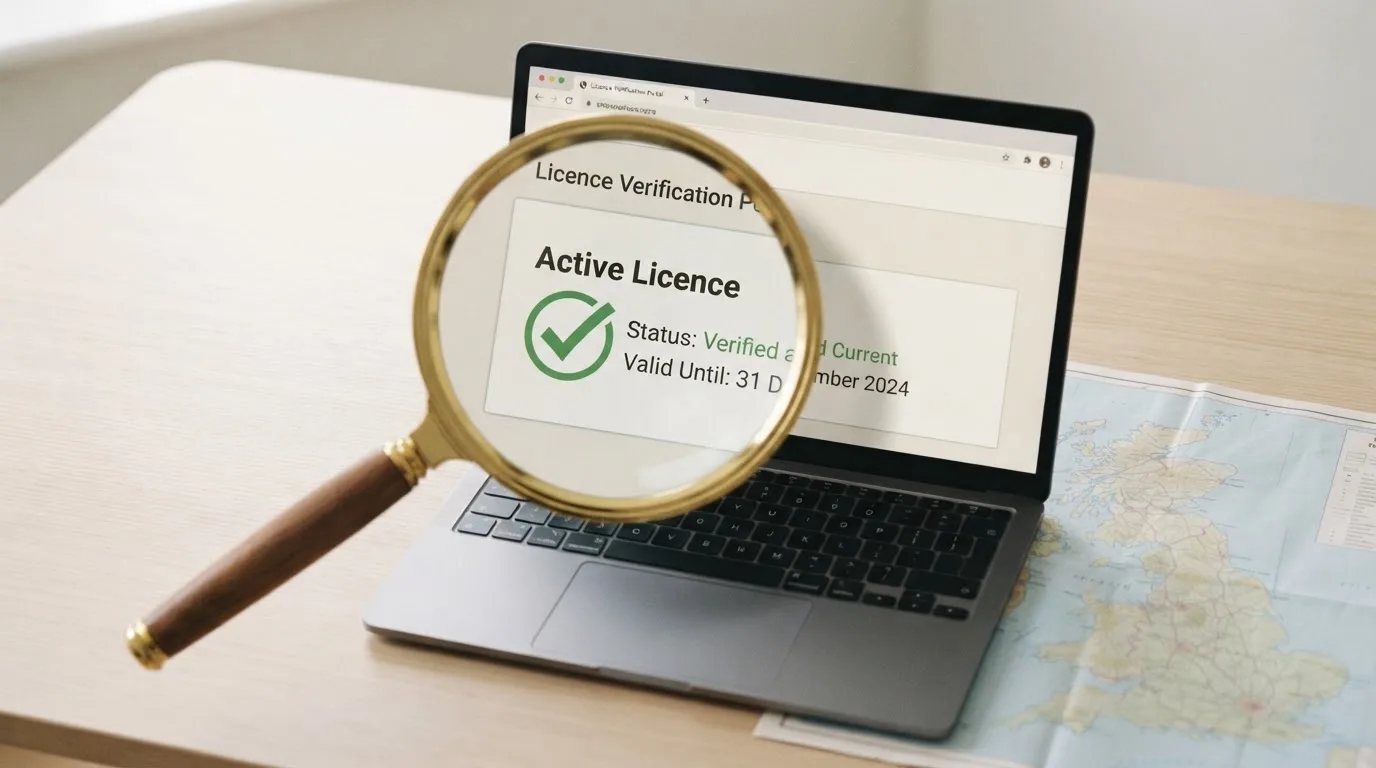
Three licence conditions bear directly on a welcome offer. The first is the social responsibility code, which sets out the affordability, vulnerability and limit-setting rules that any welcome bonus has to be sold inside. The second is the Licence Conditions and Codes of Practice (LCCP), the document that ties those rules to specific operator obligations. The third is the Remote Technical Standards, which set the technical bar — random number generation, game fairness, segregation of player funds — that the welcome bonus is ultimately played against.
A player who wants the full text of any of these can find it on the Commission’s site, but the practical implication is that the bonus is the smallest part of what a licensed operator has to do. The bonus is a marketing line; the licence conditions are the structure that holds it in place.
What a UK player can expect a licensed operator to do
Every operator in the comparison is required, as a condition of its licence, to take part in GAMSTOP, verify identity before the first deposit, run financial-vulnerability checks at the £150 net-deposit threshold in a rolling 30 days, prompt for a deposit limit before the first deposit, and apply the £5 or £2 maximum-stake rule that depends on the player’s age. The auto-play ban and the 2.5-second minimum spin time are part of the same package.
These are not features. They are baseline conditions, and a licensed operator that does not do them is in breach. The Commission’s enforcement record — published in full — shows what breach looks like, and the financial-vulnerability-check regime has already generated its first round of compliance action. The licence is the floor; the player’s protection is the floor plus the operator’s own record on top.
What an unlicensed operator offers by contrast
A casino running without a Gambling Commission licence is, in the strict legal sense, an offence under section 33 of the Gambling Act 2005 for the operator, not the player. The Commission disrupts illegal sites through cease-and-desist notices, search-engine delisting, and referrals to payment and hosting providers. It does not have ISP-blocking power, and unlicensed sites reappear under new domains when old ones are taken down.
The cost to a player who uses one is not the law; the law targets the operator. The cost is the absence of every protection the licensed regime provides — no GAMSTOP, no Commission complaints route, no approved alternative dispute resolution, and no segregation of player funds under the UK rules. A bonus on an unlicensed site can be a real number; the protection around it cannot be. The 10x cap and the £150 vulnerability check do not apply there, which sounds like a benefit until the player needs them and discovers they are not in force.
Tax sits at the edge of the framework rather than inside it, but is worth a sentence. UK players pay no tax on gambling winnings, and operators pay Remote Gaming Duty on their gross gaming yield — raised from 21% to 40% from 1 April 2026. The rate change affects what operators can afford to offer; it does not change what a player keeps.
The brands on the comparison
The write-ups below take each operator in turn, on the licence and domain data the register carries. None of them carries research on a specific welcome-bonus structure, so the description stays on what the register confirms and on what the licence signals about how each operator is set up.
Virgin Games: a Gamesys white-label
Virgin Games is a white-label of Gamesys Operations Limited’s remote casino licence, account 38905, and is listed as a white-label domain — the brand sits on top of the operator rather than holding the licence itself. The licence number is 038905-R-319430-022. A white-label site is not a separate operator in the regulatory sense; it shares the same licence as the parent, and the welcome offer, the safer-gambling tooling and the cashier are the same as on the parent brand’s own site. The Virgin branding gives the surface a different marketing voice, which is the point of the structure. For a player who likes the Virgin name, the offer underneath is Gamesys’s, not Virgin’s.
Betfred: a long-standing bookmaker’s online arm
Betfred runs on Petfre (Gibraltar) Limited, account 39544, under licence 039544-R-319290-010. The Gibraltar parent reflects how the wider Betfred group is structured; the licence on the GB register is the one that authorises the UK-facing site, and it has been live through several renewals. The bookmaker heritage is the brand’s identity; the casino welcome offer sits inside that, and the casino product is one piece of a larger gambling business rather than the whole of it. The depth of the wider group is the asset; the casino is the entry point.
Betfair: an exchange-backed casino
Betfair sits under PPB Games Limited’s remote casino licence, account 39411, under licence 039411-R-319335-010. PPB Games Limited is the casino arm that runs the gaming side; the exchange product has its own licence elsewhere in the Flutter group structure, and the GB licence is the casino licence. The two products share a brand but run on separate regulatory scaffolding, and the welcome offer on the casino site is sold under the casino licence, not the exchange one. The exchange reputation is what the player usually comes in with; the casino welcome offer is what they encounter once they arrive.
Sky Vegas: a media-branded casino
Sky Vegas appears under Bonne Terre Gaming Limited’s licence, account 65519, under licence 065519-R-339675-002. The Sky brand is a marketing front; the operator behind it is Bonne Terre. The licence account number is among the higher ones in the register, which reflects the relative newness of the operating company relative to the older groups, and the casino is one product line inside a wider Sky-branded gambling portfolio. The Sky name brings the customer in; Bonne Terre is the operator they meet.
Gala Bingo: an LC International group brand
Gala Bingo sits on LC International Limited’s remote casino licence, account 54743, under licence 054743-R-330863-014. LC International is the operating company behind several of the well-known UK-facing bingo and casino brands, including Ladbrokes and Coral. The bingo framing is the brand’s surface; the licence is shared across the group, and the safer-gambling and identity infrastructure is the same for all of them. The “bingo” name is not a regulatory boundary, and the welcome offer runs on the same scaffolding as the rest of the group’s brands.
32Red: a single-brand specialist
32Red runs on Platinum Gaming Limited’s licence, account 45322, under licence 045322-R-324275-019. The structure is one of the cleaner ones in the comparison — a single licence, a single active domain, no white-label complication. The brand has run on this licence through several renewals, and the casino is the entire business rather than one product in a wider portfolio. The narrower scope is reflected in the licence structure, and the simplicity is the point of choosing it over a multi-brand group.
Casumo: a Scandinavian-rooted operator
Casumo is held under Recro Limited’s licence, account 61549, under licence 061549-R-336718-002. The Casumo brand traces back to a Swedish-founded operator; the GB-facing licence sits on a UK-registered company. The licence is current and the domain is active, and the brand’s reputation is for a gamified loyalty structure rather than the bonus-led acquisition common in the wider UK market. For a player who weighs the ongoing rewards programme against the headline welcome offer, this is the one to look at.
Midnite: a newer UK-facing operator
Midnite is operated by Dribble Media Limited, account 42647, under licence 042647-R-321653-022. Dribble Media is a smaller operator than several of the others in the comparison, and the account number sits in the older part of the register. The licence is current and the domain is active, and the brand’s surface is a sportsbook-leaning product with a casino alongside rather than a casino-first brand. For a player who wants a casino welcome offer and a sportsbook under one licence, this is the structure they offer.
PokerStars: a poker-first operator on a casino licence
PokerStars appears on the register at Pokerstars.uk under Stars Interactive Limited’s remote casino licence, account 39108, licence 039108-R-319334-026. The brand’s identity is in poker, but the licence covers casino play as well, which is what the welcome offer is sold under. The .uk domain is the GB-facing one; the poker product has its own dedicated surface and tournament structure, and the casino welcome offer is a separate funnel rather than the brand’s main acquisition line. The casino offer is one channel of a poker-first business, which a poker-curious player can take on its own terms.
Jackpotjoy: a Gamesys sibling brand
Jackpotjoy shares the same Gamesys Operations Limited licence as Virgin Games — account 38905, licence 038905-R-319430-022 — and is listed as an active rather than white-label domain. Two brands, one licence, one parent operator. The comparison reads them as separate products, which the marketing supports, but the regulatory picture is the same. The licence structure is a closer match here than the marketing suggests, and the choice between the two brands is largely about which surface the player prefers to land on.
Frequently asked questions
Is a no-deposit welcome bonus really free, or is there still a cost?
A no-deposit welcome bonus is credited without any deposit, usually as a small amount of bonus funds or spins, and lets a player try the site before committing. The 10x wagering cap applies to it just as it does to a deposit bonus, so the small headline figure is rarely worth the time to clear it. The “free” framing is honest about the deposit; it is silent about the wagering.
Where can a player verify that a casino is actually licensed?
The Gambling Commission’s public register. Every UK-licensed operator is listed there, with its licence number and the domains the licence covers. A brand that does not appear on the list is not licensed to take UK customers, regardless of what its marketing says. The register can be searched online or downloaded in full as CSV or Excel files.
What is the wagering requirement on a UK welcome bonus in 2026?
Since 19 December 2025 the cap is 10x the bonus amount. A £100 bonus requires £1,000 of staking before withdrawal, and the figure scales linearly with the bonus. Before that date, multipliers of 30x, 40x and 65x were common on the same kinds of offers at UK-licensed operators.
How long does a player have to use a welcome bonus before it expires?
The expiry window is set by the operator’s bonus terms and is typically short — often seven to thirty days from credit. After that the bonus funds and any winnings tied to them are removed from the account, so the clock matters before the player claims rather than after.
Does the welcome bonus work the same way on mobile as on desktop?
The licence covers all channels a UK-licensed operator runs, so the welcome offer is available across app, mobile browser and desktop in principle. Whether a specific bonus is identical on each is set by the operator’s terms, and the verification, GAMSTOP check and financial vulnerability check apply on every channel the same way.
